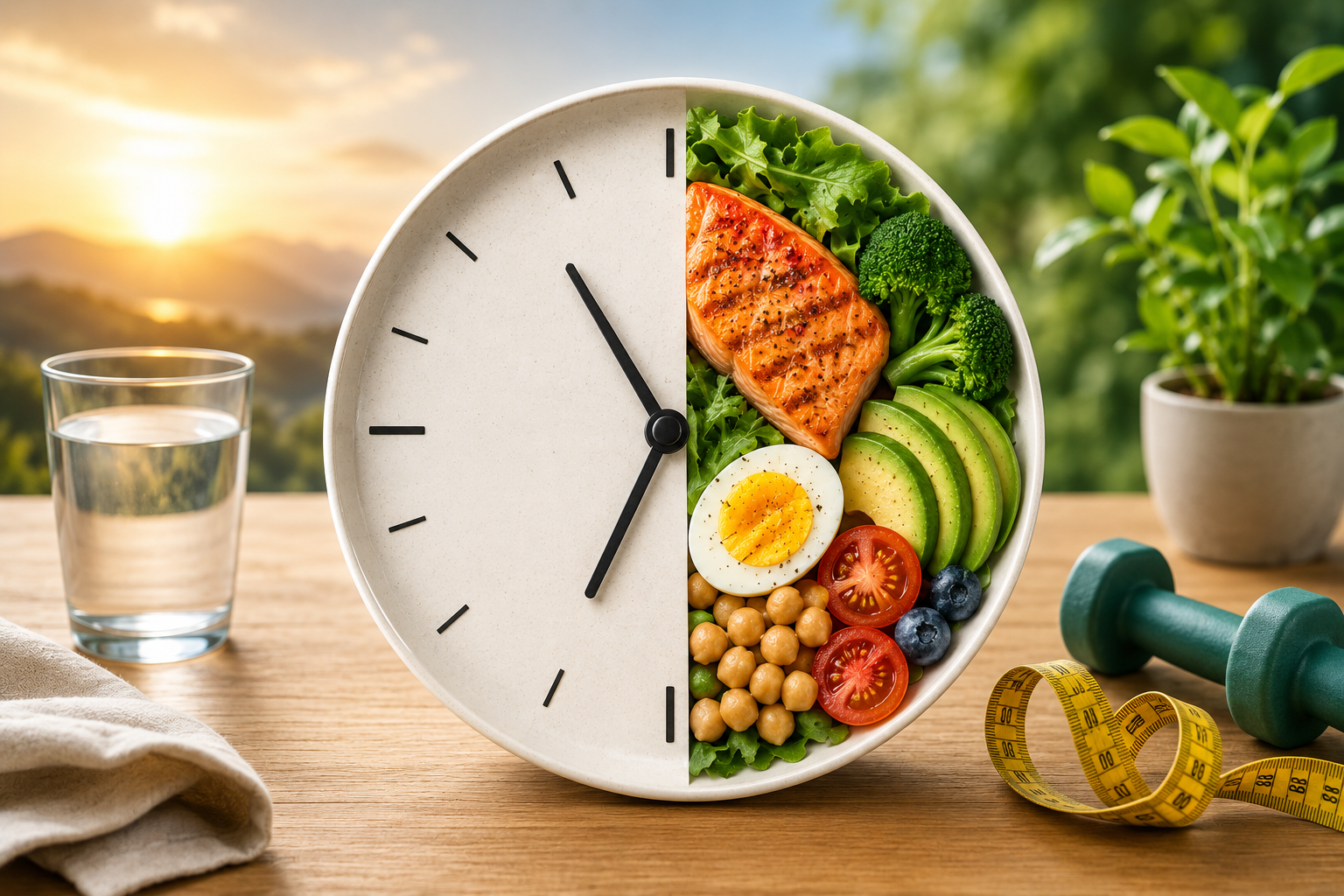
You have probably heard of intermittent fasting. Maybe a colleague lost weight doing it, or you saw it trending online. But then you dug a little deeper and found conflicting advice everywhere – skip breakfast, eat only at night, fast for 24 hours, fast for 16. The noise is overwhelming.
Here is the reality: intermittent fasting is one of the most studied dietary approaches of the past two decades, and when done correctly, the evidence behind it is genuinely impressive. But most people start it wrong, plateau quickly, or give it up before their body has even had time to adapt.
This guide cuts through the confusion. You will learn exactly what intermittent fasting is, how it works at a cellular level, which protocols suit which people, and how to support your body through the process so that you actually see results.
What Is Intermittent Fasting?
Intermittent fasting (IF) is not a diet in the traditional sense. It does not tell you what to eat – it tells you when to eat. It is an eating pattern that alternates between defined periods of fasting and eating, structured in a way that prompts the body to shift its metabolic state.
When you eat, your body uses the incoming glucose for energy and stores the excess as glycogen and fat. When you fast long enough, those glycogen stores deplete, and your body begins drawing on stored fat for fuel. This metabolic switch is the foundation of why intermittent fasting works – and it is backed by a robust and growing body of peer-reviewed research published in journals including the New England Journal of Medicine.
Unlike calorie restriction alone, IF also activates deeper cellular repair processes, influences hormone signaling, and shifts the gut microbiome in measurable ways. It is a tool that taps into biology your body already has – it just rarely gets the chance to use.
The Most Common Intermittent Fasting Protocols
There is no single “correct” way to fast. Different protocols suit different lifestyles, and research supports several approaches depending on your goals.
The 16:8 Method (Time-Restricted Eating)
This is the most popular protocol. You fast for 16 hours and eat within an 8-hour window – for example, eating between noon and 8 pm and fasting the rest of the day. Most of the fasting period overlaps with sleep, which makes it practical and sustainable.
Studies on the 16:8 method show meaningful reductions in body weight, improved insulin sensitivity, and lower inflammatory markers, even without deliberate calorie restriction.
The 5:2 Protocol
You eat normally for five days of the week and restrict intake to around 500-600 calories on two non-consecutive days. Research published in the British Journal of Nutrition has shown this approach to be comparably effective to continuous calorie restriction for weight loss and metabolic health improvement.
Alternate Day Fasting (ADF)
You alternate between regular eating days and fasting or very low-calorie days. This is one of the more aggressive protocols and tends to show stronger metabolic effects, but it is also harder to sustain. Clinical trials have documented reductions in body weight, LDL cholesterol, and blood pressure in overweight adults following ADF.
The 24-Hour Fast (Eat-Stop-Eat)
You eat normally most days and incorporate one to two complete 24-hour fasts per week. This protocol is particularly effective for activating cellular autophagy – the body’s self-cleaning process – but requires careful management to avoid muscle loss and excessive hunger.
One Meal a Day (OMAD)
Exactly what it sounds like: all daily calories consumed in a single meal. This is the most extreme time-restricted eating protocol and is not recommended for everyone. However, some metabolic research suggests it can accelerate fat loss and improve certain cardiovascular markers in healthy adults.
How Intermittent Fasting Works: The Biology
This is where things get genuinely fascinating. Intermittent fasting does not just change when you eat – it fundamentally reshapes how your body operates at a cellular level.
The Insulin Drop
Every time you eat – especially carbohydrates – your pancreas releases insulin to shuttle glucose into cells. Chronically elevated insulin levels, driven by constant eating, block the body’s ability to access stored fat. When you fast, insulin levels fall, and fat cells can finally release their stored energy for use.
This is why intermittent fasting is so effective for insulin resistance – the low-insulin environment created by fasting essentially retrains the body’s sensitivity to the hormone. Find out more about blood sugar and hunger management in this article on healthy filling foods on SVKHerbal.
The Metabolic Switch
After roughly 12-16 hours of fasting, glucose stores are depleted and the liver begins producing ketone bodies from stored fat. The brain – which normally runs on glucose – adapts to use these ketones efficiently. Many people report sharper mental clarity and improved focus once this switch occurs, a phenomenon well-documented in neuroscience research.
Autophagy: The Cellular Clean-Up
One of the most compelling aspects of fasting is its activation of autophagy – a Greek term meaning “self-eating.” This is the body’s system for identifying and breaking down damaged proteins, dysfunctional organelles, and cellular debris. The discovery of autophagy’s mechanisms earned Yoshinori Ohsumi the 2016 Nobel Prize in Physiology or Medicine, underscoring its fundamental importance to cellular health.
Autophagy is strongly upregulated during fasting and is believed to play a critical role in reducing the risk of neurodegenerative diseases, cancer, and the general cellular deterioration associated with aging. For more on protecting brain function long term, read about 10 science-backed ways to reduce Alzheimer’s risk on SVKHerbal.
Human Growth Hormone (HGH)
Fasting triggers a dramatic rise in human growth hormone (HGH), with some studies reporting increases of up to 300% in women and 2,000% in men over a 24-hour fast. HGH promotes fat metabolism, supports muscle preservation, and plays a central role in tissue repair – which is why fasting does not necessarily cause muscle loss when protein intake and resistance training are adequate.
Evidence-Based Health Benefits of Intermittent Fasting
Weight Loss and Body Composition
The most commonly cited benefit of intermittent fasting is weight loss. A 2020 systematic review in Nutrients analyzed 27 trials and found that IF consistently produced significant reductions in body weight and fat mass, with an average loss of 0.8-13% of baseline body weight across different protocols. Crucially, a significant portion of this loss comes specifically from visceral fat – the metabolically dangerous fat stored around the organs.
Cardiovascular Health
Intermittent fasting improves multiple cardiovascular risk markers, including LDL cholesterol, triglycerides, blood pressure, and inflammatory markers such as C-reactive protein. A landmark American Heart Association statement published in 2024 acknowledged time-restricted eating as a promising dietary pattern for cardiovascular disease prevention.
Blood Sugar Regulation
For people with prediabetes or type 2 diabetes, the evidence for IF is particularly compelling. Research in Cell Metabolism found that a 10-hour time-restricted eating window – without any calorie counting – improved insulin sensitivity, blood pressure, and cholesterol in metabolic syndrome patients after just 12 weeks.
Brain Health and Cognitive Function
Fasting increases levels of BDNF (brain-derived neurotrophic factor), a protein that promotes the growth of new neurons, strengthens existing neural connections, and protects against neurodegeneration. Animal studies consistently show IF reducing the accumulation of amyloid plaques associated with Alzheimer’s disease, while early human trials are yielding similarly promising results. The connection between metabolic health and cognitive resilience is also explored in depth in SVKHerbal’s article on reducing Alzheimer’s risk.
Longevity and Aging
Some of the most exciting research on IF relates to aging. Studies in organisms from yeast to primates have consistently shown caloric restriction and fasting extending lifespan, with human observational data beginning to align. The mechanisms – autophagy activation, reduced oxidative stress, improved mitochondrial function, and lower systemic inflammation – are all well-established biological pathways linked to longevity.
Who Should Be Cautious With Intermittent Fasting?
Intermittent fasting is not universally appropriate, and it is important to approach it honestly. Certain populations should consult a physician before beginning any fasting protocol.
- Pregnant and breastfeeding women – caloric and nutritional demands during these periods are elevated, and fasting can compromise both maternal and infant health.
- People with a history of eating disorders – structured restriction can trigger or reinforce disordered eating patterns. The psychological component must be evaluated carefully.
- Individuals with type 1 diabetes or those on insulin or sulfonylureas – fasting significantly alters blood glucose dynamics and requires medical supervision to adjust medications safely.
- Underweight individuals – those with a BMI below 18.5 should not pursue caloric restriction without medical guidance.
- People under significant stress – fasting raises cortisol, and stacking it on top of chronic stress can worsen hormonal dysregulation, particularly in women.
- Children and adolescents – growing bodies require consistent nutritional input, and fasting is not appropriate for this population.
As with any significant dietary change, speaking with a qualified healthcare provider before starting is always a sensible step.
How to Start Intermittent Fasting the Right Way
Start Gradually
Do not leap straight into a 16:8 or more aggressive protocol. If you currently eat across a 14-hour window, begin by compressing it to 12 hours for a week, then to 13 hours, and gradually extend the fasting window. This gentler ramp allows hunger hormones – particularly ghrelin – to recalibrate rather than fight you every morning.
Prioritize Protein in Your Eating Window
High-protein meals are the most satiating, help preserve lean muscle mass during fasting periods, and have the highest thermic effect of any macronutrient. Aiming for 1.6-2.0g of protein per kilogram of body weight per day is a reliable starting point, particularly if you are training. For a deeper look at how protein deficiency quietly affects the body, see SVKHerbal’s article on protein deficiency symptoms.
Focus on Whole, Nutrient-Dense Foods
The quality of what you eat during your eating window matters enormously. A diet built around whole foods – vegetables, legumes, quality proteins, healthy fats, and complex carbohydrates – will stabilize blood sugar, reduce hunger during fasting periods, and amplify the metabolic benefits of IF. Processed foods and refined sugars will do the opposite, creating blood sugar crashes that make fasting feel miserable.
Stay Well Hydrated
Hunger and thirst signals overlap significantly in the hypothalamus – many people mistake dehydration for hunger during their fasting window. Water, black coffee, and plain tea are all permitted during the fasting period and do not break a fast. Aim for at least 2-3 liters of fluid daily. Electrolytes become increasingly important on longer fasting protocols.
Time Your Eating Window Thoughtfully
Circadian biology research strongly suggests that eating earlier in the day aligns better with metabolic function – the body is more insulin-sensitive in the morning, and digestion is more efficient. Where practical, an earlier eating window (for example 8 am to 4 pm) may offer greater metabolic benefits than a late-shifted window. That said, social and lifestyle factors matter too, and consistency beats theoretical optimality every time.
Common Side Effects and How to Manage Them
Hunger and Irritability in the First Week
The first 5-7 days are typically the hardest. Ghrelin – the hunger hormone – follows a circadian rhythm tied to your habitual meal times. It takes approximately one week to begin adapting to a new eating schedule. Staying busy during the fasting window, ensuring adequate protein at your last meal, and managing stress all help significantly.
Headaches and Fatigue
These are common in the first week and are usually the result of electrolyte shifts and mild dehydration as glycogen stores deplete. Increasing sodium, potassium, and magnesium intake – through foods or supplementation – typically resolves this within days.
Constipation
A reduced eating window sometimes means less fiber intake, which can slow transit time. Ensuring adequate fiber – from vegetables, legumes, seeds, and fruits – during your eating window is the primary fix. Hydration, as always, plays a supporting role.
Sleep Disruption
Some people experience disrupted sleep when first starting IF, particularly if they train in the evening or eat their final meal too close to bedtime. Research on chrono-nutrition suggests that finishing the eating window at least 2-3 hours before sleep tends to improve both sleep quality and overnight metabolic recovery.
Intermittent Fasting vs. Continuous Calorie Restriction: What Does the Evidence Say?
A frequent question is whether intermittent fasting is actually superior to simply eating less every day. The most comprehensive head-to-head comparison to date – a 12-month randomized controlled trial published in NEJM – found that time-restricted eating produced similar weight loss outcomes to continuous calorie restriction in obese adults. The important nuance, however, is what IF achieves that simple calorie restriction does not.
IF uniquely:
- Activates autophagy at a level not seen with simple calorie restriction
- Produces metabolic benefits that are at least partially independent of weight loss
- Allows many people to naturally reduce caloric intake without deliberate counting
- Trains hunger hormones over time, reducing baseline appetite
For many people, the behavioral simplicity of “don’t eat before noon” is far more adherent over time than calculating daily caloric targets.
The Role of Natural Support During Fasting
Intermittent fasting is powerful on its own, but its benefits can be meaningfully amplified when the body is well-nourished during the eating window. Herbal compounds with adaptogenic, anti-inflammatory, and metabolic properties have been used in Traditional Eastern medicine for centuries to support exactly the kind of cellular resilience and metabolic balance that fasting seeks to achieve.
Ingredients like Cordyceps militaris, well-documented for its effects on mitochondrial energy production and cellular oxygen utilization, complement the metabolic state that fasting promotes. Similarly, Lion’s Mane mushroom supports BDNF production and neuronal health – aligning directly with fasting’s established brain benefits.
The Naturem™ range from SVKHerbal bridges the gap between traditional herbal wisdom and modern nutritional science, offering targeted formulas that support metabolic health, cognitive function, immune resilience, and healthy aging – all areas that intermittent fasting also directly addresses. For those on a serious wellness journey, pairing smart dietary timing with quality herbal support represents a genuinely synergistic approach.
The Bottom Line
Intermittent fasting is not a fad. It is a scientifically-grounded approach to eating that aligns human feeding patterns with evolutionary biology, activates powerful cellular repair mechanisms, and produces meaningful improvements in metabolic health, body composition, cardiovascular function, and brain health.
The key is starting gradually, eating intelligently during your eating window, prioritizing protein and whole foods, staying hydrated, and giving your body the time it needs to adapt. Managing hunger through smart food choices during your eating window will make the fasting periods dramatically more comfortable.
It is also worth recognizing that intermittent fasting is one powerful tool in a broader wellness picture. Quality sleep, regular movement, stress management, and the right nutritional support all compound the benefits of IF. The Naturem™ herbal range from SVKHerbal is designed with this holistic picture in mind – supporting the metabolic, cognitive, and immune pathways that fasting activates, from the inside out.