
Think of your skeleton as a living mineral bank where your daily habits act as either deposits or withdrawals. While many people focus on bone density, the actual hardening of the bone tissue-a process known as bone mineralization is what prevents our framework from becoming soft, flexible or brittle. When this complex biological process is interrupted, the result is often persistent bone pain, muscle weakness, and a significantly higher risk of fractures.
Fortunately, through specific lifestyle habits for bone mineralization, we can provide the body with the raw materials and mechanical signals it needs to maintain a rock-solid foundation.
The Biological Foundation of Bone Mineralization
Bone mineralization is the precise physiological process where essential minerals, primarily calcium and phosphorus, are deposited into a protein matrix to create hard, resilient tissue. This is distinct from bone density; while density refers to how much bone tissue you have, mineralization refers to how well that tissue has hardened. When mineralization fails in adulthood, it leads to a condition called osteomalacia, whereas in growing children, it manifests as rickets. Understanding the nuances of rickets vs. osteomalacia is crucial, as the age at which these defects occur determines whether the result is permanent skeletal bowing or chronic adult bone pain.
This process is governed by a delicate chemical balance within the blood and the bone matrix. Vitamin D acts as the primary conductor, ensuring that the intestines absorb enough calcium to satisfy the skeleton’s needs. Without adequate minerals, the body is forced to leave the bone protein soft which creates the characteristic deep, aching pain associated with mineralization defects. Maintaining this cellular harmony is the first step toward preventing structural decay as we age.
By understanding the biological necessity of mineral deposition, we can better appreciate why our dietary choices serve as the bedrock of skeletal strength.
Nutritional Guidelines for Hardening the Bone Matrix
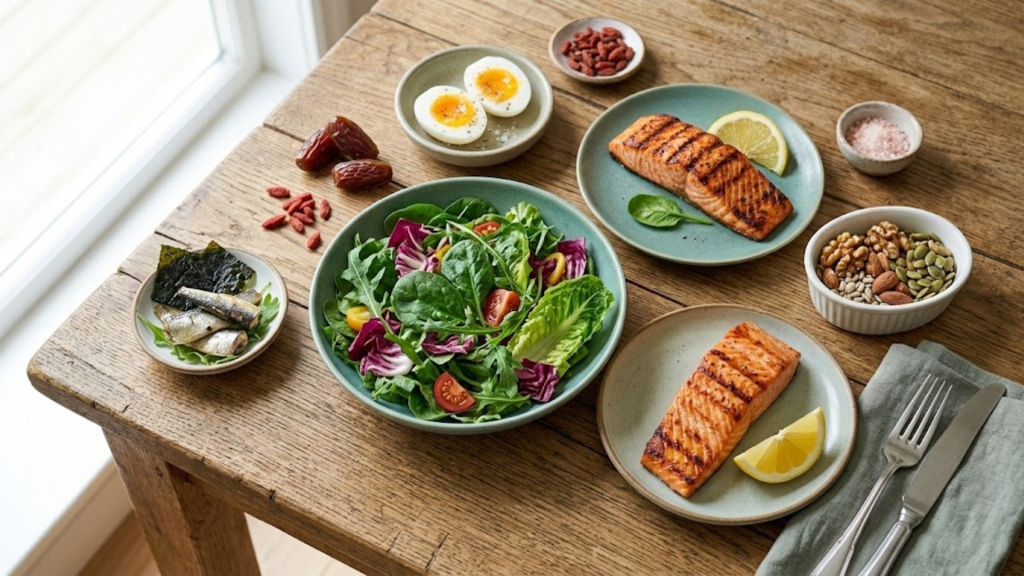
The most effective way to support the hardening of your skeleton is through a targeted nutritional strategy that emphasizes mineral bioavailability. Following a specific diet for strong bones and joints ensures that you are consuming not just calcium, but also the cofactors like Vitamin K2 and Magnesium that guide those minerals into the bone rather than the arteries. Phosphorus is equally important, as it works alongside calcium to form hydroxyapatite, the primary mineral component of our teeth and bones.
To maximize these efforts, many clinicians recommend a nutrient-dense approach often referred to as the osteomalacia diet, which focuses on fatty fish, egg yolks, and mineral-rich greens. Incorporating hydrolyzed collagen can also provide the protein “scaffold” that minerals need to cling to. When these nutrients are missing, the skeleton becomes increasingly porous, leading to a decline in both mechanical strength and metabolic resilience.
Proper nutrition provides the building blocks, but these minerals can only enter the bone matrix if the body’s hormonal “unlocking” mechanism is functioning correctly.
The Synergy of Sunlight and Vitamin D Absorption
Vitamin D is less of a vitamin and more of a pro-hormone that triggers the absorption of calcium in the small intestine. Without sufficient Vitamin D levels, the body can only absorb about 10% to 15% of dietary calcium, leaving the skeleton in a state of constant mineral hunger. The most natural way to boost this hormone is through safe sun exposure, which initiates a chemical reaction in the skin to synthesize Vitamin D3.
For most individuals, spending 10-20 minutes in the midday sun a few times a week is sufficient to maintain healthy levels. However, factors like skin pigmentation, latitude, and age can significantly impact your body’s ability to produce this vital nutrient. During winter months or in cloudier climates, high-quality supplementation becomes a necessary habit to ensure the mineralization process does not stall. This ensures that the minerals you consume actually reach their intended destination: your skeletal framework.
While nutrition and sunlight provide the internal resources, the bones still require an external reason to stay hard and strong.
Mechanical Loading and Exercise Strategies
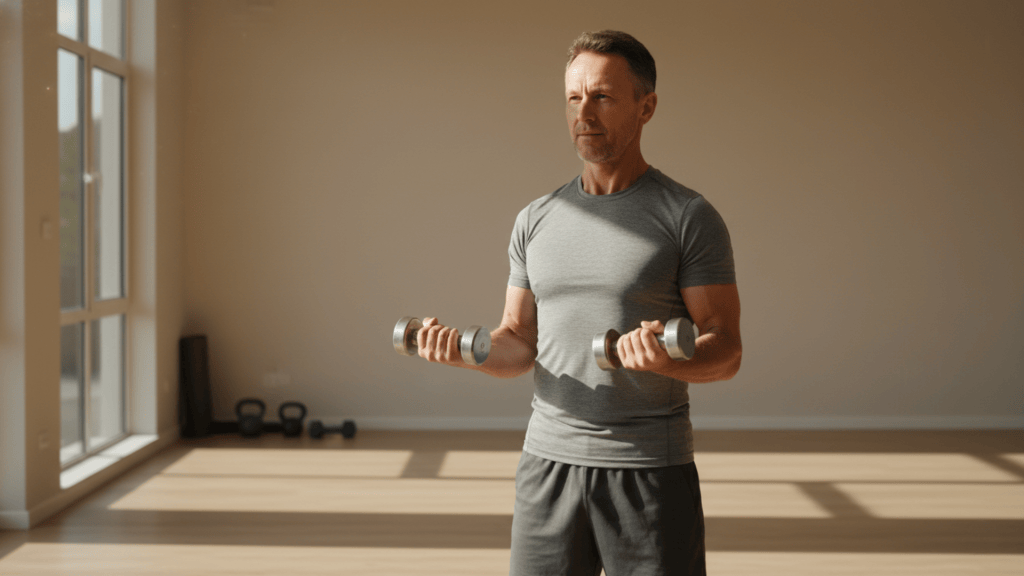
Bones are dynamic tissues that follow Wolff’s Law, which states that bone will adapt to the loads under which it is placed. Regular weight-bearing exercise creates mechanical stress that signals the osteoblasts to deposit more mineral content into the bone matrix. Activities such as brisk walking, dancing, and stair climbing are excellent for maintaining the structural integrity of the hips and spine.
Resistance training, specifically using weights or elastic bands, provides an even stronger signal for bone mineralization. By pulling on the bone via muscle contraction, you stimulate the cells responsible for hardening the tissue. For those already suffering from soft bones, low-impact movements like Tai Chi can improve balance and muscle strength, reducing the risk of falls while still providing some mechanical benefit to the skeleton.
Even with a perfect routine of sun and sweat, certain daily habits can quietly leach the minerals right back out of your system.
Avoiding Bone Thieves: Habits that Sabotage Mineralization

Protecting your skeleton is as much about what you avoid as what you do. Certain habits act as “bone thieves,” interfering with mineral absorption or accelerating mineral loss through the kidneys. For example, excessive sodium intake forces the body to excrete calcium through the urine, effectively pulling it away from the mineralization process. Similarly, a high intake of phosphoric acid-found in many dark sodas-can disrupt the calcium-phosphorus balance, leading to weaker bone tissue.
Smoking and excessive alcohol consumption are also major culprits in the development of soft bones. Tobacco use restricts blood flow to the bones and interferes with the production of bone-forming cells, while alcohol inhibits the liver’s ability to activate Vitamin D. By eliminating these detrimental habits, you allow your body’s natural mineralization cycles to function without unnecessary interference.
Fascinating Insights into Your Skeleton
Bones Are Mineral Batteries
Your skeleton acts as a massive reservoir for minerals. If your blood levels of calcium drop too low, your bones discharge stored calcium to keep your heart beating and your muscles moving.
The Speed of Renewal
Your skeleton is almost entirely replaced every 7 to 10 years. This means the habits you start today will literally be reflected in the new skeleton you will have a decade from now.
Weight and Strength
Bones are roughly four times as strong as concrete on a pound-for-pound basis. Their unique mineralized structure allows them to be incredibly lightweight while bearing the entire weight of your body.
Active Living Tissue
Unlike a piece of wood or stone, bone is a living organ. It has its own blood supply and nerves, which is why bone pain is so distinct and why habits that improve cardiovascular health also improve bone health.
Frequently Asked Questions (FAQ)
Yes. Unlike some forms of permanent structural damage, mineralization defects like osteomalacia are often highly reversible with consistent Vitamin D and mineral supplementation.
Most medical experts prefer calcium from food because the body absorbs it more efficiently and it carries less risk of forming kidney stones compared to high-dose synthetic supplements.
Heavy caffeine consumption can slightly increase calcium excretion. However, as long as your overall dietary calcium intake is adequate, a cup or two of coffee daily is generally considered safe for bone health.
References
Harvard Health Publishing. (2021). Two keys to strong bones: Calcium and Vitamin D. https://www.health.harvard.edu/womens-health/two-keys-to-strong-bones-calcium-and-vitamin-d
Mayo Clinic. (2022). Osteomalacia: Symptoms and causes. https://www.mayoclinic.org/diseases-conditions/osteomalacia/symptoms-causes/syc-20355514
National Institutes of Health (NIH). (2023). Vitamin D Fact Sheet for Health Professionals. https://ods.od.nih.gov/factsheets/VitaminD-HealthProfessional/
Palacios, C. (2006). The role of nutrients in bone health, from evolutionary, cellular, and genetic perspectives. Critical Reviews in Food Science and Nutrition, 46(8), 621-628. https://doi.org/10.1080/10408390500466174
U.S. Department of Health and Human Services. (2023). Bone health and osteoporosis. https://www.niams.nih.gov/health-topics/bone-health-and-osteoporosis
World Health Organization (WHO). (2022). Musculoskeletal conditions. https://www.who.int/news-room/fact-sheets/detail/musculoskeletal-conditions