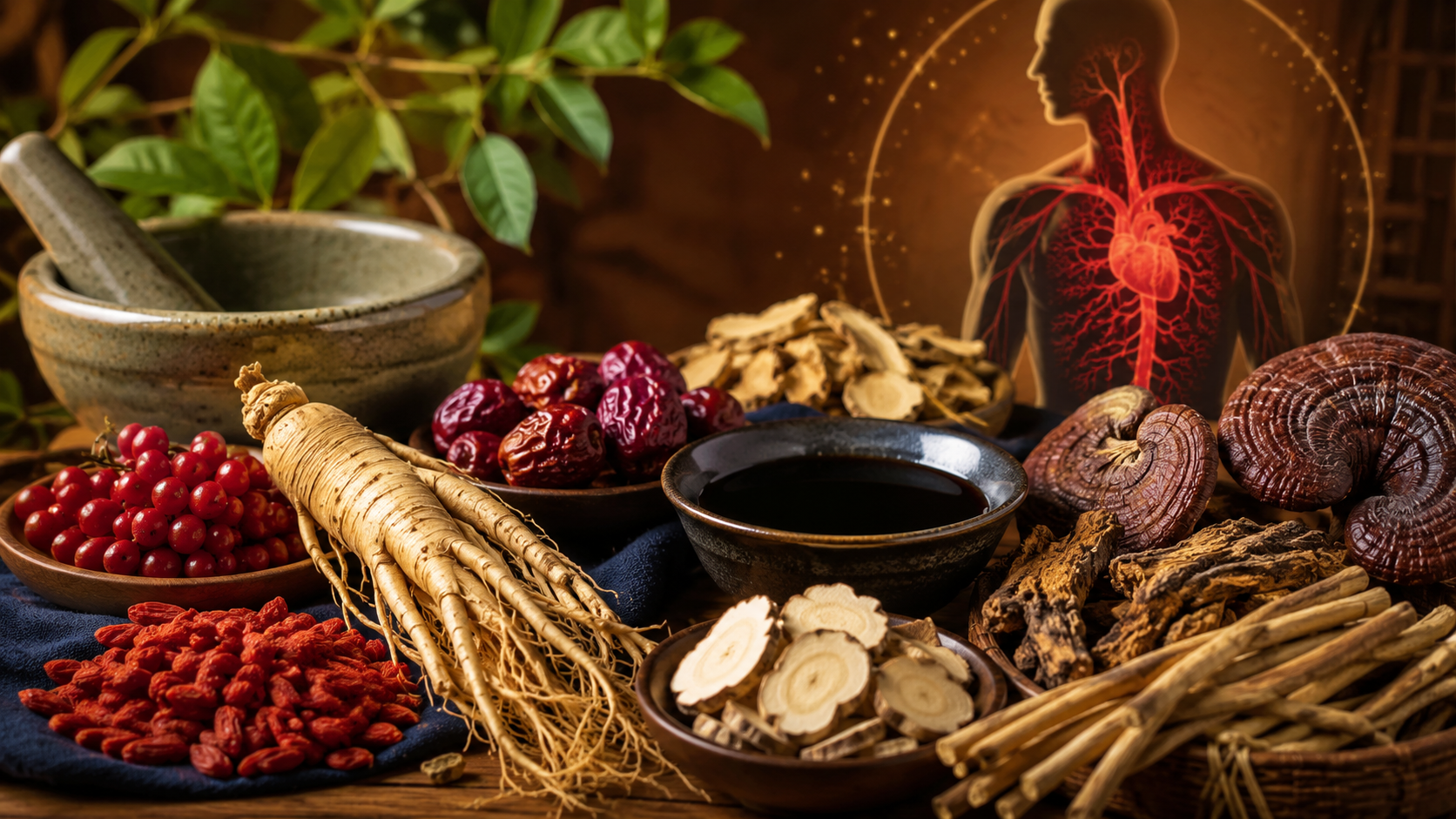
Long before ferritin tests and hemoglobin panels existed, traditional medicine systems across the world had already identified a recurring pattern: people with pale complexions, persistent fatigue, dizziness, and cold hands and feet often improved dramatically with specific herbal formulas, repeated use after use, generation after generation. In Traditional Chinese Medicine, this pattern was named Blood Deficiency. In Ayurveda, similar presentations fall under depleted Ojas or weakened Rasa Dhatu. Modern science is now circling back to many of these herbs with genuine pharmacological curiosity – and in several cases, finding real mechanisms behind centuries of clinical observation.
This article explores the herbs most consistently used across traditional systems for blood and energy support, what their traditional use actually claims, and what current research has – and has not – confirmed.
Understanding “Blood Deficiency” in Traditional Medicine
In Traditional Chinese Medicine, Blood (Xuè) is understood as a substance that nourishes and moistens the entire body, distinct from but related to the Western biomedical concept of blood. When Blood is deficient, the classical signs described for centuries map remarkably well onto modern markers of anemia and iron deficiency: pallor, fatigue, dizziness, heart palpitations, brittle nails, and dry skin and hair. This overlap is not a coincidence – it’s likely the reason these herbal traditions consistently converged on plants with genuine hematopoietic (blood-cell-producing) properties, identified through generations of careful clinical observation, long before the underlying biochemistry was understood.
It’s worth being clear about how to read this article: traditional use and modern pharmacological research are two different types of evidence, and we’ll be explicit throughout about which is which. Some of these herbs now have genuine mechanistic and even early clinical research behind them. Others remain primarily supported by traditional use alone. Both are worth understanding, but they are not interchangeable categories of evidence.
Dang Gui (Angelica sinensis): The Premier Blood Tonic of Chinese Medicine
If there is one herb that defines the entire category of “blood tonics” in Traditional Chinese Medicine, it is Dang Gui. Dang Gui is considered one of the foremost Blood-tonifying herbs in Chinese medicine, traditionally understood to enter the Liver, Heart, and Spleen – the three organ systems classically associated with Blood production and circulation. First recorded in the Shen Nong Ben Cao Jing, China’s earliest known herbal text, Dang Gui has been used for over 2,000 years specifically for nourishing the blood and regulating women’s health.
What Modern Research Shows
This is one of the rare traditional blood tonics with genuinely compelling modern mechanistic evidence behind it. A 2024 study published in Frontiers in Pharmacology found that Angelica sinensis polysaccharides (APS) regulate the proliferation and differentiation of blood cells and promote the recovery of hematopoietic function in blood-deficient animal models, working specifically by promoting the production of erythropoietin (EPO), granulocyte colony-stimulating factor (G-CSF), and interleukin-3 (IL-3) – the same biological signals the body uses to ramp up its own blood cell production. The same study found that APS treatment reduced TNF-alpha, an inflammatory marker, contributing to what researchers described as a genuine blood-replenishing effect at the cellular level.
Separate research has identified the active phthalide compounds in Dang Gui – ferulic acid, ligustilide, and eugenol – as responsible for its blood-activating, circulation-improving effects, providing a plausible biochemical explanation for traditional claims that go beyond simple correlation. Other research has demonstrated that Angelica sinensis polysaccharides promote hematopoiesis and thrombopoiesis (platelet production) specifically through activation of the PI3K/AKT signaling pathway – a well-established cellular growth and survival pathway, lending real mechanistic credibility to centuries of traditional use.
Traditional Use
Beyond blood nourishment, Dang Gui has traditionally been used for menstrual irregularity, pain associated with blood deficiency, and as a gentle laxative for constipation caused specifically by blood-deficiency-related intestinal dryness – a pattern particularly common in elderly patients and those recovering from illness or childbirth. Note that Dang Gui is contraindicated during pregnancy and should not be combined with blood-thinning medications without medical supervision, given its blood-activating properties.
Shu Di Huang (Prepared Rehmannia): The Foundational Yin and Blood Tonic
Alongside Dang Gui, Shu Di Huang (prepared Rehmannia glutinosa root) holds equal standing as one of the most important blood-nourishing herbs in Chinese medicine. It belongs to the category of Blood tonics in the Chinese Materia Medica and is one of the most widely prescribed herbs in TCM, serving as the foundational herb in the classical Liu Wei Di Huang Wan formula family – traditionally used for anemia, premature greying of hair, fatigue, dizziness, and lower back weakness associated with what TCM terms Kidney deficiency.
What’s particularly interesting about Shu Di Huang is the processing method itself, which reflects a sophisticated traditional understanding of how preparation changes a plant’s therapeutic action. Created through repeated steaming and drying of the raw Rehmannia root, this transformation converts the cooling, heat-clearing raw herb (Sheng Di Huang) into a warming, deeply nourishing blood and Yin tonic – the same plant, deliberately processed into two pharmacologically and clinically distinct medicines.
What Modern Research Shows
Research findings here are genuinely encouraging, particularly regarding the herb’s effect on blood cell production specifically. A pharmacological review found that water extract of prepared Rehmannia root improved the proliferation and differentiation of hematopoietic stem cells and bone marrow erythropoiesis progenitor cells in laboratory research – a direct mechanistic link to the traditional claim that this herb supports the body’s own blood-producing capacity, rather than simply masking symptoms.
A broader pharmacological overview confirms that research demonstrates hematopoietic effects, including increased red blood cell and hemoglobin production, alongside anti-inflammatory, immunomodulatory, neuroprotective, and blood glucose-regulating activity associated with prepared Rehmannia. Additional pharmacological research notes that Rehmannia glutinosa polysaccharides have been incorporated into oral liquid preparations explored for conditions including aplastic anemia – a serious bone marrow condition – underscoring the seriousness with which Chinese medical research has approached this herb’s hematopoietic potential.
Traditional Use
Beyond blood support, Shu Di Huang is traditionally used for night sweats, dizziness, low back soreness, and as a foundational herb supporting healthy aging and fertility in classical formulas. Because of its rich, heavy nature, traditional practitioners typically combine it with digestive-supporting herbs to offset potential heaviness in the digestive system, rather than prescribing it in isolation.
Ashwagandha (Withania somnifera): Ayurveda’s Premier Energy Adaptogen
Moving from Chinese medicine to Ayurveda, Ashwagandha occupies a similarly central role – though its traditional framing centers more on vitality and stress resilience than blood nourishment specifically. Classified in Ayurveda as both a “Rasayana” (rejuvenative tonic) and an adaptogen, Ashwagandha is valued for its anti-inflammatory, antioxidant, adaptogenic, and memory-enhancing properties within traditional practice.
What Modern Research Shows – A Genuinely Mixed Picture
This is the herb in this article with the most robust modern clinical trial evidence – and it’s worth presenting that evidence honestly, including where it doesn’t fully support the traditional claims.
On the positive side, a 2024 randomized controlled trial in chronically stressed adults found that 8 weeks of ashwagandha extract produced a measurable attenuating effect on HPA-axis activity, with decreasing levels of blood cortisol and ACTH compared to baseline – directly relevant to fatigue, since chronically elevated cortisol is a well-established driver of persistent tiredness. A separate prospective, randomized, placebo-controlled trial in adults with self-reported energy and cognitive concerns found that 600 mg daily of ashwagandha root extract over 8 weeks produced measurable improvements in the energy and cognition domains being studied.
A specifically energy-focused trial found that 42 days of a standardized ashwagandha formulation improved performance on the 6-minute walk test alongside reductions in serum cortisol, with secondary improvements in stair-climbing and chair-standing tests – functional measures genuinely relevant to everyday energy and physical capacity rather than just subjective questionnaire scores.
However, it’s important to present the less favorable findings too, since balanced reporting matters here. A separate 12-week randomized controlled trial in overweight adults with self-reported stress and fatigue found that while ashwagandha significantly reduced fatigue symptoms on the Chalder Fatigue Scale compared to placebo, it did not produce a significantly greater reduction in perceived stress than placebo – a more nuanced result than blanket “ashwagandha reduces stress” claims often suggest, showing real but selective benefit rather than uniform improvement across every measured outcome.
Traditional Use
In Ayurvedic practice, Ashwagandha is traditionally used far more broadly than just for energy – including for supporting healthy sleep, reproductive vitality, and overall resilience to physical and mental stress. Recent safety research evaluating 180 days of continuous use in healthy adult participants found the standardized root extract to be well tolerated, supporting its traditional reputation as a gentle, long-term tonic rather than a short-term stimulant.
Polygonum Multiflorum (He Shou Wu): The Traditional Vitality and Blood-Nourishing Root
Among the most storied herbs in Chinese tonic herbalism, He Shou Wu carries a folkloric reputation tied directly to vitality, healthy aging, and blood nourishment – traditionally associated with maintaining dark hair color, reproductive vitality, and sustained energy into old age. Its processed form (Zhi He Shou Wu) is specifically used in classical formulas addressing what TCM terms blood and essence deficiency, presentations that closely parallel the fatigue, premature greying, and diminished vitality associated with iron-deficiency-related conditions in modern terms.
Find out more about how Polygonum multiflorum supports vitality and recovery from burnout in this Naturem article exploring its traditional role in restoring depleted energy reserves.
An important safety note: unlike the other herbs discussed in this article, unprocessed Polygonum multiflorum carries documented hepatotoxicity risk in case reports, and even the processed form should only be used under proper guidance and from a reputable, quality-tested source – this is not a “more is better” herb, and traditional preparation methods exist specifically to mitigate this risk.
How These Traditional Approaches Connect to Modern Nutritional Science
It’s worth drawing an explicit line here between traditional blood-tonic herbalism and the modern, biomedical understanding of iron and blood health. The traditional pattern these herbs were developed to address – fatigue, pallor, dizziness, cold extremities – overlaps substantially with what we now understand as iron deficiency and its progression toward anemia, a connection explored in detail in what actually happens inside the body as iron levels decline.
This doesn’t mean these herbs are simply ancient iron supplements in disguise – their mechanisms, as the research above shows, often work through hematopoietic stimulation (encouraging the body’s own blood-cell-producing machinery) rather than direct iron replacement. But it does mean that traditional herbal support and modern nutritional strategies – including the dietary approaches discussed in the best iron-rich foods for daily energy – are genuinely complementary rather than competing approaches, each addressing a different piece of the same underlying physiological picture.
For those interested in supporting cellular energy and antioxidant defenses alongside traditional herbal approaches, Naturem’s herbal formulations combine evidence-informed botanical ingredients designed to work alongside, rather than replace, foundational nutrition and medical care.
Important Safety Considerations
Before incorporating any of these herbs, several considerations are genuinely worth taking seriously rather than treating as boilerplate disclaimers.
Pregnancy and blood-thinning medications: Dang Gui’s blood-activating properties make it generally contraindicated during pregnancy and worth discussing with a doctor if you take anticoagulant or antiplatelet medications.
Quality and sourcing: Traditional Chinese herbs, particularly Polygonum multiflorum, vary enormously in quality and processing standards. Improperly processed or unprocessed forms carry documented safety risks that properly prepared, quality-tested versions are specifically designed to avoid.
These herbs support, not replace, medical evaluation: Persistent fatigue, dizziness, or pallor can reflect genuine iron deficiency, anemia, or other medical conditions requiring proper diagnosis. None of the herbs discussed here are a substitute for a blood test and medical evaluation if you’re experiencing these symptoms – they are best understood as complementary support alongside, not instead of, appropriate medical care.
Individual variation: As the ashwagandha research demonstrates clearly, herbal effects are real but often selective – benefiting some outcomes more than others, and varying meaningfully between individuals. Approaching these herbs with realistic, evidence-calibrated expectations serves you better than either dismissing them entirely or expecting them to work like a precisely-dosed pharmaceutical.
This article is for educational purposes only and does not constitute medical advice. Traditional herbal medicine should complement, not replace, appropriate medical evaluation and care. Consult a qualified healthcare professional or licensed herbalist before beginning any new herbal regimen, particularly if you are pregnant, taking medications, or have a diagnosed medical condition such as iron deficiency anemia.
Frequently Asked Questions (FAQs)
There is genuine modern mechanistic evidence supporting this traditional use. A 2024 study found that Angelica sinensis polysaccharides promote hematopoietic recovery in blood-deficient animal models by stimulating erythropoietin, G-CSF, and IL-3 production – the body’s own blood-cell-production signals. This represents a genuine biochemical mechanism behind a 2,000-year-old traditional claim, though it’s worth noting much of this evidence currently comes from animal and cellular studies rather than large human clinical trials (Tian et al., 2024).
The evidence is genuinely positive but more selective than blanket marketing claims suggest. A randomized controlled trial found ashwagandha significantly reduced fatigue scores on a validated scale compared to placebo, but the same trial found no significant difference from placebo on overall perceived stress – meaning the herb appears to genuinely help with fatigue specifically, even when its effect on other related outcomes is less pronounced (Smith et al., 2023).
It matters considerably. Prepared Rehmannia (Shu Di Huang), created through repeated steaming and drying, is specifically the warming, blood-and-Yin-nourishing form, while raw Rehmannia (Sheng Di Huang) is cooling and used for clearing heat from the blood rather than nourishing it – these are pharmacologically distinct preparations from the same root, and using the wrong one for blood-deficiency support would not align with either traditional theory or the processing-dependent research findings (Me & Qi, 2026).
No. These herbs work through different and complementary mechanisms – some, like Dang Gui and Rehmannia, appear to stimulate the body’s own hematopoietic (blood-cell-producing) machinery, but this is distinct from directly replenishing iron stores, which diagnosed iron deficiency anemia specifically requires. Anyone with confirmed iron deficiency anemia should follow their doctor’s guidance on iron supplementation, with herbal approaches considered as complementary support rather than a replacement.
It requires more caution than the other herbs discussed here. Unprocessed Polygonum multiflorum carries documented case reports of hepatotoxicity (liver harm), and even the traditionally processed form (Zhi He Shou Wu) should be sourced from a quality-tested, reputable supplier and used under appropriate guidance rather than self-administered at high doses – this is genuinely one of the more safety-sensitive herbs in traditional tonic herbalism, despite its long history of use.
References:
Caring Sunshine. (2025). Ingredient: Rehmannia glutinosa. https://caringsunshine.com/ingredients/ingredient-rehmannia-glutinosa/
Dal Berto, A. (2026). Shu Di Huang (Prepared Rehmannia): Benefits & uses. https://www.attiliodalberto.com/chinese-herbal-medicine/herbs/shu-di-huang.php
Hou, Y., Wang, L., & Zhang, J. (2008). Rehmannia glutinosa: Review of botany, chemistry and pharmacology. Journal of Ethnopharmacology, 117(2), 199-214. https://doi.org/10.1016/j.jep.2008.01.018
Me & Qi. (2026). Dang Gui (Chinese Angelica root) – TCM herb. https://www.meandqi.com/knowledge-base/herbs/dang-gui
Me & Qi. (2026). Shu Di Huang (Prepared Rehmannia root) – TCM herb. https://www.meandqi.com/knowledge-base/herbs/shu-di-huang
Smith, S. J., Lopresti, A. L., & Fairchild, T. J. (2023). Exploring the efficacy and safety of a novel standardized ashwagandha (Withania somnifera) root extract (Witholytin®) in adults experiencing high stress and fatigue in a randomized, double-blind, placebo-controlled trial. Journal of Psychopharmacology. https://doi.org/10.1177/02698811231200023
Sun, T., Liang, J., Kang, M., & Wang, Y. (2024). Effects of Withania somnifera extract in chronically stressed adults: A randomized controlled trial. Nutrients, 16(9), 1293. https://doi.org/10.3390/nu16091293
Tian, Y., Shen, X., Hu, T., Liang, Z., Ding, Y., Dai, H., Liu, X., Lu, T., Yin, F., Shu, Y., Guo, Z., Su, L., & Li, L. (2024). Structural analysis and blood-enriching effects comparison based on biological potency of Angelica sinensis polysaccharides. Frontiers in Pharmacology, 15, 1405342. https://doi.org/10.3389/fphar.2024.1405342
Vaidya, N., Agarwal, R., Kshirsagar, P., Ganu, G., Nagore, D., Mehta, A., Vora, A., & Nair, S. (2025). Safety and tolerability of Withania somnifera root extract in healthy male participants: A pilot randomized, double-blind, placebo-controlled clinical trial. Food Science & Nutrition. https://doi.org/10.1002/fsn3.71388
Zhu, T., Zhang, M., Su, H., Li, M., Wang, Y., Jin, L., & Li, M. (2022). Integrated metabolomic and transcriptomic analysis reveals differential mechanism of flavonoid biosynthesis in two cultivars of Angelica sinensis. Molecules, 27(1), 306. https://doi.org/10.3390/molecules27010306