It’s easy to overlook a mineral you can’t see, taste, or feel working – until the day it runs low and suddenly everything feels harder. Climbing a single flight of stairs leaves you winded. Your brain feels foggy by mid-morning. You’re cold when everyone else is comfortable. This is often what iron deficiency feels like before it’s ever officially diagnosed, and it is staggeringly common: the World Health Organization estimates that approximately 1.62 billion people worldwide – roughly 25% of the global population – are affected by anemia, with iron deficiency as the leading underlying cause.
This article explains exactly why iron is so fundamental to nearly every system in your body, what happens when you don’t get enough, and how to make sure your daily intake actually meets your needs.
What Iron Actually Does Inside Your Body
Iron’s reputation is mostly tied to blood, and for good reason – but its actual job description is far broader than most people realize.
Oxygen Transport: The Job Everyone Knows
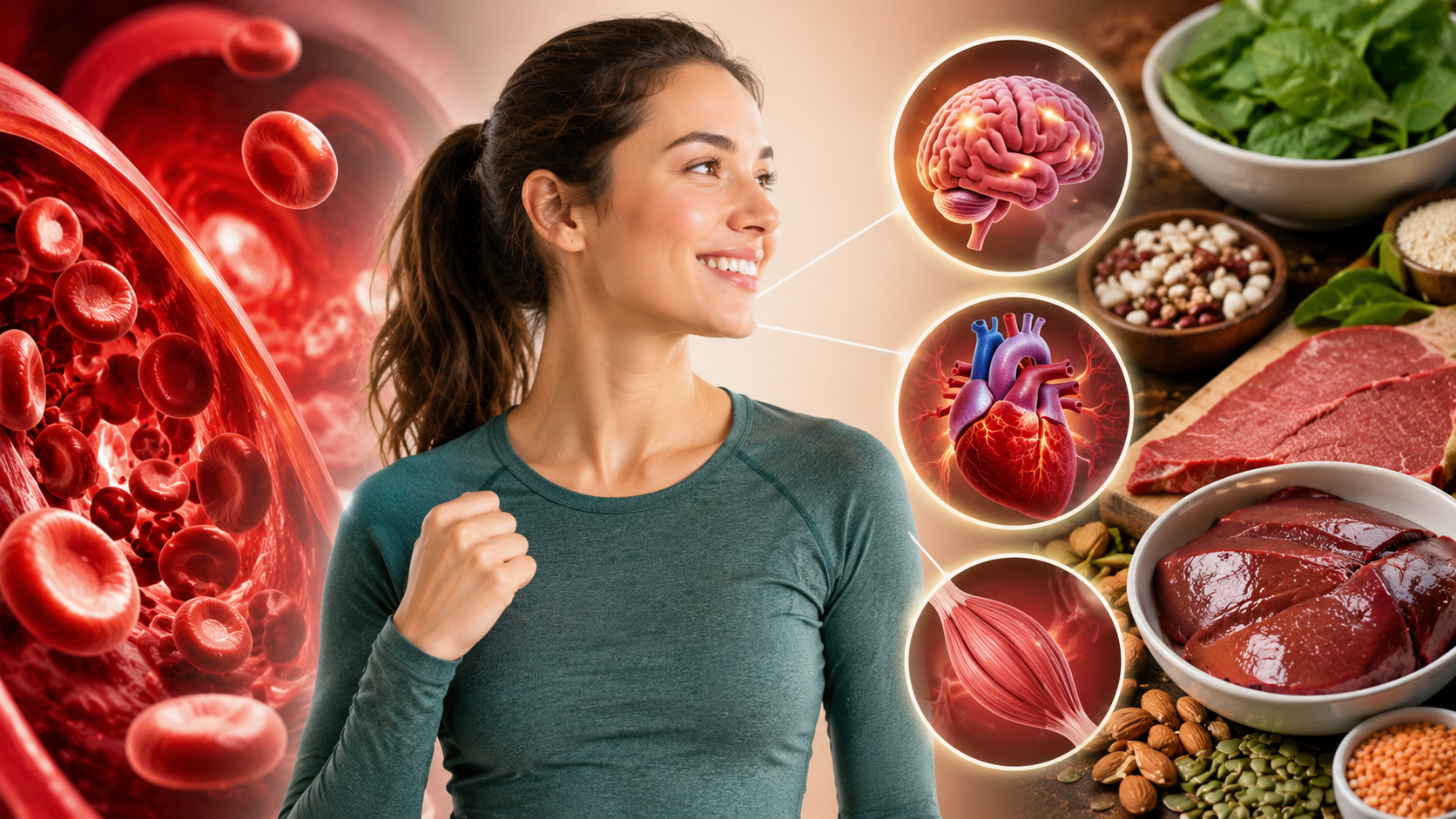
The most well-known function of iron is forming the core of hemoglobin, the protein packed inside red blood cells that binds oxygen in the lungs and carries it to every tissue in the body. Each hemoglobin molecule contains four heme groups, each built around a single iron atom, and each capable of binding one oxygen molecule – meaning a single hemoglobin molecule can carry four oxygen molecules at once. Roughly half of all the iron in your body exists as this heme iron, bound within the hemoglobin of your red blood cells.
Without enough iron, your bone marrow cannot manufacture sufficient functional hemoglobin, and the red blood cells it does produce end up smaller and paler than normal – a hallmark finding called microcytic, hypochromic anemia. Every milliliter of blood contains about 0.5 milligrams of iron, which is exactly why blood loss – whether through menstruation, injury, or internal bleeding – is one of the most direct routes to iron deficiency.
Powering Your Cells: Iron and the Mitochondria
Beyond hemoglobin, iron plays an equally critical but far less talked-about role inside the mitochondria – the energy-producing structures within nearly every cell in your body. Mitochondria require iron to form iron-sulfur clusters and heme groups, both essential cofactors incorporated into the proteins that carry out cellular respiration – the metabolic process that converts the food you eat into usable cellular energy (ATP).
This is a big part of why fatigue is one of the earliest and most universal symptoms of iron deficiency, even before anemia becomes severe enough to show up clearly on standard blood tests. Your muscles and organs simply cannot generate energy as efficiently when the iron-dependent machinery inside your mitochondria doesn’t have enough raw material to work with. Iron-containing enzymes are specifically required by skeletal muscle mitochondria to generate energy, with oxidative metabolism in muscle facilitated directly by iron-dependent proteins in the mitochondrial electron transport chain.
Brain Function: Iron’s Often-Overlooked Role
Iron crosses the blood-brain barrier through a tightly regulated transport system and participates in numerous critical processes within the central nervous system, including energy metabolism and the synthesis and breakdown of myelin and neurotransmitters – the insulating sheath around nerve fibers and the chemical messengers that allow neurons to communicate, respectively. During brain development specifically, iron plays a pivotal role in neuronal development, myelination, and neurotransmitter synthesis.
This is why iron deficiency in infancy and early childhood is taken so seriously by pediatricians: low iron levels during this developmental window are associated with an increased risk of cognitive dysfunction and impaired growth and development – effects that some research suggests can persist well beyond the period of deficiency itself, even after iron levels are later corrected.
DNA Synthesis and Cell Growth
Iron is also a required cofactor for enzymes involved directly in DNA synthesis and electron transport – processes fundamental to nearly every dividing cell in the body. This explains why iron deficiency affects far more than just blood and energy: it can impact any tissue with a high rate of cell turnover, including the gut lining, skin, hair follicles, and immune cells.
Immune Function and Muscle Health
Iron also supports a properly functioning immune system and plays a specific, protective role in muscle tissue as we age. Iron has the ability to bind free radicals, thereby reducing oxidative stress, which helps reduce muscle damage and lower the risk of sarcopenia – the age-related loss of muscle mass and strength – particularly important for older adults working to maintain mobility and independence.
How Much Iron Do You Actually Need – and Why Doesn’t the Body Make More?
The human body contains approximately 4 to 5 grams of iron in total, and unlike many other nutrients, iron levels are controlled almost entirely through absorption rather than excretion – iron excretion is largely an unregulated process, occurring through routine loss in sweat, menstruation, shed hair and skin cells, and the natural turnover of intestinal lining cells, rather than through any active mechanism your kidneys or liver can ramp up or down on demand.
Because of this, the typical adult requires between 0.5 and 1.5 mg of replacement iron daily just to offset routine losses, while infants and pregnant women require significantly more – between 2 and 5 mg daily – to support the additional demands of growth and fetal development. Since dietary iron absorption is inefficient (often well under 20%), actual recommended dietary intakes are considerably higher than these net loss figures in order to compensate.
This absorption-only regulation system is precisely why a daily, consistent dietary intake of iron matters so much. There is no internal reservoir mechanism that compensates for repeated days of low intake the way your body might buffer, say, short-term fluctuations in blood sugar. Iron status is built – or depleted – gradually, day by day, meal by meal.
The Scale of the Problem: Iron Deficiency Is Genuinely Common
It’s worth understanding just how widespread iron deficiency actually is, because the scale tends to surprise people who assume it’s a niche concern.
Global Burden of Disease data shows that the number of people with iron deficiency grew from roughly 984.6 million in 1990 to 1.27 billion in 2021, and is projected to reach nearly 1.44 billion by 2050 – meaning the absolute number of affected people continues climbing even as global rates per capita have modestly declined, largely due to population growth.
In the United States specifically, recent CDC data using the August 2021 to August 2023 NHANES survey found that anemia prevalence was 9.3% among people aged 2 and older overall, but rose to 17.4% among adolescent girls aged 12 to 19 and 14.0% among women aged 20 to 59 – reflecting the substantially elevated iron needs that come with menstruation and, for many women in this age range, pregnancy. The same report noted that anemia prevalence in women of reproductive age has actually risen since 2000, and the United States remains off track to meet the World Health Organization’s global target of reducing anemia in this group by 50% by 2025.
Who Is Most at Risk for Insufficient Iron?
Iron needs are not uniform across the population, and several groups face meaningfully elevated risk that’s worth understanding clearly.
Menstruating women and girls lose iron monthly through blood loss, which is reflected directly in the significantly higher anemia rates seen in this group compared to men of the same age.
Pregnant women require 2 to 5 mg of iron daily, well above the typical adult requirement, to support the dramatic expansion of maternal blood volume and the iron needs of the developing fetus and placenta.
Infants and young children, particularly those born preterm, face elevated risk; one study found that iron deficiency anemia prevalence among preterm infants ranges from 25% to 80% globally, driven by lower iron stores at birth combined with the rapid catch-up growth preterm infants typically undergo.
People following vegetarian or vegan diets face a structurally higher risk, since the iron available from plant sources (non-heme iron) is absorbed far less efficiently than iron from animal sources – bioavailability runs approximately 14% to 18% from mixed diets containing meat, seafood, and vitamin C, compared to just 5% to 12% from vegetarian diets.
People with chronic gastrointestinal conditions that impair absorption (such as celiac disease or inflammatory bowel disease), and anyone experiencing ongoing internal blood loss, also face significantly elevated risk and typically require medical evaluation rather than dietary adjustment alone.
Getting Enough Iron From Food: What Actually Works
Understanding the difference between the two forms of dietary iron – and what helps or hinders their absorption – makes a meaningful practical difference in how effectively your diet meets your needs.
Heme vs. Non-Heme Iron
Heme iron, found in meat, poultry, and seafood, has notably higher bioavailability than non-heme iron, and unlike non-heme iron, its absorption is largely unaffected by other foods eaten at the same meal. Non-heme iron, found in plant sources like beans, lentils, nuts, leafy greens, and iron-fortified grains, is absorbed far less efficiently and is significantly influenced by what else is on your plate.
What Boosts Absorption
Vitamin C is one of the most effective enhancers of non-heme iron absorption, working by converting iron into a more soluble, absorbable form and by directly counteracting the inhibitory effects of phytates and polyphenols. Pairing iron-rich plant foods like lentils or spinach with vitamin C sources – citrus fruits, bell peppers, tomatoes, or broccoli – is a simple, evidence-backed strategy worth building into regular meals.
There is also a documented “meat factor” effect: adding even modest amounts of meat, poultry, or fish to a meal containing plant-based iron has been shown to increase non-heme iron absorption two to three-fold, likely due to cysteine-containing peptides in animal protein that help shuttle iron across the intestinal lining.
What Inhibits Absorption
Several common foods and beverages can meaningfully reduce how much non-heme iron your body actually absorbs. Phytates, found in whole grains, legumes, and rice, along with polyphenols in tea, coffee, and red wine, both inhibit non-heme iron absorption in a dose-dependent way. Calcium is unique among inhibitors in that it can reduce absorption of both heme and non-heme iron, making it worth spacing calcium-rich foods or supplements away from your main iron-containing meals when possible.
Tea and coffee in particular can reduce non-heme iron absorption by as much as 50% when consumed at the same time as an iron-rich meal, though research suggests that having coffee at least an hour before or after an iron-containing meal largely avoids this effect.
A Practical Note on Vitamin C Supplementation
It’s worth being precise here, since the evidence is more nuanced than commonly assumed. While dietary vitamin C reliably enhances iron absorption from food, a study of 440 people found that adding 200 mg of vitamin C specifically to an iron supplement did not significantly improve hemoglobin or ferritin levels compared to taking the iron supplement alone, and the British Society of Gastroenterology does not routinely recommend co-supplementing vitamin C with iron tablets for this reason. The practical takeaway: prioritize pairing vitamin C-rich whole foods with iron-rich meals, rather than assuming a vitamin C supplement pill alongside an iron pill provides the same documented benefit.
Good Dietary Sources to Build Meals Around
- Heme iron (animal sources): red meat, poultry, liver, oysters, sardines, and other seafood
- Non-heme iron (plant sources): lentils, chickpeas, kidney beans, tofu, spinach, pumpkin seeds, cashews, and iron-fortified breakfast cereals and bread
This article is for educational purposes only and does not constitute medical advice. If you suspect you have iron deficiency or anemia, consult a healthcare professional for proper testing and diagnosis before starting iron supplementation, as excess iron intake can also cause harm.
Frequently Asked Questions (FAQs)
Common early signs include persistent fatigue, unusual paleness, feeling cold frequently, and difficulty concentrating – symptoms that often appear gradually before anemia is severe enough to register clearly on a basic blood test. Iron deficiency anemia is associated with cognitive impairment, fatigue, and weakened immune function once it becomes more pronounced. A blood test measuring ferritin and hemoglobin, ordered by your doctor, is the only reliable way to confirm iron status rather than relying on symptoms alone (Sharma & Verma, 2024).
Yes, but it requires more intentional meal planning than an omnivorous diet, since bioavailability runs only about 5% to 12% from vegetarian diets compared to 14% to 18% from mixed diets including meat and vitamin C. Consistently pairing iron-rich plant foods with vitamin C sources, and being mindful of tea, coffee, and calcium timing, can meaningfully close this gap (Office of Dietary Supplements, 2025).
Pregnancy dramatically increases iron demand to support both the substantial expansion of maternal blood volume and the iron requirements of the developing fetus and placenta. Pregnant women require between 2 and 5 mg of iron daily, several times the typical adult maintenance requirement, which is why prenatal vitamins are almost universally formulated with iron and why iron status is routinely screened throughout pregnancy (USPTO patent background literature, 2024).
Yes, and this is worth knowing if you take both. Calcium is distinct from other absorption inhibitors in that it can reduce the bioavailability of both heme and non-heme iron, unlike phytates and polyphenols, which only affect non-heme iron. Taking calcium supplements at a different time of day than iron-rich meals or iron supplements is a reasonable, evidence-supported strategy (NCBI StatPearls, 2023).
Yes, which is why pediatric screening for iron deficiency is taken seriously. Low iron levels in infancy and early childhood are linked to increased risk of cognitive dysfunction and poor growth and developmental outcomes, reflecting iron’s critical role in myelination and neurotransmitter synthesis during this key developmental window. Early detection and correction through pediatric care is the recommended approach (Frontiers in Nutrition, 2025).
References:
Akhtar, S., Khan, M., & Ahmed, R. (2024). Comparative prevalence of iron deficiency anemia in exclusively breastfed versus exclusively cow milk-fed infants: A cross-sectional study. Journal Name. https://www.ncbi.nlm.nih.gov/pmc/articles/PMC12107016/
Centers for Disease Control and Prevention. (2025). Anemia prevalence: United States, August 2021-August 2023. NCHS Data Brief No. 519. https://www.cdc.gov/nchs/products/databriefs/db519.htm
Harvard T.H. Chan School of Public Health. (2024). Iron. The Nutrition Source. https://nutritionsource.hsph.harvard.edu/iron/
National Institutes of Health, Office of Dietary Supplements. (2025). Iron: Fact sheet for health professionals. https://ods.od.nih.gov/factsheets/Iron-HealthProfessional/
Philpott, C. C., Jadhav, S., & Lothian, A. (2021). Down the iron path: Mitochondrial iron homeostasis and beyond. Cells, 9(11), 2554. https://pmc.ncbi.nlm.nih.gov/articles/PMC8468894/
Sharma, P., & Verma, A. (2024). Iron deficiency anemia: A global public health concern. International Journal of Clinical Biochemistry and Research, 11(4), 229-236. https://doi.org/10.18231/j.ijcbr.2024.034
Stanfield, B. (2026). Iron: Benefits, best forms, dosing, and side effects. https://drstanfield.com/blogs/articles/iron-benefits-forms-dosing-and-side-effects
U.S. National Library of Medicine. (2024). Dietary iron. In StatPearls. https://www.ncbi.nlm.nih.gov/books/NBK540969/
U.S. National Library of Medicine. (2023). Biochemistry, iron absorption. In StatPearls. https://www.ncbi.nlm.nih.gov/books/NBK448204/
Wang, X., Liu, Y., & Zhang, H. (2025). Role of iron in brain development, aging, and neurodegenerative diseases. Annals of Medicine, 57(1), 2472871. https://doi.org/10.1080/07853890.2025.2472871
Yuan, J., Li, T., & Zhao, Q. (2025). Unlocking iron: Nutritional origins, metabolic pathways, and systemic significance. Frontiers in Nutrition, 12, 1637316. https://doi.org/10.3389/fnut.2025.1637316
Zhao, Y., Chen, X., & Liu, W. (2024). Iron deficiency: Global trends and projections from 1990 to 2050. Nutrients, 16(20), 3456. https://pmc.ncbi.nlm.nih.gov/articles/PMC11510637/