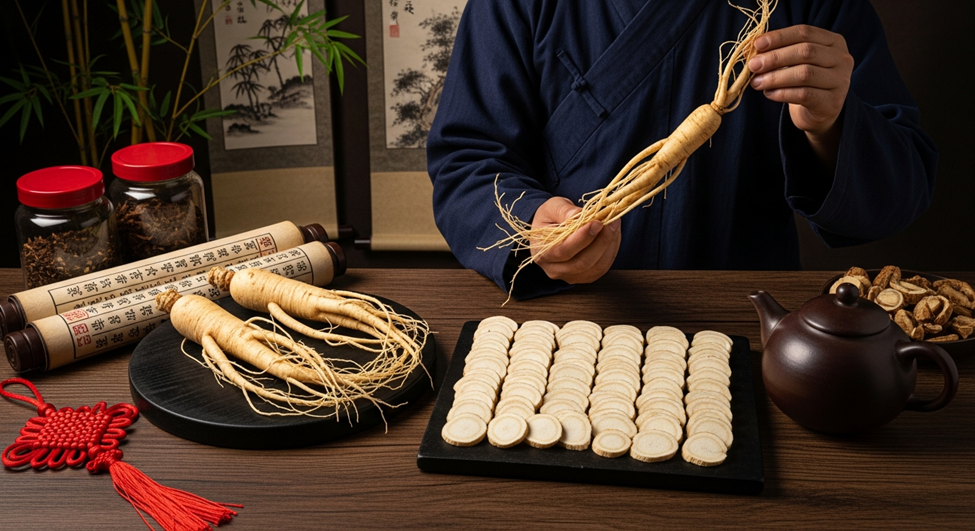
For centuries, ginseng has been cherished across Asia as a precious “living root,” a symbol of health, wisdom, and longevity. In traditional Eastern medicine, it was believed to provide abundant vitality, mental clarity, and the secret to a long life. Emperors sent expeditions to seek it, healers prescribed it to restore health, and families offered it as a treasured gift to their elders.
Today, modern research is beginning to validate these ancient values. The bioactive compounds in ginseng, particularly ginsenosides, may help the body combat stress, strengthen the immune system, enhance cognitive function, and slow cellular aging. Ginseng has moved from legend into science, bridging Eastern knowledge with modern medicine.
> Ginseng – From Eastern Longevity Traditions to Modern Science
Ginseng: A Symbol of Longevity in Eastern Culture

A Symbol of Vitality and Longevity
In Eastern thought, the human-like shape of ginseng root was seen as the embodiment of vital energy. Classical texts, such as Bencao Gangmu (Compendium of Materia Medica) by Li Shizhen, describe ginseng as a precious herb capable of balancing qi, enhancing overall health, and extending life (Li, 1596/2003). Because of this symbolic meaning, ginseng held an important place in rituals, customs, and traditional medicine.
Role in Traditional Medicine
For centuries, ginseng has been regarded as a “superior herb” in traditional Chinese and Korean medicine. Its key benefits include:
- Strengthening qi and blood: enhancing energy, endurance, and resistance to illness.
- Improving mental clarity and spirit: supporting memory, reducing fatigue, and promoting a sense of calm (Kim, 2012).
- Anti-aging: believed to preserve youthful vitality, improve skin tone, and support overall wellness (Suh & Nah, 2013).
With a long-standing reputation for boosting vitality, enhancing mental clarity, and slowing aging, ginseng continues to hold an important place as one of the most valued herbal remedies in Eastern traditions.
Cultural Value of Ginseng
Ginseng is not only a precious medicinal herb but also a cultural treasure in Eastern traditions. It was often given as a prestigious gift to elders, scholars, and rulers, symbolizing respect and wishes for longevity. Historical records show that emperors in the East dispatched expeditions deep into forests to find rare wild ginseng, treating it as a divine elixir of life (Court, 2000).
As both an ancient symbol of vitality and a scientifically recognized adaptogen, ginseng continues to stand as a bridge between tradition and modern medicine, guiding humanity on the path toward longevity and sustainable health.
Read more: Herbal Solutions to Enhance Male Physiology
Ginseng Through the Scientific Lens

While tradition regarded ginseng as a symbol of vitality, modern science has revealed the biochemical mechanisms behind its effects.
Active Compounds
Ginseng primarily contains ginsenosides-a group of saponins that influence energy metabolism, the immune system, and nervous system function. In addition, ginseng is rich in polysaccharides, peptides, and polyacetylenes, which contribute to its adaptogenic and protective effects on overall health (M Irfan, 2020).
Documented Biological Effects
Modern research has confirmed many of ginseng’s traditional uses, revealing a wide range of notable health benefits:
- Adaptogenic properties: Ginseng helps the body resist stress, improve stamina, reduce fatigue, and enhance recovery after exertion (A Szymańska, 2024).
- Cognitive support: Clinical trials indicate that ginseng boosts memory, focus, and reaction time while reducing mental fatigue (R Lee, 2024).
- Antioxidant and anti-aging effects: Ginsenosides act as antioxidants, neutralizing free radicals and reducing oxidative stress, a major contributor to aging and chronic diseases (YM Ko, 2025).
- Immune system enhancement: Ginseng polysaccharides stimulate immune cells such as natural killer cells and macrophages, improving resistance to infections and supporting overall immune defense (S Kang, 2012).
From boosting energy and cognition to strengthening immunity and slowing aging, ginseng remains one of the most extensively studied and trusted adaptogenic herbs worldwide.
Clinical Applications of Ginseng
Today, ginseng is widely studied for its diverse therapeutic potential (JJ Wee, 2011):
Cardiovascular support: improving circulation and reducing oxidative stress on blood vessels.
- Metabolic support: aiding blood sugar regulation and reducing insulin resistance.
- Neuroprotection: potential benefits in preventing Alzheimer’s disease and cognitive decline.
- Cancer support: used as an adjunct therapy to enhance immunity and reduce chemotherapy-related fatigue.
By combining centuries of traditional use with modern scientific evidence, ginseng has emerged as a natural ally in promoting resilience, vitality, and long-term health.
Learn more about: Ginseng and Cardiovascular Health – The Secret to Longevity
How to Use Ginseng to Enhance Daily Health

Applications of Ginseng in Daily Life
Ginseng is not only a symbol of vitality and longevity but is also widely used in daily health practices around the world. From traditional remedies to modern functional foods and supplements, ginseng offers a range of benefits:
- Traditional medicine: For centuries, ginseng has been used as a tonic to restore strength after illness, enhance recovery, and maintain balance in the body. It remains a key ingredient in Eastern traditional medicine (Park, 2012).
- Modern dietary supplements: Standardized ginseng extracts are available in capsules, powders, and tinctures, helping to support energy, cognition, and immunity with consistent dosing (Bilia et al., 2019)
- Functional foods and beverages: Ginseng is added to teas, coffees, and health drinks to naturally boost energy and mental clarity, often marketed as a natural alternative to synthetic stimulants.
- Cosmetics and skincare: Thanks to its antioxidant and anti-aging properties, ginseng is increasingly incorporated into creams, serums, and masks to enhance skin vitality and reduce visible signs of aging (Kim et al., 2024)
- Sports and performance: Athletes and active individuals use ginseng to improve endurance, support recovery, and reduce fatigue, taking advantage of its adaptogenic benefits (Bach et al., 2016)
In summary, ginseng has evolved from a revered herbal remedy of the past into a versatile ingredient that enhances daily health practices and fits seamlessly into modern lifestyles.
Naturem™ Glucose Guard – Natural Support for Balanced Blood Sugar and Healthy Heart
Naturem™ Glucose Guard is a scientifically formulated herbal supplement designed to help maintain stable blood sugar and cholesterol levels. It is especially suitable for individuals managing prediabetes or type II diabetes. By reducing sugar absorption and optimizing insulin function, Naturem™ Glucose Guard promotes steady energy throughout the day and helps control unhealthy cravings.

At the core of Naturem™ Glucose Guard is Ginseng extract, renowned for enhancing insulin sensitivity, boosting energy metabolism, and supporting cardiovascular health. Combined with Gymnema sylvestre, Cinnamon Bark, and Hydroxytyrosol, these ingredients work synergistically to promote overall metabolic balance and protect cells from oxidative stress.
Free from artificial additives or harsh chemicals, Naturem™ Glucose Guard offers a safe, natural solution to sustain energy, improve heart function, and support long-term metabolic health. It provides a comprehensive, plant-based path to enhanced vitality and well-being.
Conclusion
Ginseng is more than a herbal plant; it is a cultural and scientific symbol of longevity. In Eastern traditions, it was revered as a source of vitality and wisdom. Today, modern science recognizes ginseng as a powerful adaptogen that supports physical health, enhances mental resilience, and protects cells from damage.
As we seek ways to live longer and healthier lives, ginseng reminds us that the wisdom of the past and modern scientific discoveries can converge to guide our journey toward sustained health and longevity.
Frequently Asked Questions (FAQs)
Korean ginseng (Panax ginseng) is considered the most stimulating, often used to boost energy and stamina. American ginseng (Panax quinquefolius) is milder and more calming, making it popular for stress reduction and balance. Siberian ginseng (Eleutherococcus senticosus) is not a “true ginseng” but shares adaptogenic properties and is traditionally used for endurance and immune support (Kim, 2012).
Yes. Clinical studies suggest that ginseng may improve insulin sensitivity and help regulate post-meal blood glucose levels (Yuan et al., 2012). However, it should not replace medical treatment and must be used under professional guidance for those managing diabetes.
Some benefits, like increased energy or reduced fatigue, may be noticed within days to weeks. Cognitive support and anti-aging effects usually require regular use over several months. Most clinical trials test ginseng over 4–12 weeks (Zeng et al., 2024).
Ginseng is generally not recommended for children, pregnant women, or breastfeeding mothers due to a lack of safety data. Professional consultation is essential before use (Scaglione et al., 1996).
Ginseng may interact with blood thinners (such as warfarin), diabetes medications, and certain antidepressants. It’s important to consult a healthcare provider before combining ginseng with prescription drugs or high-dose supplements (Kim, 2012).