
The short answer is yes. Herbal lozenges can help relieve sore throat symptoms, but they mainly provide symptomatic relief. They soothe, lubricate, and sometimes reduce inflammation rather than curing the underlying infection. The effectiveness depends on the cause of the sore throat, the herbal ingredients, and whether stronger medicated options are needed.
Understanding What a Lozenge Brings
Lozenges provide temporary relief for a sore throat by targeting surface pain, but they do not treat the underlying medical issue.
- Soothing Mechanism: They coat and soothe the mucous membranes, reducing irritation, and may deliver mild anti-inflammatory or anesthetic effects.
- Cooling Sensation: Ingredients like menthol or Slippery elm can create a cooling effect that makes breathing feel easier.
- The Root Cause: Lozenges do not cure the cause of most sore throats:
- Viral infections usually resolve naturally within a few days.
- Bacterial infections (like strep throat) require antibiotic treatment prescribed by a doctor.
Therefore, while lozenges offer comfort, professional medical advice is essential if symptoms persist or a bacterial infection is suspected.
What Makes a Lozenge Herbal
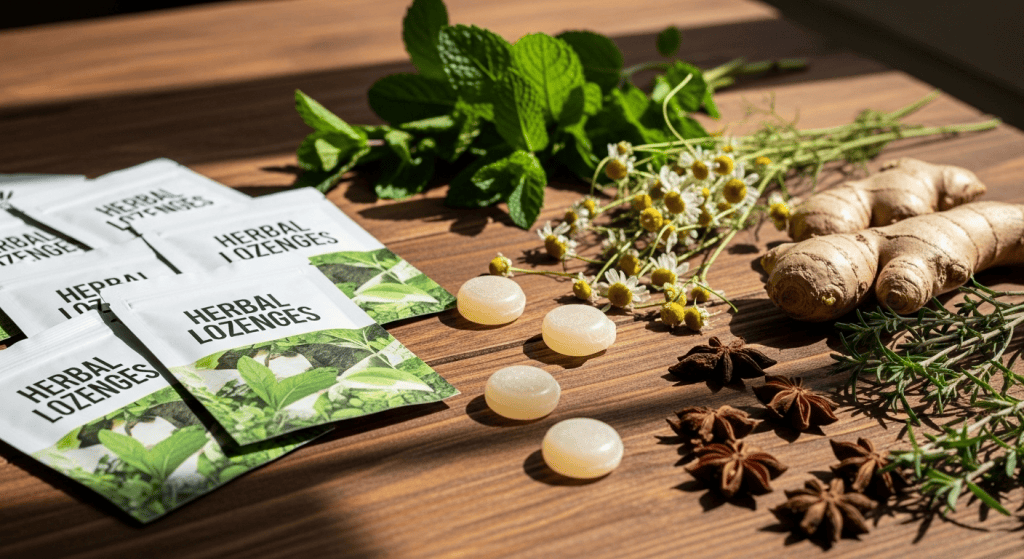
Herbal lozenges utilize various plant-derived extracts and natural ingredients, many of which have been used for centuries to soothe throat discomfort.
- Key Natural Ingredients: These often include Honey, Licorice root, Ginger, Slippery elm, and Marshmallow root.
- Eucalyptus is also a popular component for its cooling and aromatic qualities.
- Scientific Backing: Traditional use suggests these ingredients work well, and modern research lends some support, indicating certain anti-inflammatory and antimicrobial properties.
While based on time-honored practices, the specific strength and effectiveness of these herbal components can vary depending on the extract and the quality of the studies.
Key Herbal Ingredients and Their Scientific Evidence

Herbal lozenges leverage several natural ingredients, each contributing a distinct mechanism, such as coating or cooling, to ease throat discomfort.
- Honey: Acts as a soothing agent with a coating and mild antimicrobial effect. It is more effective than standard care for reducing upper respiratory symptoms, but never give it to infants under one year old. (Paediatrics & Child Health, 2012)
- Mucilage-Rich Herbs (Licorice Root, Marshmallow Root, Slippery Elm): These contain mucilage, a gel-like substance that coats the throat, protecting irritated tissues. Clinical studies support their use in demulcent mixtures to reduce pain and dryness.
- Anti-Inflammatory and Cooling Agents (Ginger, Eucalyptus, Menthol): Ginger may help reduce inflammation, while eucalyptus and menthol provide a cooling vapor that offers temporary relief from pain and congestion.
In summary, these ingredients offer effective symptomatic relief by soothing, coating, and cooling the throat, though their actions are primarily palliative rather than curative.
What Clinical Research Says About Herbal Lozenges

Recent research indicates that botanical lozenges can alleviate sore throat symptoms in people with acute or chronic pharyngitis, yet their evidence base often differs from that of medicated options.
- A 2024 clinical trial found a significant improvement in throat irritation and dryness after participants used herbal lozenges. (Frontiers in Pharmacology, 2024)
- However, many herbal studies are limited by small sample sizes or the use of diverse formulations, which can make their overall efficacy hard to determine definitively.
- By contrast, medicated lozenges containing active ingredients like flurbiprofen or benzocaine consistently show stronger and faster pain relief in well-designed randomized controlled trials.
Ultimately, while herbal lozenges offer promising, mild relief supported by some newer studies, medicated formulations currently possess a more robust evidence base for rapid, potent symptom reduction.
Herbal vs. Medicated Lozenges

Choosing the right lozenge depends entirely on your needs, weighing the gentle, natural comfort of herbal options against the proven, potent relief of medicated ones.
- Herbal Lozenges
- Advantages: They are gentle, natural, carry a low risk of side effects, are suitable for frequent use, and usually have a pleasant flavor.
- Disadvantages: They generally provide weaker pain relief compared to medicated types, and the scientific evidence can be inconsistent between different products.
- Medicated Lozenges
- Advantages: They deliver stronger and faster pain relief, which has been proven in clinical trials, making them highly useful for severe sore throats or significant voice strain.
- Disadvantages: They carry a risk of possible local irritation or allergic reactions, and some active ingredients are not suitable for children or pregnant individuals.
Ultimately, your selection should be guided by the severity of your symptoms, any allergies you may have, and your personal preferences regarding natural versus pharmaceutical treatments.
How to Use Herbal Lozenges Safely

When using lozenges, always prioritize safety and combine them with other proven methods to ensure effective symptom relief and appropriate medical care.
- Label Checks: Always read the product label carefully to check for allergens, sugar content, and specific herbal ingredients.
- Special Considerations: Choose sugar-free options if you are diabetic or use lozenges frequently, and never give honey-based products to infants under one year old. Be cautious with young children, as lozenges can be a choking hazard.
- Complementary Relief: Boost the lozenges’ effects by drinking warm fluids, gargling salt water, using a humidifier, and resting your voice.
- When to See a Doctor: Seek medical advice immediately if symptoms worsen, last longer than 10 days, or are accompanied by a fever or difficulty swallowing.
Following these precautions ensures safe usage while allowing you to maximize comfort until your sore throat resolves or you receive necessary medical treatment.
Naturem™ Cough Free: Natural Support for Persistent Cough Relief

Naturem™ Cough Free features a science-backed herbal formula inspired by traditional remedies, designed to soothe persistent coughs, calm throat irritation, and support overall respiratory health. This product focuses on relieving discomfort from chronic coughing without the side effects of conventional medications, helping you maintain daily activities and restful sleep.
Key Ingredients
- Thyme (Thymus vulgaris) – Contains thymol and carvacrol, which relax airway muscles, reduce coughing, and provide anti-inflammatory support (ScienceDirect, 2023).
- Marshmallow Root (Althaea officinalis) – Rich in mucilage, it forms a protective coating on the throat to reduce irritation and suppress dry coughs (PMC, 2019).
- Peppermint (Mentha piperita) – Menthol provides a cooling sensation, soothes throat itchiness, and offers mild antimicrobial and anti-inflammatory effects (PMC, 2024)
- Ginger (Zingiber officinale) – Gingerols and shogaols help reduce inflammation, relax airway muscles, and enhance immunity (PMC, 2020).
- Licorice Root (Glycyrrhiza glabra) – Glycyrrhizin helps loosen mucus, soothes the throat, and provides anti-inflammatory support (ScienceDirect, 2023).
How It Works
- Reduces irritation and inflammation: Herbal components work together to calm throat tissues and alleviate persistent coughs.
- Protects and nourishes the airways: Natural mucilage from marshmallow and licorice keeps the throat moist, reduces dryness, and shields respiratory tissues.
- Supports immune function and recovery: Ginger and peppermint improve circulation, enhance anti-inflammatory and antimicrobial defenses, and promote overall respiratory healing.
Naturem™ Cough Free is a reliable herbal solution that complements a holistic respiratory wellness strategy, helping to reduce coughing, soothe throat discomfort, and support natural recovery from within. It is ideal for those seeking relief from persistent coughs without relying on conventional medications.
Frequently Asked Questions (FAQs)
No. Herbal lozenges only help to soothe discomfort, such as dryness or irritation in the throat. Strep throat is a bacterial infection, so herbal products alone cannot eliminate the cause. For proper treatment, antibiotics prescribed by a doctor are necessary to fully resolve the infection. (CDC, 2025)
Many herbal lozenges are generally considered safe, but each product may contain different herbs and oils. Some ingredients may be unsuitable for pregnancy if used frequently or in large amounts. Therefore, it is best to check the ingredient list and consult a healthcare provider before using them regularly. (NIH/PMC, 2022)
Most people experience a sense of soothing relief within a few minutes as the lozenge dissolves. This happens because the lozenge stimulates saliva and coats the throat surface. However, the relief is usually mild and temporary, especially compared to medicated lozenges with active anesthetic ingredients. (PubMed, 2018)
Lozenges made with honey, licorice root, marshmallow root, slippery elm, menthol, or eucalyptus have the strongest traditional and research support. These ingredients are known for their soothing, coating, or cooling effects on irritated throat tissues. Their effectiveness varies between individuals, but they are generally recognized as reliable natural options. (PubMed, 2013)
Yes, you can make simple herbal lozenges using ingredients like honey and ginger at home. However, homemade versions may lack consistent dosage, hygiene control, and stability during storage. For everyday use, commercial products are usually more dependable and safer to use long-term. (MedlinePlus/NIH, 2025)
References:
Centers for Disease Control and Prevention. (2024). Sore throat: Overview and causes. U.S. Department of Health and Human Services. https://www.cdc.gov/sore-throat/index.html
Frontiers in Pharmacology. (2024). Efficacy of botanical lozenges in reducing throat irritation and dryness in patients with acute and chronic pharyngitis: A randomized clinical trial. Frontiers in Pharmacology, 15(3), 2024. https://www.frontiersin.org/journals/pharmacology/articles/10.3389/fphar.2024.1162883/full
Harvard Health Publishing. (2023). Natural remedies for sore throat relief. Harvard Medical School. https://www.health.harvard.edu/diseases-and-conditions/sore-throat-pharyngitis-a-to-z
Mayo Clinic. (2024). Sore throat (pharyngitis): Diagnosis and treatment. Mayo Foundation for Medical Education and Research. https://www.mayoclinic.org/diseases-conditions/sore-throat/diagnosis-treatment/drc-20351640
National Center for Complementary and Integrative Health. (2023). Honey and health: Research review. National Institutes of Health. https://www.nccih.nih.gov/health/honey-and-health-research-review
Paediatrics & Child Health. (2012). Honey for treatment of cough in children. Paediatrics & Child Health, 17(4), 205-206. https://doi.org/10.1093/pch/17.4.205
U.S. Food and Drug Administration. (2023). Over-the-counter sore throat products: What you need to know. U.S. Department of Health & Human Services. https://www.fda.gov/consumers World Health Organization. (2023). Traditional herbal medicines: Global review and clinical evidence. WHO Press. https://www.who.int/health-topics/traditional-complementary-and-integrative-medicine