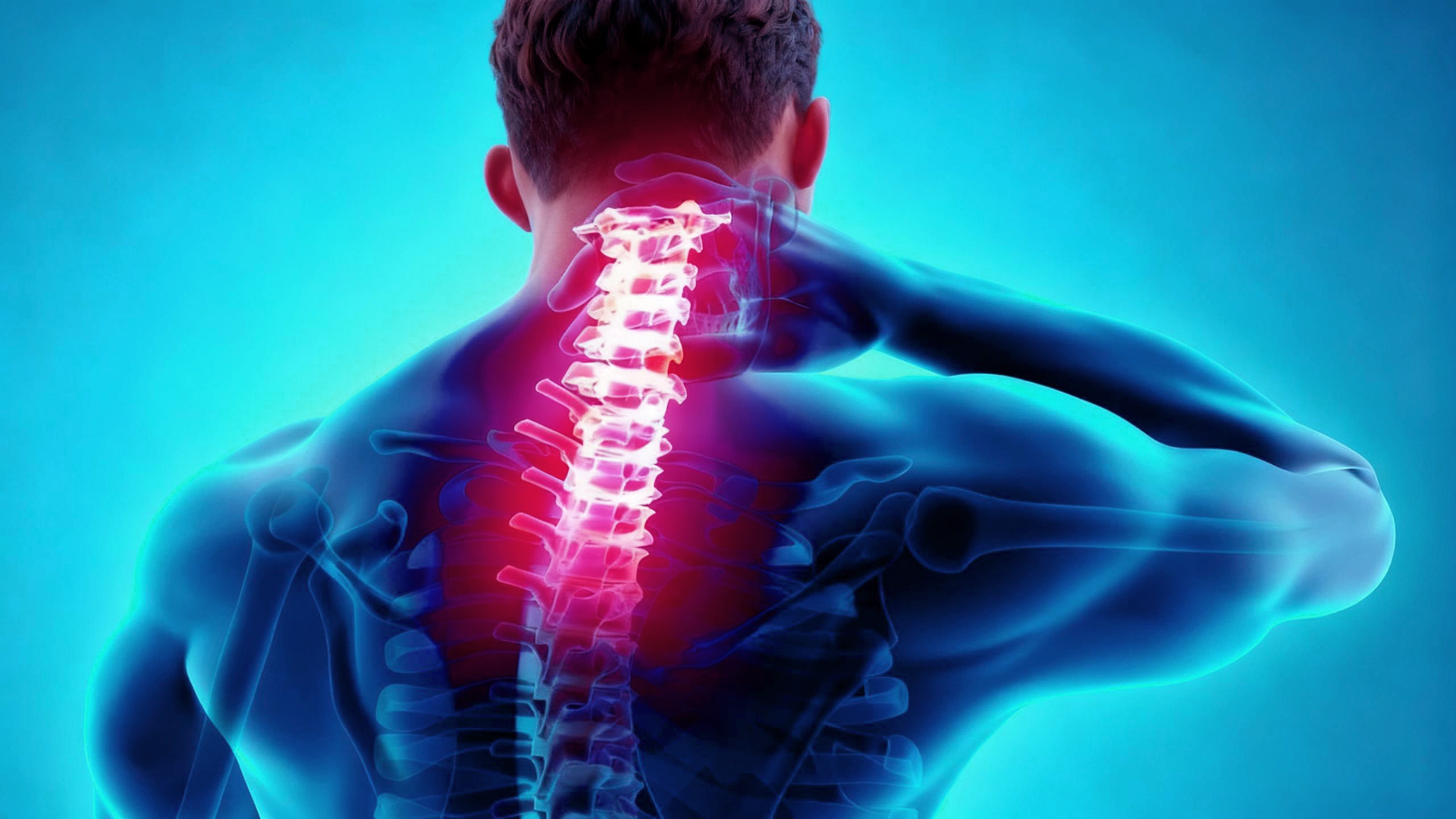
Let’s be real for a moment. You are probably reading this while hunched over a laptop or scrolling on your phone, perhaps shifting uncomfortably because of a nagging ache in your lower back. You are likely in your late 20s or early 30s – the prime of your life. Yet, your back feels like it belongs to someone twice your age.
You are not alone. There is a silent epidemic sweeping through modern workspaces: early-onset herniated discs.
Historically, degenerative spine issues were the territory of the elderly or heavy laborers. Today, however, I am diagnosing an alarming number of young professionals – software engineers, graphic designers, writers – with serious spinal pathology. The culprit isn’t heavy lifting; it is the sedentary marathon of the 9-to-5. As a physician bridging Traditional Vietnamese Medicine and Modern Western Science, I want to help you understand the biology of your back and how to fix it without immediately resorting to surgery.
The Biomechanics of the “Desk Sentence”
To understand why sitting is dangerous, we have to look at the engineering of the human vertebral column. Your spine is a stack of bones called vertebrae, cushioned by shock-absorbing pads known as intervertebral discs.
Think of these discs like a jelly doughnut. They have a tough outer tire called the annulus fibrosus and a soft, gel-like center called the nucleus pulposus.
The Ischemia Effect: Starving Your Spine
Here is the scientific kicker: Discs are avascular. This means they do not have their own blood supply. They are one of the few tissues in your body that rely entirely on motion to survive.
When you move, you create a “pump” effect that sucks oxygen and glucose into the disc and pushes waste products out. When you sit still for hours, that pump stops.
- Hypoxia: The cells inside the disc begin to suffocate from a lack of oxygen (hypoxia).
- Acidosis: Waste products accumulate, making the environment inside the disc acidic, which kills the cell matrix.
Pressure Cooker Physics
You might think sitting is “resting,” but physics disagrees. Studies on intradiscal pressure show that sitting places roughly 40% to 90% more pressure on your lumbar spine (lower back) than standing does. If you slouch forward to type? That pressure spikes even higher.
Over time, the tough outer wall (annulus) cracks. The gel center (nucleus) pushes out through the crack and compresses a nearby spinal nerve root. This is a herniated disc.
The Compounding Risks of the Modern Office
The damage doesn’t stop at the disc. The modern office ecosystem attacks your musculoskeletal health from multiple angles.
- Tech Neck (Cervical Kyphosis): Your head weighs about 10-12 pounds. For every inch you tilt it forward to look at a screen, the load on your neck doubles. At a 60-degree angle (typical smartphone use), that is 60 pounds of force on your cervical spine.
- Gluteal Amnesia: When you sit on your glutes all day, they forget how to fire. This forces your lumbar paraspinal muscles to overwork, leading to spasms and fatigue.
- Chronic Inflammation: A sedentary lifestyle is linked to higher levels of systemic inflammatory markers like C-reactive protein. This means when you do get a micro-injury, your body overreacts with pain.
If you are currently experiencing shooting electrical pain down your leg (sciatica), numbness in your toes, or a burning sensation in your neck, these are not just “aches.” They are warning signals of nerve compression.
The Hybrid Recovery Protocol: Mechanical Biohacks + Herbal Repair for Office Bodies
We cannot always quit our jobs, but we can “biohack” our recovery. As a doctor, I advocate for a hybrid approach: fixing the mechanics and using high-potency herbal medicine to repair the chemistry.
1. Mechanical Biohacks for the Office
- The “Anti-Creep” Stretch: Spinal tissues deform over time (a process called viscoelastic creep). To reverse this, stand up every 30 minutes, place your hands on your lower back, and gently lean backward for 10 seconds.
- Sit-Stand Variability: Don’t just stand all day (that causes vein issues). Alternate: Sit for 45 minutes, stand for 15.
- Monitor Height: The top of your screen should be at eye level. If you are looking down, you are damaging your neck.
2. Traditional Medicine: The Herbal Repair Kit
While Western medicine offers NSAIDs (Ibuprofen) which can damage the stomach lining, Traditional Vietnamese Medicine provides powerful anti-inflammatory alternatives that support tissue regeneration.
- Clinacanthus Nutans: This is a powerhouse herb in Vietnamese folk medicine. It is traditionally used to reduce hematomas and calm the inflammatory fire around damaged nerves.
- Eclipta Prostrata: In traditional theory, the kidneys govern bone health. This herb supports the “Kidney Yin,” strengthening the structural integrity of the skeletal system.
- Hydrolyzed Collagen: The annulus fibrosus is made largely of Type I collagen. Supplementing with bioavailable collagen peptides provides the raw building blocks for disc repair.
Expert Recommendation: It is difficult to source these herbs individually and prepare them correctly. I often recommend scientifically formulated blends that combine these specific ingredients.
For a more comprehensive approach, Naturem™ Joints+ combines the structural support of collagen with the anti-inflammatory power of medicinal herbs. This dual-action approach-calming the pain while feeding the tissue-is essential for long-term recovery. You can research the efficacy of these specific formulations further at svkherbal.com or explore the rich history of these ingredients at herbsofvietnam.com.
Your Spine-Saving Daily Routine
Consistency beats intensity. Here is a realistic protocol for the office worker.
| Time | Protocol | Why? |
| 07:00 AM | Hydrate: Drink 500ml water immediately. | Discs rehydrate via osmosis while you sleep. |
| 08:30 AM | Commute: Use a lumbar roll in your car seat. | Prevents the lower back from rounding out (flexion). |
| 10:00 AM | Micro-Break: Stand up. Do 5 “air squats.” | Activates the glutes and pumps blood to the spine. |
| 12:30 PM | Lunch Walk: Walk for 15-20 minutes. | Gait cycle movement naturally mobilizes the spinal joints. |
| 03:00 PM | Herbal Support: Take your Naturem™ Joints+ supplement. | Maintains anti-inflammatory levels during the afternoon slump. |
| 08:00 PM | Floor Decompression: Lie on the floor, legs on a chair (90-degree angle). | Takes gravity completely off the spine to relieve pressure. |
If you are looking to dive deeper into how lifestyle impacts your long-term health, I highly recommend reading the wellness guides available on naturem.us.
Naturem™ Joints+: Nourishing Joint Health from Within
True joint strength begins inside the body, where organs, circulation, and metabolism work together to protect bones and connective tissues. Naturem™ Joints+ combines traditional Vietnamese herbal wisdom with modern nutritional science to restore that harmony. Its natural formula targets the root causes of stiffness and discomfort, helping the body repair cartilage, regulate inflammation, and maintain long-term mobility.
Each capsule delivers a synergistic blend of Collagen Peptides, Drynaria Fortunei, Clinacanthus Nutans, Rhizoma Homalomena, and Tinospora Sinensis. Together, they strengthen bones, enhance circulation, and support the body’s natural healing processes. Designed for daily use, Naturem™ Joints+ helps you move with ease, balance, and confidence, the way your body was meant to.
Frequently Asked Questions (FAQ)
Statistically, probably not. Surgery is usually reserved for cases where there is significant muscle weakness (foot drop) or loss of bladder/bowel control (Cauda Equina Syndrome). For pain alone, conservative care is the gold standard.
Yes, but you must modify. Avoid exercises that compress the spine under load, such as heavy barbell squats or overhead presses, until you are healed. Focus on core stability (like planks) rather than flexion (sit-ups).
This is called radiculopathy. The disc in your lower back is pinching the sciatic nerve roots that travel down to your leg. The brain interprets the signal as pain in the leg, even though the injury is in the spine.
Acute flare-ups often calm down within 4 to 6 weeks. However, complete remodeling of the disc tissue can take 3 to 12 months. Patience and adherence to your herbal and ergonomic routine are key.
References
Zhong, M., Liu, J. T., Jiang, H., Mo, W., Yu, P. F., Li, X. C., & Xue, R. R. (2017). Incidence of Spontaneous Resorption of Lumbar Disc Herniation: A Meta-Analysis. Pain Physician, 20(1), E45-E52.
Daily, J. W., Yang, M., & Park, S. (2016). Efficacy of Turmeric Extracts and Curcumin for Alleviating the Symptoms of Joint Arthritis: A Systematic Review and Meta-Analysis of Randomized Clinical Trials. Journal of Medicinal Food, 19(8), 717-729. https://doi.org/10.1089/jmf.2016.3705
Nachemson, A. L. (1981). Disc pressure measurements. Spine, 6(1), 93-97.
O’Connell, G. D., Vresilovic, E. J., & Elliott, D. M. (2011). Human Intervertebral Disc Internal Strain in Compression: The Effect of Degeneration. Spine, 36(26), 1761-1767.
Urban, J. P., Smith, S., & Fairbank, J. C. (2004). Nutrition of the intervertebral disc. Spine, 29(23), 2700-2709.
Wong, A. Y. L., Karppinen, J., & Samartzis, D. (2017). Low back pain in older adults: risk factors, management options and future directions. Scoliosis and Spinal Disorders, 12, 14. https://doi.org/10.1186/s13013-017-0121-3