
You have tried the diets, you have increased your cardio, and you have cut calories, yet that stubborn tire around your midsection refuses to budge. As a medical doctor who bridges the gap between traditional herbal wisdom and modern endocrinology, I often tell my patients: weight regulation is fundamentally an endocrine process governed by stress signaling, insulin dynamics and sex hormone balance.
The accumulation of adipose tissue in the lower abdomen is rarely just a result of overeating. Instead, it is often a red flag waving from your endocrine system, signaling deep-seated imbalances in cortisol, insulin, and testosterone. Understanding the biology behind this hormonal belly is the first step toward reclaiming your physique and your vitality.
The Cortisol Conundrum: Why Stress Equals Fat

In our modern, high-pressure world, stress is the invisible enemy of a lean physique. When your brain perceives a threat – whether it is a looming deadline or financial worry, your adrenal glands flood your system with cortisol. This is a survival mechanism, but when chronically activated, it becomes metabolic sabotage.
> For a deeper breakdown of the physiology, read How High Cortisol Causes Lower Belly Fat Accumulation.
Survival Biology and Storage
Cortisol specifically targets the abdominal area for fat storage. Why? Because visceral fat (fat stored deep inside the belly) has a higher density of cortisol receptors and provides a quick energy source for the fight or flight response. This phenomenon is often referred to as the cortisol conundrum, where the body prioritizes survival storage over burning calories.
High cortisol levels also break down muscle tissue to create glucose, which in turn spikes insulin. This double-whammy makes it nearly impossible to lose weight without first addressing the stress response. Learning how to lower cortisol levels through science-backed strategies is not just about relaxation, it is a metabolic necessity for shrinking the waistline.
The Insulin Trap: Why Your Body Won’t Let Go

Cortisol does not act alone. Repeated stress elevates blood glucose, forcing the pancreas to release more insulin. Over time, this constant stimulation leads to insulin resistance, a condition in which cells stop responding efficiently to insulin’s signal.
When insulin remains chronically elevated, fat burning shuts down. The body interprets this hormonal environment as a signal to store energy, particularly in the lower abdomen. Without correcting insulin signaling, attempts to reduce lower belly fat often fail despite calorie restriction.
> The mechanism behind this insulin-driven fat lock is examined in detail in Why High Insulin Prevents Lower Belly Fat Loss.
Testosterone: The Metabolic Engine
While cortisol is the gas pedal for belly fat, testosterone is the brake. In both men and women, testosterone plays a critical role in muscle maintenance and fat metabolism. However, we are currently seeing a global decline in this hormone, contributing to what is now widely recognized as the silent hormonal collapse associated with chronic stress.
The Vicious Cycle of Low Testosterone

Understanding testosterone reveals its role as the hormone that shapes our body composition. When levels drop, muscle mass decreases, slowing your metabolic rate. Worse, belly fat cells produce an enzyme called aromatase, which converts existing testosterone into estrogen. This creates a vicious cycle: low testosterone causes belly fat, and belly fat further lowers testosterone.
Recognizing low testosterone symptoms early, such as fatigue, mood changes, and weight gain is crucial. Testosterone is not just for bodybuilders, it is the essential hormone of vitality that keeps your metabolic fire burning. If you are unsure of the basics, it is worth reading up on what is testosterone and why it matters to fully grasp its impact on your long-term health.
Visceral vs. Subcutaneous: The Danger Within

Not all belly fat is equally dangerous. Deep abdominal fat behaves very differently from the fat stored under the skin. To understand this difference in detail.
> Explore the distinction between visceral fat and subcutaneous fat.
The Toxic Spare Tire
It is vital to beware of belly fat because visceral adipose tissue acts as an active endocrine organ. It continuously releases inflammatory cytokines that disrupt insulin sensitivity and suppress testosterone production, reinforcing the hormonal loop that drives abdominal fat accumulation. It pumps out inflammatory cytokines that attack your blood vessels and organs.
Understanding why belly fat is dangerous requires looking at the hidden difference between these fat types. This deep fat is directly linked to insulin resistance, heart disease, and chronic inflammation.
Inflammation: The Root of the Problem
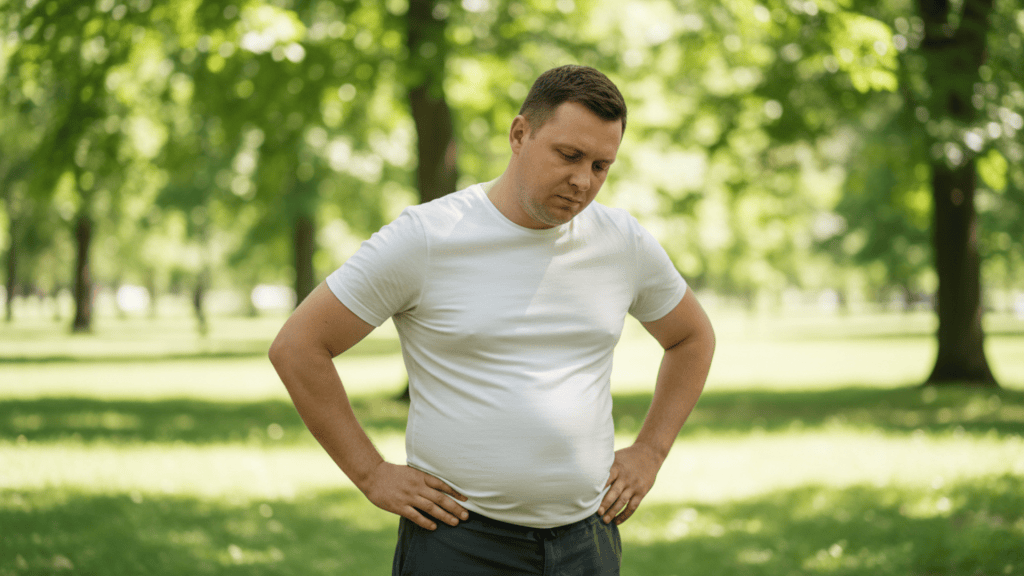
The presence of excess visceral fat triggers a state of systemic alarm. The cytokines released by fat cells lead to chronic inflammation symptoms, such as joint pain, brain fog, and persistent fatigue.
This inflammation further disrupts hormonal signaling, blunting the body’s response to leptin (the fullness hormone) and suppressing testosterone production. When considering treatment options for chronic inflammation, we must look beyond drugs and focus on extinguishing the fire through lifestyle and herbal interventions.
Natural Solutions: Reversing the Damage
The good news is that because this fat is metabolically active, it responds well to the right interventions.
Diet and Movement
To lose belly fat naturally, you must adopt a diet that manages insulin and lowers inflammation. This involves intermittent fasting, high-protein intake, and removing processed sugars. Exercise should focus on heavy compound lifting to stimulate testosterone receptors, rather than just endless cardio.
Herbal Support and Boosters
Nature offers powerful tools to help reset this balance. Navigating the world of supplements can be tricky, so consulting a testosterone boosters guide is recommended to understand the benefits and risks.
We know that low libido often accompanies belly fat due to the hormonal dip. Exploring evidence-informed botanical strategies can be helpful, and a curated overview such as the Top 10 Natural Herbal Supplements provides a practical starting point for understanding which adaptogens may support stress resilience and endocrine balance.
Targeted Support: The Naturem Approach
For those who have dialed in their diet and sleep but still struggle with that final layer of stubborn fat and low energy, targeted supplementation may serve as an adjunct strategy within a structured hormonal restoration plan.
Stamina and Balance

I often recommend formulas that address both stress physiology and androgen signaling within a broader lifestyle framework. Naturem™ Stamina Capsules were formulated to align with this integrative framework. Rather than acting as a quick fix, such formulations are intended to support stress adaptation and endocrine balance alongside proper sleep, resistance training, and metabolic nutrition.
Conclusion
Lower belly fat is a visible biomarker of internal endocrine stress, not an isolated cosmetic issue. It is a visual representation of what is happening inside your endocrine system. By addressing the root causes, specifically the interplay between high cortisol, low testosterone, and systemic inflammation, you can stop fighting your body and start healing it. Through mindful nutrition, stress regulation, and targeted endocrine support when appropriate, it becomes possible to restore hormonal balance and improve body composition in a sustainable way.
Frequently Asked Questions (FAQ)
No, spot reduction is a myth. You cannot burn fat specifically from one area by doing crunches. You must lower your overall body fat percentage through diet and hormonal balance, and your body will mobilize fat from the belly when cortisol levels are managed.
If your fat is concentrated primarily around the midsection while your arms and legs remain relatively thin, this is a classic sign of cortisol belly or insulin resistance. Other signs include sugar cravings, afternoon fatigue, and difficulty sleeping.
No. Women have naturally lower levels of testosterone than men. Natural herbal boosters help balance hormones within a physiological range for women, aiding in fat loss and mood stabilization without causing masculine features.
It typically takes 4 to 8 weeks of consistent lifestyle changes (better sleep, adaptogens, diet) to lower baseline cortisol levels. Once cortisol drops, visceral fat begins to mobilize more easily during exercise.
Absolutely not. In fact, visceral fat is metabolically active, meaning it is often the first fat to go when you start exercising and fasting, provided your hormones are balanced.
References
Bjorntorp, P. (2001). Do stress reactions cause abdominal obesity and comorbidities?. Obesity Reviews, 2(2), 73-86.
Grossmann, M. (2014). Testosterone and glucose metabolism in men: Current concepts and future directions. Journal of Endocrinology, 220(3), R37-R55.
Kelly, D. M., & Jones, T. H. (2013). Testosterone: a metabolic hormone in health and disease. Journal of Endocrinology, 217(3), R25-R45.
Pasquali, R., et al. (2006). The hypothalamic-pituitary-adrenal axis activity in obesity and the metabolic syndrome. Annals of the New York Academy of Sciences, 1083(1), 111-128.Travison, T. G., et al. (2007). The relative contributions of aging, health, and lifestyle factors to serum testosterone decline in men. The Journal of Clinical Endocrinology & Metabolism, 92(2), 549-555.