
In the modern world, meals are often treated as tasks to be completed rather than experiences to be savored. However, your metabolism operates on a biological clock that cannot be rushed. Emerging research suggests that the speed at which you eat is a significant, independent risk factor for metabolic dysfunction and Type 2 Diabetes.
The “Satiety Gap”: Why Your Brain is Behind
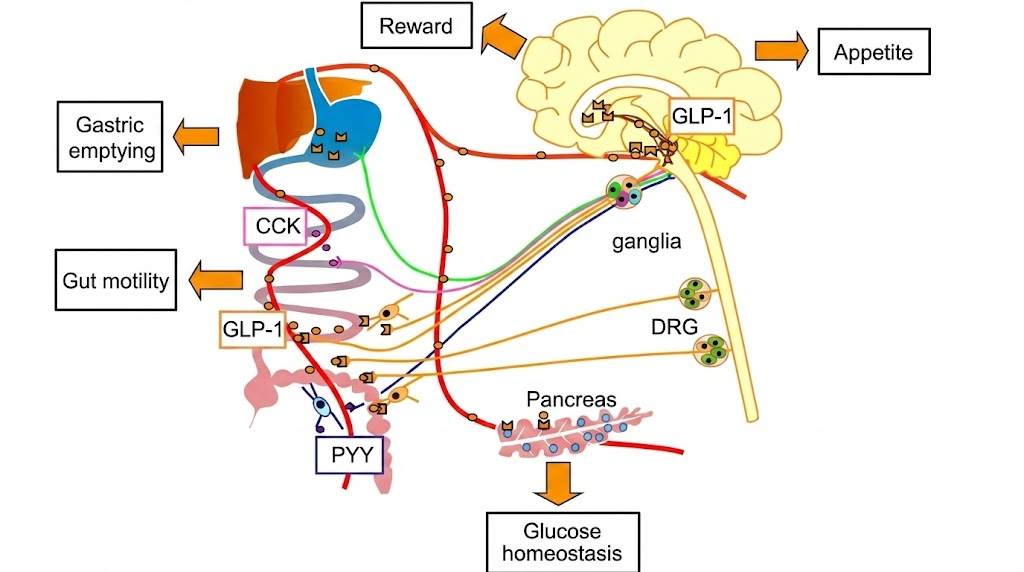
The human body does not register fullness instantly. It relies on a complex gut-brain axis to signal when enough energy has been consumed.
When food enters the digestive tract, hormones such as Cholecystokinin (CCK) and Glucagon-like peptide-1 (GLP-1) are released to signal the hypothalamus. This process takes approximately 20 minutes. If you finish a meal in under 10 minutes, you bypass these “metabolic brakes,” leading to:
- Hyperphagia: Overeating because the brain still perceives a “hunger” state.
- Hormonal Imbalance: Suppressed levels of Leptin (the fullness hormone) and elevated Ghrelin (the hunger hormone).
Therefore, the key to controlling weight and digestive health lies in ‘slowing down’ at the dining table. Spend at least 20 to 30 minutes on each meal to allow your brain and stomach to synchronize. This ensures you stop at the right time and stay healthier every day.
The Mechanics of a Glucose Spike

Rapid eating leads to a physiological phenomenon known as a Postprandial Glucose Excursion. When you eat quickly, large amounts of glucose enter the bloodstream simultaneously.
According to the American Diabetes Association, the pancreas responds by secreting a massive surge of insulin to manage this sudden influx. Over time, these repeated “shocks” to the system lead to:
- Insulin Resistance: Cells become desensitized to insulin due to chronic overexposure.
- Reactive Hypoglycemia: An overproduction of insulin that causes blood sugar to “crash” shortly after a meal, leading to fatigue and further sugar cravings.
The relationship between glucose concentration (C) and time (t) during a rapid meal can be visualized as a steep curve where the peak (max C) far exceeds the body’s ideal threshold.
Clinical Evidence: What the Research Says

The link between eating speed and disease is not merely anecdotal; it is backed by rigorous clinical data.
- The 2.5x Risk Factor: A study published in BMJ Open found that individuals who characterize themselves as “fast eaters” had a significantly higher risk of developing metabolic syndrome.
- The NIH Perspective: The National Institutes of Health (NIH) has highlighted research showing that slow eaters produce higher levels of gut hormones that decrease the desire to eat.
- Weight & BMI: The World Health Organization (WHO) identifies rapid eating as a behavioral contributor to obesity, which is the primary precursor to blood sugar mismanagement.
Therefore, the key to weight management and digestive health is to ‘slow down’ at the dining table. Spend at least 20 – 30 minutes on each meal to allow your brain and stomach to synchronize, helping you stop at the right time and become healthier every day.
Strategic Interventions for Better Control
To improve your metabolic health, focus on mastication (chewing) and pacing.
| Technique | Metabolic Benefit |
| Fiber – First Sequencing | Eating fiber before carbohydrates creates a physical buffer, slowing glucose absorption. |
| 30 – Chew Goal | Breaks food into smaller particles, increasing surface area for digestive enzymes. |
| The 20 – Minute Timer | Ensures the gut – brain signaling has time to reach the hypothalamus. |
Naturem™ Glucose Guard: A Comprehensive Herbal Solution for Blood Sugar Control

In addition to adjusting your eating speed, incorporating natural herbal essences offers a breakthrough solution for more stable blood glucose management, especially for those with a busy lifestyle. Naturem™ Glucose Guard is specifically designed to support the metabolic process through four core actions:
- Sustainable Blood Sugar Stability: The synergy of Gymnema Sylvestre and Gynostemma Pentaphyllum helps reduce glucose absorption in the gut and prevents post-meal blood sugar spikes – even if you happen to eat too quickly.
- Stimulating Natural Insulin: Active compounds in Ginseng support pancreatic recovery and improve insulin sensitivity, helping to unlock “rusty” cellular locks and convert sugar into energy efficiently.
- Comprehensive Complication Prevention: Hydroxytyrosol (Olive extract) acts as a powerful antioxidant, protecting blood vessels and nerves from the oxidative stress caused by prolonged high blood sugar.
- Lipid Support: The formula improves cholesterol levels and reduces visceral fat – addressing the root causes of inflammation and insulin resistance.
The key to protecting your metabolic system lies in combining the habit of “slowing down” at the dining table with the support of nature. By dedicating at least 20 – 30 minutes to each meal, you allow your body to synchronize its biological signals. Coupled with the daily use of Naturem™ Glucose Guard, you can maintain blood sugar levels within a safe range, empowering you to live a healthier, more active, and proactive life.
Frequently Asked Questions (FAQ)
While eating fast is not the sole cause, it is a major contributor. By causing frequent blood sugar spikes and forcing high insulin production, it accelerates the onset of insulin resistance, a primary driver of Type 2 Diabetes. BMJ Open: Effects of changes in eating speed on obesity in patients with diabetes
Yes. Studies have shown that even when the calorie count is identical, slowing down the rate of ingestion results in a lower peak glucose level and improved post-meal satiety. The Journal of Clinical Endocrinology & Metabolism: Eating slowly increases the postprandial response of anorexigenic gut hormones
Common signs include the “post-meal slump” (extreme tiredness 30–60 minutes after eating), frequent hunger shortly after a large meal, and increased abdominal fat (visceral fat), which is highly sensitive to insulin fluctuations. NIH: Understanding the “Food Coma” and Glucose Spikes
Most health experts, including those cited by Harvard Health, recommend chewing each bite 20 to 30 times. This not only aids digestion but naturally extends the duration of the meal. Harvard Health Publishing: Mindful eating may help with weight loss
References
American Diabetes Association. (n.d.). Blood glucose and insulin. https://diabetes.org/about-diabetes/high-blood-sugar
Harvard Health Publishing. (2023, April 18). Mindful eating. Harvard Medical School. https://www.health.harvard.edu/staying-healthy/mindful-eating
Hurst, Y., & Tamakoshi, H. (2018). Effects of changes in eating speed on obesity in patients with diabetes: A secondary analysis of tertiary care cohort data. BMJ Open, 8(2), e019589. https://doi.org/10.1136/bmjopen-2017-019589
Manson, J. E., & Rexrode, K. M. (2024). The role of lifestyle intervention in metabolic health. National Institutes of Health. https://pubmed.ncbi.nlm.nih.gov/25278771/
National Institute of Diabetes and Digestive and Kidney Diseases. (n.d.). Insulin resistance & prediabetes. U.S. Department of Health and Human Services. https://www.niddk.nih.gov/health-information/diabetes/overview/what-is-diabetes/prediabetes-insulin-resistance
Prince, A. C., Adamo, K. B., & Vincent, R. S. (2014). The role of the gastrointestinal tract in satiety signaling and the effects of variations in dietary intake. Journal of Gastroenterology, 49, 1–15. https://www.taylorfrancis.com/chapters/mono/10.1201/9781420047844-14/role-gastrointestinal-tract-satiation-satiety-food-intake-evidence-research-humans-ruth-harris-ruth-harris-richard-mattes
Shukla, A. P., Iliescu, R. G., Thomas, C. E., & Aronne, L. J. (2015). Food order has a significant impact on postprandial glucose and insulin levels. Diabetes Care, 38(7), e98–e99. https://doi.org/10.2337/dc15-0429
World Health Organization. (2024, March 1). Obesity and overweight. https://www.who.int/news-room/fact-sheets/detail/obesity-and-overweight