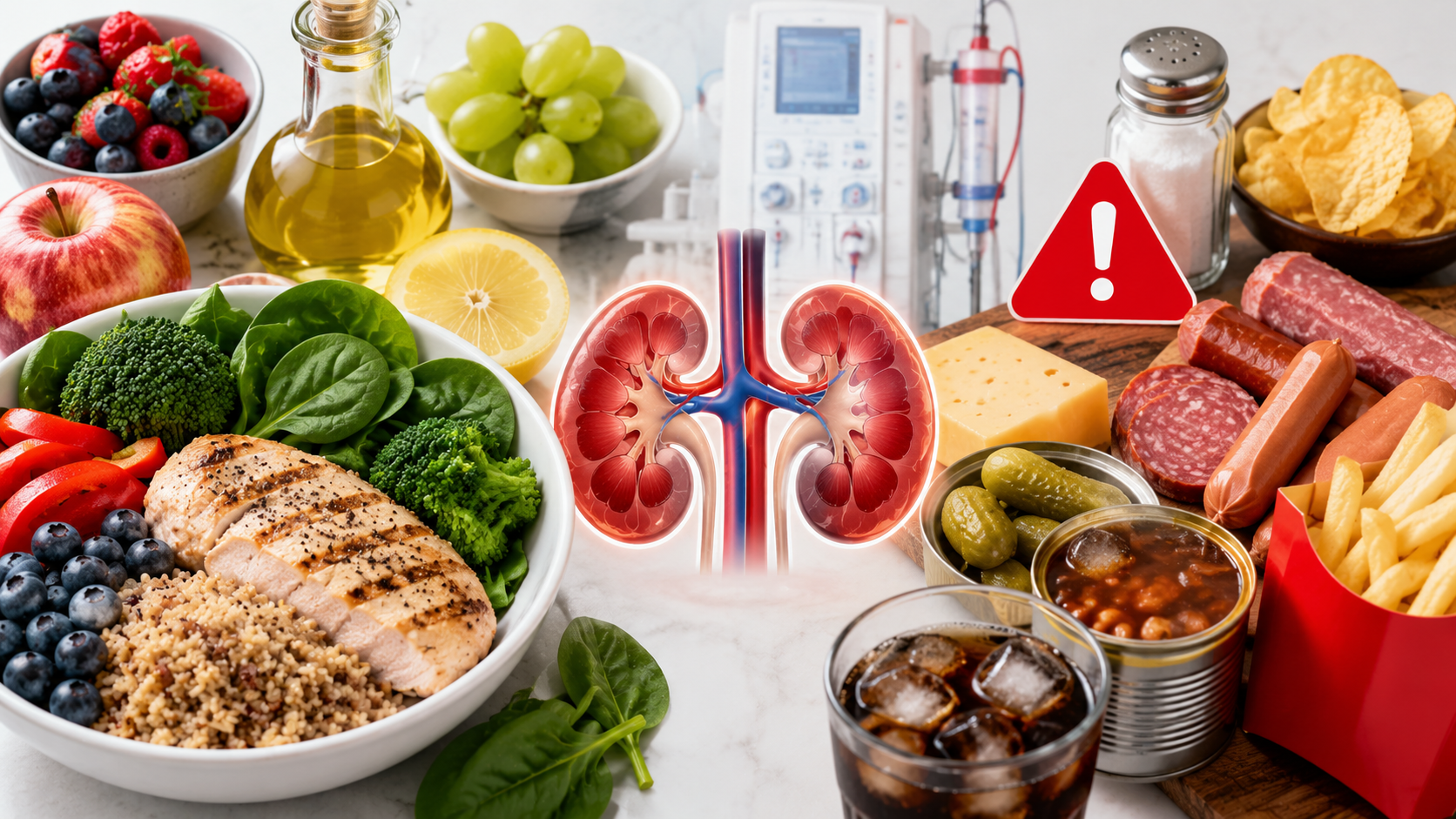
Starting dialysis changes almost everything about how you eat. Foods that were once perfectly healthy, a banana, a handful of almonds, a glass of orange juice, can suddenly become risky when your kidneys can no longer filter and balance your blood the way they used to. It is disorienting, and it is completely understandable to feel overwhelmed the first time a renal dietitian hands you a list of restrictions instead of the usual “eat more fruits and vegetables” advice most of us grew up hearing.
The truth is that once dialysis takes over part of your kidneys’ job, food becomes one of the most powerful tools you have to protect your heart, bones, and overall stability between treatments. This guide walks through exactly what to eat, what to limit, and why each recommendation exists, so the dialysis diet feels less like a punishment and more like a plan you can actually work with.
Why Diet Becomes Medicine When You’re on Dialysis
Dialysis performs some of the work your kidneys can no longer do, filtering waste and excess fluid from your blood, but it cannot replicate everything a healthy kidney does around the clock. According to the National Kidney Foundation, dialysis only partially removes certain minerals and fluid, which means the amount you take in through food and drink between sessions directly affects how you feel and how safely your next treatment goes.
This is why a dialysis diet is not a generic “healthy eating” plan. It is a highly individualized strategy built around your specific lab values, dialysis schedule, and remaining kidney function, and it typically requires close collaboration with a renal dietitian who can adjust your targets over time.
The Four Nutrients Every Dialysis Patient Must Watch
Sodium
Excess sodium causes your body to retain fluid and increases thirst, both of which make fluid management between dialysis sessions significantly harder. The National Kidney Foundation recommends most people on dialysis aim for less than 2,300 milligrams of sodium per day, roughly a quarter teaspoon of salt, and specifically advises avoiding processed meats, most canned foods, salty seasonings like soy sauce, and salt substitutes that contain potassium.
Potassium
Potassium keeps your heart beating at a steady rhythm and supports normal nerve and muscle function, but both too much and too little can be dangerous. Because dialysis can remove varying amounts of potassium depending on the type and frequency of treatment, the National Kidney Foundation notes that your doctor will check your levels regularly and adjust how much potassium-rich food you should eat accordingly, rather than applying a blanket restriction to everyone.
Phosphorus
Phosphorus is one of the trickiest minerals to manage because dialysis cannot remove all of the excess from your blood. Left unchecked, high phosphorus pulls calcium out of your bones, weakening them over time and increasing the risk of dangerous calcification in blood vessels, according to guidance from NIDDK on peritoneal dialysis nutrition. Packaged and processed foods are a particular concern here, since manufacturers often add inorganic phosphorus additives that are absorbed more readily than the phosphorus naturally found in whole foods.
Fluid
Because your kidneys no longer effectively remove excess fluid, everything you drink, and many foods that are liquid at room temperature, counts toward your daily fluid allowance. According to Cleveland Clinic, soup, ice cream, gelatin, and gravy all count toward this limit, and fluid buildup between sessions can cause swelling, high blood pressure, and shortness of breath, while overly rapid fluid removal during treatment can trigger headaches, cramping, and nausea.
Best Foods to Eat on a Dialysis Diet
High-Quality Protein Sources
Most dialysis patients actually need more protein than the general population, since the dialysis process itself removes some protein from the blood and the body needs adequate amino acids to repair tissue and maintain muscle mass. Lean, high-quality protein sources like chicken, fish, eggs, and roast beef are generally encouraged, according to NIDDK’s guidance on peritoneal dialysis nutrition, since these sources produce less metabolic waste relative to their protein content than many plant-based alternatives.
Low-Potassium Fruits and Vegetables
Apples, berries, grapes, pears, cabbage, cauliflower, cucumber, and green beans tend to be lower in potassium and easier to fit into a dialysis meal plan, based on food lists compiled by Dallas Nephrology Associates. Portion size still matters even with lower-potassium choices, so your dietitian may recommend specific serving limits based on your latest lab results.
Kidney-Conscious Grains and Starches
White rice, pasta, and refined bread are often preferred over whole-grain versions on a dialysis diet, since whole grains tend to be considerably higher in phosphorus and potassium. This is one of the more counterintuitive parts of renal nutrition, since refined grains are typically discouraged for the general population but become a practical, well-tolerated staple for many dialysis patients.
Worst Foods to Avoid on a Dialysis Diet
High-Sodium and Processed Foods
Processed meats such as bacon, sausage, hot dogs, and deli cold cuts are consistently flagged as some of the worst offenders for sodium intake. Most canned foods, restaurant meals, and salty condiments like soy sauce and teriyaki sauce also add up quickly, and the National Kidney Foundation specifically recommends rinsing canned foods with water when you do eat them, since much of the sodium concentrates in the liquid.
High-Potassium Foods
Bananas, oranges and orange juice, potatoes, tomatoes and tomato products, avocados, cooked spinach, and dried fruits like raisins and prunes are among the most concentrated sources of potassium in the average diet. Beans, including refried, black, and lima beans, along with nuts and lentils, also carry a substantial potassium load, according to food guidance from UMass Memorial Health.
High-Phosphorus Foods and Additives
Dairy products including milk, cheese, and yogurt, along with beef liver, sardines, tuna canned in oil, and bran cereal, are naturally high in phosphorus. Beyond whole foods, packaged products frequently contain phosphorus additives, and the National Kidney Foundation advises checking ingredient labels for any word containing “phos” and choosing a different product when one appears, since additive phosphorus is absorbed at a much higher rate than the naturally occurring form.
The One Fruit to Avoid Completely
Starfruit deserves its own warning. Beyond containing moderate potassium and phosphorus, this tropical fruit also contains a neurotoxin that a healthy kidney would normally filter out, and according to a nephrology nurse practitioner interviewed by Cleveland Clinic, starfruit can cause seizures and other serious neurologic complications in people with significant kidney impairment. This is one food that should be eliminated entirely rather than simply portion-controlled.
Managing Fluid Intake Between Treatments
Fluid restriction is often the part of the dialysis diet patients find hardest to adjust to, since thirst is such a basic physical sensation. Cleveland Clinic’s nephrology team recommends limiting caffeinated drinks, dark sodas, and electrolyte beverages in particular, since these not only count toward your fluid allowance but can also affect potassium and phosphorus intake depending on the product. Portion control also matters for high-water-content foods like watermelon, cucumber, celery, and grapes, all of which contribute meaningfully to your total fluid intake even though they are not liquids in the traditional sense, per Cleveland Clinic’s dialysis diet guidance.
Practical strategies that many patients find helpful include using smaller cups, sipping slowly rather than drinking large amounts at once, sucking on ice chips or sugar-free hard candy to manage thirst, and tracking daily fluid intake so it becomes second nature rather than a constant mental calculation.
Why It Matters: The Real Consequences of Slipping Off Plan
The stakes behind these restrictions are not abstract. Persistent high sodium and fluid intake between sessions can lead to dangerous fluid overload severe enough to require hospitalization, according to Cleveland Clinic. Chronically elevated phosphorus pulls calcium from bone tissue and contributes to calcification in blood vessels, a process linked to increased cardiovascular risk over time, as explained by NIDDK. And because potassium directly affects your heart’s electrical rhythm, both dangerously high and dangerously low levels can trigger irregular heartbeats or, in severe cases, cardiac arrest, which is why the National Kidney Foundation emphasizes regular lab monitoring rather than guesswork.
Understanding these mechanisms, rather than just memorizing a list of forbidden foods, tends to make the dialysis diet feel less arbitrary and easier to stick with long term.
Traditional Medicine’s View: The Kidney as the Root of Vitality
Long before modern nephrology mapped out the roles of sodium, potassium, and phosphorus, East Asian traditional medicine placed the kidneys at the center of the body’s entire vitality system. In Traditional Chinese Medicine, the Kidney is considered the storehouse of foundational energy, or “Jing,” governing not just urinary function but bone strength, hearing, hair health, and long-term resilience, a framework explored further in Herbs of Vietnam’s guide to daily kidney care.
This traditional emphasis on protecting kidney function through daily habits, moderation, and mindful eating echoes the same underlying philosophy that drives modern renal nutrition: what you consistently put into your body has a direct and cumulative effect on how well your kidneys, or your dialysis treatment, can keep you in balance. For readers interested in how sodium and blood pressure management intersect more broadly, our comparison of the DASH and Mediterranean diets explains why sodium restriction remains one of the most clinically effective dietary levers for cardiovascular and kidney-adjacent health, even outside a dialysis context.
Building Your Personalized Dialysis Meal Plan
No single meal plan works for every dialysis patient, because your targets depend on your remaining kidney function, dialysis modality, lab trends, and overall health status. NIDDK recommends working with a registered dietitian who specializes in kidney disease, since nutritional needs typically shift as treatment progresses and can differ significantly between hemodialysis and peritoneal dialysis.
A practical starting framework most renal dietitians use includes: building meals around a moderate, high-quality protein portion; choosing lower-potassium fruits and vegetables in controlled servings; favoring refined grains over whole grains; reading labels closely for hidden sodium and phosphorus additives; and tracking fluid intake throughout the day rather than trying to estimate it after the fact.
A Note on Supplements and Herbal Products During Dialysis
If you are considering any dietary supplement, herbal remedy, or “natural” product while on dialysis, including anything from Naturem™ or similar wellness brands, it is essential to bring it to your nephrologist or renal dietitian before starting. Many herbal ingredients, even ones generally considered safe for the broader population, contain meaningful amounts of potassium or have diuretic and kidney-modulating effects that can interact unpredictably with a compromised or dialysis-dependent kidney. This caution applies even to traditional kidney-supportive herbs, since supporting kidney function in someone with healthy kidneys and managing electrolyte balance in someone on dialysis are two very different clinical situations. Your care team can review any product’s full ingredient list against your current labs and medications to confirm it is appropriate for your specific treatment plan.
When to Call Your Care Team
Certain symptoms warrant a call to your dialysis team rather than waiting for your next scheduled session. Sudden swelling, shortness of breath, chest pain, muscle weakness, an irregular heartbeat, or significant weight gain between treatments can all signal that fluid or electrolyte levels have moved outside a safe range. Because the margin for error narrows considerably once your kidneys are no longer doing this filtering work themselves, it is always better to reach out early with questions about a specific food or symptom than to guess.
The Bottom Line
The dialysis diet can feel restrictive at first, but it is ultimately one of the most direct ways you can protect your heart, bones, and quality of life while managing kidney failure. Watching sodium, potassium, phosphorus, and fluid intake is not about eliminating enjoyment from eating. It is about understanding which foods place extra strain on a system that no longer has full capacity to correct imbalances on its own, and building a personalized plan around your specific lab values with the guidance of your renal care team.
This article is for informational and educational purposes only and is not a substitute for professional medical advice, diagnosis, or treatment. Dietary needs for people on dialysis vary significantly based on individual lab values, dialysis type, and overall health. Always work directly with your nephrologist and renal dietitian before making changes to your diet, fluid intake, or supplement routine.
Frequently Asked Questions (FAQs)
Why do I have to limit foods that are otherwise healthy, like bananas and whole grains?
Foods like bananas and whole grains are nutritious for most people, but they’re also high in potassium and phosphorus, minerals that a healthy kidney would normally balance. Since dialysis can’t fully replicate that filtering function, these foods need to be limited or portioned carefully based on your individual lab values (National Kidney Foundation).
How much fluid can I drink while on dialysis?
There’s no single number that applies to everyone. Your fluid allowance depends on your remaining kidney function, dialysis schedule, and weight gain between sessions, and it should be set by your care team. Remember that foods like soup, ice cream, and gelatin count toward that daily allowance too, not just beverages (Cleveland Clinic).
Why is phosphorus in packaged food worse than phosphorus in whole food?
Phosphorus additives used in processed and packaged foods are absorbed by the body far more efficiently than the phosphorus naturally found in meat, dairy, or grains. That’s why checking ingredient labels for anything containing “phos” is one of the most effective ways to manage phosphorus intake (National Kidney Foundation).
Is it safe to take herbal supplements while on dialysis?
Not automatically. Many herbal ingredients contain potassium or have diuretic and kidney-modulating effects that can interact unpredictably with dialysis. Any supplement should be reviewed by your nephrologist or renal dietitian against your current labs and medications before you start it (NIDDK).
What symptoms mean I should call my care team instead of waiting for my next dialysis session?
Sudden swelling, shortness of breath, chest pain, muscle weakness, an irregular heartbeat, or significant weight gain between treatments can all signal that fluid or electrolyte levels have shifted outside a safe range. These warrant a call to your care team right away rather than waiting (Cleveland Clinic).
References:
National Institute of Diabetes and Digestive and Kidney Diseases. (2025). Eating & nutrition for peritoneal dialysis. https://www.niddk.nih.gov/health-information/kidney-disease/kidney-failure/peritoneal-dialysis/eating-nutrition
National Institute of Diabetes and Digestive and Kidney Diseases. (2026). Healthy eating for adults with chronic kidney disease. https://www.niddk.nih.gov/health-information/kidney-disease/chronic-kidney-disease-ckd/healthy-eating-adults-chronic-kidney-disease
National Kidney Foundation. (2026). Healthy eating on home dialysis: Diet and nutrition guidelines. https://www.kidney.org/kidney-topics/nutrition-and-home-dialysis
Cleveland Clinic. (2026). The dialysis diet: What to eat, what to avoid and why it matters. https://health.clevelandclinic.org/dialysis-diet
UMass Memorial Health. (2026). Dialysis and your diet. https://www.ummhealth.org/health-library/diet-for-dialysis
Dallas Nephrology Associates. (2025). Dialysis and dietary restrictions: Maintaining a healthy and balanced diet. https://www.dneph.com/dialysis-maintaining-a-healthy-and-balanced-diet/
Naturem.us. DASH diet vs. Mediterranean diet: Which is better? https://naturem.us/blogs/steady-glucose/dash-diet-vs-mediterranean-diet-which-is-better
HerbsOfVietnam.com. Daily kidney care: How to protect the natural urinary gateway. https://herbsofvietnam.com/en/daily-kidney-care-how-to-protect-the-natural-urinary-gateway/