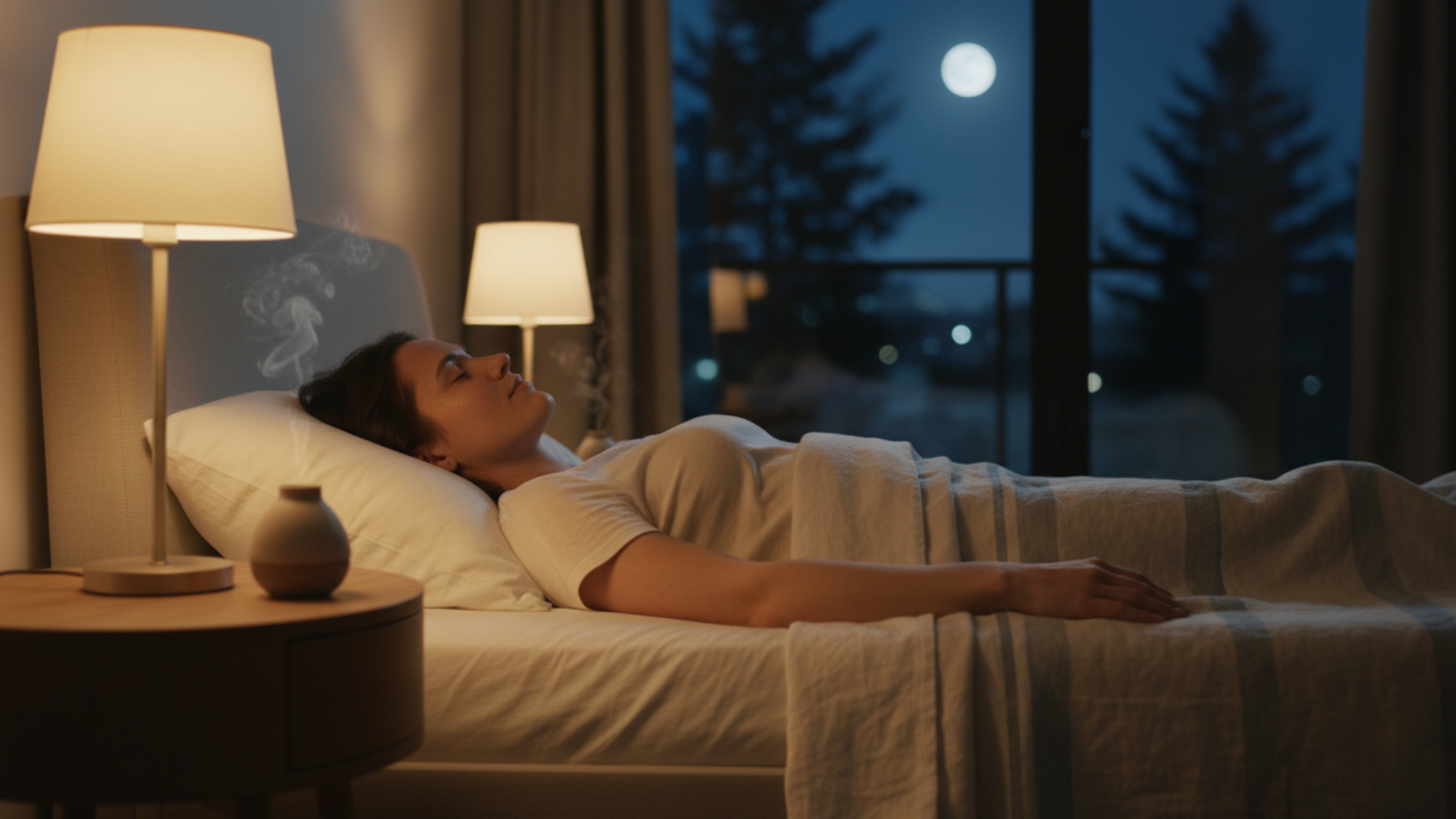
It is a familiar struggle for many of us. You feel exhausted after a long day, your eyes are heavy, and you are desperate for rest. Yet the moment your head hits the pillow, your body feels restless and your mind begins to race. You toss and turn, unable to find a comfortable position, watching the clock tick minutes into hours.
For many people, the problem is not just a busy mind. It is a tense body. Tight shoulders, a clenched jaw, and restless legs can keep the nervous system stuck in an active mode, making it difficult for the body to transition into sleep. This is why progressive muscle relaxation for sleep has become one of the most recommended techniques for people dealing with insomnia and night anxiety.
The method is simple and requires no equipment. By intentionally tensing and releasing different muscle groups, you send a powerful signal to your nervous system that it is safe to relax.
In this guide, you will learn how progressive muscle relaxation for sleep works, how to practice it step by step, and how this relaxation technique can help calm night anxiety and improve sleep quality naturally.
Why Muscle Tension Blocks Sleep

To understand why you cannot sleep, you first need to understand the connection between your body and your brain. Sleep is not just a mental process; it is a deeply physiological one. When your body feels unsafe or “on duty,” it will resist sleep, even if your mind wants rest.
When you experience stress during the day, whether it is a deadline at work, financial worries, or family responsibilities, your body activates the sympathetic nervous system. This is the fight-or-flight response. Even if you don’t feel panicked, low-level stress keeps this system running in the background.
This activation triggers the release of cortisol, one of the body’s primary stress hormones.
Cortisol is helpful in dangerous situations, but it can seriously interfere with sleep. When cortisol remains elevated at night, several things happen:
- Your heart rate increases
- Mental alertness rises, leading to racing thoughts
- Muscle tension increases to prepare the body for action
The real problem appears when this tension lingers into the night. Your muscles may remain tight even if you are not aware of it. This creates a feedback loop. Tense muscles send signals back to the brain that say: Something is wrong. Stay alert.
This is why progressive muscle relaxation for sleep is so effective. It reverses this process. By manually releasing the tension in your muscles, you cut off the distress signal to your brain.
Research consistently shows a strong connection between sleep quality and stress levels. When the body stays tense, restorative sleep becomes harder to reach. When you lower physical tension, you lower cortisol levels, allowing your parasympathetic nervous system, the body’s rest-and-digest mode, to take over.
It is also important to consider how long-term stress impacts overall health. Chronic tension wears down your immune system and disrupts your natural rhythms. Implementing a relaxation routine isn’t just about tonight’s sleep; it is about breaking the cycle of chronic tension that prevents your body from recovering.
If you want to go deeper, the science behind progressive muscle relaxation explains why it is often recommended as a first-line option for insomnia.
Full 15-Minute PMR Script
If you have fifteen minutes before bed, this full-body routine is the most complete option for muscle relaxation for insomnia. It covers every major muscle group, ensuring a deep sense of calm.
Preparation
- Lie on your back with arms by your sides and legs uncrossed.
- Close your eyes and take 3 slow breaths.
How to do it
- Tense each muscle group for 5 seconds (never to the point of pain).
- Release for 10 seconds and notice the contrast.
- Move slowly from feet to face.
1. Feet and Toes
- Tense: Curl your toes downward and arch your feet tightly. Hold the tension. Feel the tightness in your arches. (1… 2… 3… 4… 5)
- Release: Let go instantly. Feel your feet flop open. Notice the warmth spreading through your soles.
2. Calves
- Tense: Flex your feet, pulling your toes back toward your knees. Feel the tension in your calf muscles. (1… 2… 3… 4… 5)
- Release: Let your feet fall back. Feel the muscles in your lower legs soften and sink into the mattress.
3. Thighs
- Tense: Squeeze your thigh muscles tight. Press your knees together or straighten your legs forcefully. (1… 2… 3… 4… 5)
- Release: Relax completely. Feel your heavy legs sinking into the bed.
4. Abdomen and Buttocks
- Tense: Clench your buttocks and tighten your stomach muscles as if someone is about to tickle you. (1… 2… 3… 4… 5)
- Release: Let the tension go. Feel your stomach rise and fall gently with your breath.
5. Chest and Back
- Tense: Take a deep breath and hold it. Arch your back slightly off the mattress and squeeze your shoulder blades together. (1… 2… 3… 4… 5)
- Release: Exhale loudly and let your back collapse into the bed. Feel the heaviness in your chest.
6. Hands
- Tense: Clench both hands into tight fists. Feel the tension travel up to your wrists. (1… 2… 3… 4… 5)
- Release: Open your fingers wide. Shake them out gently. Notice any tingling sensations in your fingertips.
7. Arms
- Tense: Bend your elbows and flex your biceps hard, like a bodybuilder posing. (1… 2… 3… 4… 5)
- Release: Let your arms flop down to your sides. Feel the tension drain out of your arms and into the sheets.
8. Shoulders
- Tense: Shrug your shoulders up toward your ears. Try to touch your ears with your shoulders. Hold it tight. (1… 2… 3… 4… 5)
- Release: Drop your shoulders down. Imagine a heavy weight falling off them. This is where many people unknowingly store emotional stress and night anxiety, so focus on letting that tension completely fall away.
9. Neck
- Tense: Gently tip your head back to look at the wall behind you (be careful here). Feel the tension in the back of your neck. (1… 2… 3… 4… 5)
- Release: Bring your head back to a neutral position. Feel your neck lengthen and relax.
10. Face
- Tense: Scrunch your whole face up. Close your eyes tight, wrinkle your nose, and clench your jaw. (1… 2… 3… 4… 5)
- Release: Smooth out your face. Part your teeth slightly. Let your tongue fall away from the roof of your mouth.
Lie still for a few moments. Scan your body. If you find any remaining tension, breathe into that area and let it go.
Completing this routine helps your brain transition more smoothly into its natural sleep cycles. And because sleep is essential for memory consolidation, falling asleep faster gives your brain more time to do its overnight recovery work.

Supporting the brain during sleep is just as important as relaxing the body. While techniques like progressive muscle relaxation calm the nervous system, some people also benefit from gentle nutritional support that promotes healthy brain circulation and cognitive recovery overnight.
For example, natural brain-support formulas such as Naturem™ Memory+ combine botanical ingredients traditionally used to support mental clarity, circulation, and stress resilience. When paired with relaxation practices before bed, these kinds of supplements may help create a more supportive environment for the brain to recover during sleep.
5-Minute PMR for Busy Nights
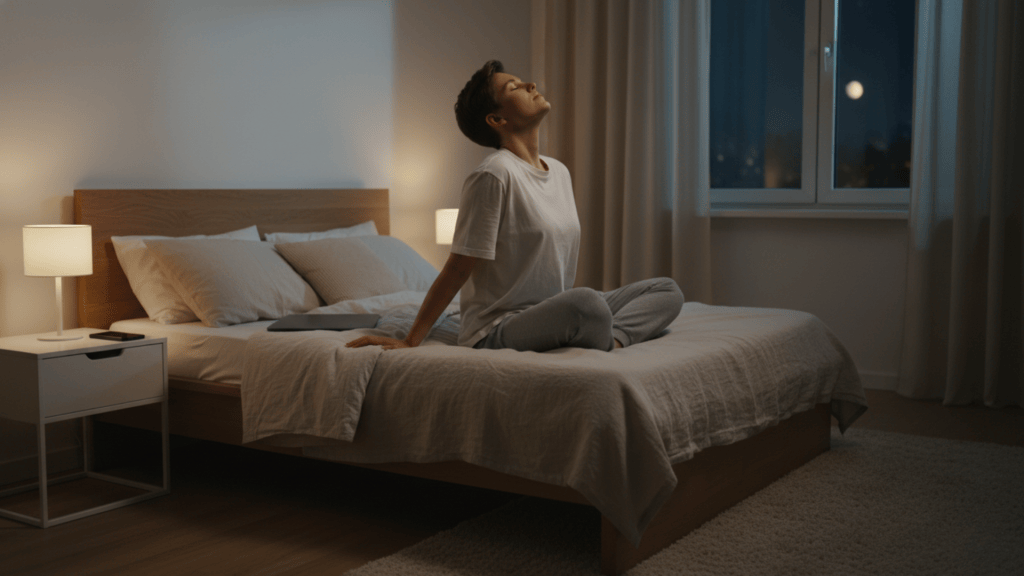
Sometimes you may feel too exhausted to complete the full routine. On busy nights, a shorter relaxation technique can still calm the body before sleep. Focus on the “High Tension Four,” the areas where the body stores the most stress.
1. The Shoulder Shrug
Many people hold tension in their shoulders without realizing it.
- Action: Inhale and shrug your shoulders up to your ears. Squeeze tight.
- Release: Exhale and drop them suddenly. Imagine gravity pulling them down. Repeat twice.
2. The Jaw Release
A clenched jaw (bruxism) is a major cause of headaches and insomnia.
- Action: Open your mouth as wide as possible, stretching the jaw muscles.
- Release: Let your mouth close gently, lips touching but teeth slightly apart. Rest your tongue on the floor of your mouth.
3. The Fist Squeeze
This helps release built-up tension in the hands and arms.
- Action: Squeeze both hands into tight fists.
- Release: Open hands flat and visualize stress leaving through your fingertips.
4. The Leg Stiffen
- Action: Squeeze your thighs and buttocks simultaneously.
- Release: Let your lower body become dead weight.
This quick routine takes less than five minutes but effectively interrupts the stress response, helping reduce tension before bed.
PMR + Breathing Combo
To supercharge your progressive muscle relaxation for sleep, you should combine it with rhythmic breathing.
Breathing is often called the remote control for your nervous system. When combined with progressive muscle relaxation for sleep, it becomes a powerful bedtime relaxation technique that helps calm sleep anxiety and prepare the body for rest. While PMR addresses the physical tension, deep breathing helps counter the body’s stress response.
When you control your breath, you stimulate the Vagus nerve, which is responsible for calming the body. This can be especially helpful for people dealing with panic disorder and nighttime anxiety, which can strike when the house becomes quiet.
The 4-2-6 Technique
We recommend using the 4-2-6 breathing pattern during the “release” phase of your muscle relaxation.
- Inhale (4 seconds): Breathe in slowly through your nose while you tense a muscle group.
- Hold (2 seconds): Hold the breath and the tension at the peak.
- Exhale (6 seconds): Release the muscle tension and breathe out slowly through your mouth, making a soft “whoosh” sound.
By making your exhale longer than your inhale, you physically force your heart rate to slow down.
If You Wake Up at 3AM
Waking up in the middle of the night can be incredibly frustrating. In many cases, this is caused by a nighttime cortisol spike. When stress levels remain elevated, the body may release cortisol too early in the sleep cycle and wake you up suddenly.
At 3 AM, your logical brain is often offline, and your emotional brain is hyperactive. This leads to catastrophic thinking and racing thoughts. It is vital to calm the body to get back to sleep because specific hormones regulate your energy and appetite.
For example, understanding how poor sleep and chronic stress affect metabolism can be a motivator to prioritize getting back to sleep. When you miss out on deep sleep, your hunger hormones can become imbalanced.
Additionally, researchers are studying how insomnia may affect blood sugar regulation, finding that fragmented sleep can lead to insulin resistance.
If you find yourself staring at the ceiling, try this micro version of progressive muscle relaxation for sleep:
- Stay in bed and keep the lights off.
- Use a “micro-tense” (about 20% effort).
- Start at the feet: gently curl your toes, then release.
- Move upward: lightly squeeze your calves, then release.
- Imagine warmth spreading through each muscle.
If you are still awake after 20 minutes, get out of bed and do a quiet activity (like reading) until you feel sleepy again. But try the micro routine first. It is often enough to quiet the body and restart sleep.
Conclusion
Sleep shouldn’t be a battle. By using progressive muscle relaxation for sleep, you are giving your body the permission it needs to let go. You are moving from a state of high alert to a state of deep safety.
Whether you use the full 15-minute script, the quick 5-minute version, or the breathing combination, consistency is key. Like any skill, learning how to relax muscles before sleep takes a little practice. The more you do it, the faster your body will respond to the cues.
Start tonight. Lie down, curl your toes, and begin the journey toward a peaceful night and a more energetic tomorrow.
Progressive muscle relaxation is also one of the most practical mental health exercises for stress relief that can be practiced daily. When combined with other simple relaxation habits, it helps build a sustainable routine that supports both sleep quality and emotional well-being.
With regular practice, progressive muscle relaxation for sleep can become a powerful nightly ritual that helps the body release tension and transition naturally into deep, restorative rest.
Frequently Asked Questions
Yes, progressive muscle relaxation is a proven technique for insomnia. It reduces physiological arousal (muscle tension and heart rate), which is a primary cause of sleeplessness, allowing the body to enter a state ready for sleep.
Many people feel relaxed immediately after one session. However, to see significant changes in sleep quality and a reduction in the time it takes to fall asleep, it is best to practice it nightly for at least two weeks.
Absolutely. Night anxiety is often fueled by physical tension. By focusing your mind on the sensation of tensing and releasing muscles, you distract yourself from racing thoughts while physically calming the nervous system.
Yes, bed is the perfect place for it. In fact, doing PMR in bed helps associate your mattress with relaxation rather than tossing and turning. You can drift directly into sleep once you finish the routine.
Neither is strictly better, but PMR is often easier for beginners. Meditation requires mental focus that can be difficult when you are stressed. PMR gives you a physical task to focus on, which can be more effective for people who carry stress in their bodies.
Practicing progressive muscle relaxation nightly before bed is ideal. Over time, the nervous system begins to associate the exercise with relaxation, making it easier to fall asleep naturally.
References
- Gerritsen, R. J. S., & Band, G. P. H. (2018). Breath of life: The respiratory vagal stimulation model of contemplative activity. Frontiers in Human Neuroscience, 12, Article 397. https://doi.org/10.3389/fnhum.2018.00397
- Han, K. S., Kim, L., & Shim, I. (2012). Stress and sleep disorder. Experimental Neurobiology, 21(4), 141–150. https://doi.org/10.5607/en.2012.21.4.141
- Hirotsu, C., Tufik, S., & Andersen, M. L. (2015). Interactions between sleep, stress, and metabolism: From physiological to pathological conditions. Sleep Science, 8(3), 143–152. https://doi.org/10.1016/j.slsci.2015.09.002
- Trauer, J. M., Qian, M. Y., Doyle, J. S., Rajaratnam, S. M. W., & Cunnington, D. (2015). Cognitive behavioral therapy for chronic insomnia: A systematic review and meta-analysis. Annals of Internal Medicine, 163(6), 491–505. https://doi.org/10.7326/M14-2841