
A sleep hygiene checklist is a set of simple habits and bedroom conditions that improve sleep quality and daytime alertness. For people living with stress or anxiety, these basics are not optional, they’re essential for nervous system recovery.
Chronic stress creates a state of hyperarousal that disrupts the body’s natural ability to transition into rest. Without a consistent evening routine, the body often stays in a mild hyperaroused state, making sleep onset harder night after night, leading to insomnia and increased daytime anxiety.
The following guide provides an evidence-based sleep hygiene checklist designed to regulate the nervous system, optimize your environment, and break the cycle of stress-induced sleeplessness.
The Stress-Sleep Loop
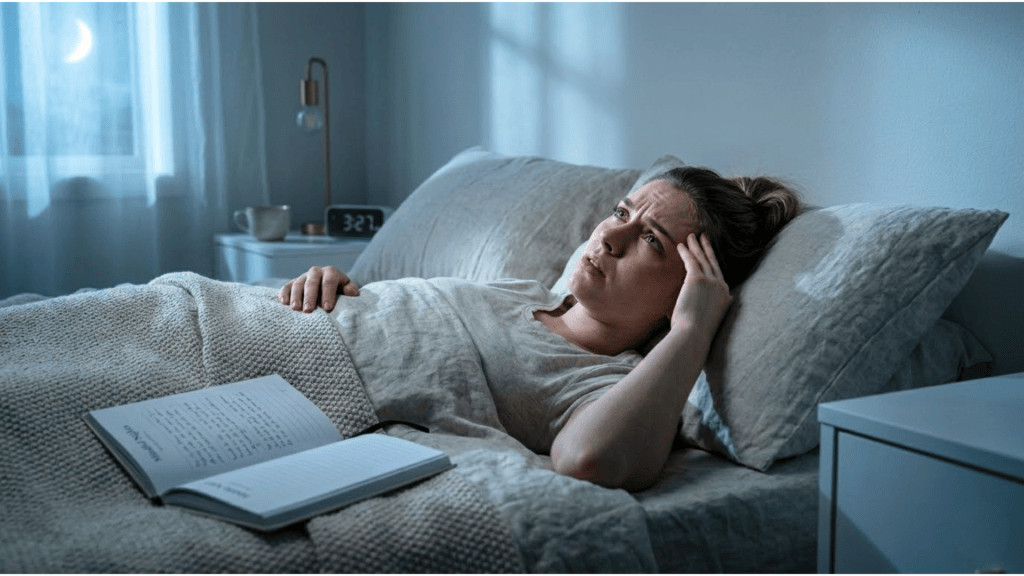
To improve sleep, it is necessary to understand how stress physiologically prevents it. When you are stressed, the body releases cortisol and adrenaline. These hormones activate the sympathetic nervous system (the fight or flight response), increasing heart rate and alertness.
While this response is helpful in acute danger, chronic activation delays the onset of sleep and fragments sleep cycles. This creates a bidirectional relationship: stress prevents sleep, and a lack of sleep increases stress sensitivity the following day.
Deep sleep is when the brain processes emotional experiences and clears metabolic waste. A deeper explanation of these mechanisms is explored in the science of sleep.
Multiple studies suggest that stabilizing sleep patterns can improve stress resilience. This aligns with research on sleep and stress, which shows that stabilizing sleep patterns can support healthier cortisol regulation.
Non-Negotiable Sleep Foundations
The foundation of good sleep hygiene lies in consistency and environmental control. These factors help regulate the circadian rhythm, allowing the body to transition into sleep more naturally each night.
Use the following sleep hygiene checklist to evaluate your current routine.
Schedule
- Go to bed and wake up at the same time every day, including weekends
- Aim for 7–9 hours of sleep per night
- Avoid large schedule shifts between weekdays and weekends
Consistent timing helps anchor the body’s circadian rhythm, making sleep onset easier and improving sleep depth.
Light
- Get 15–30 minutes of morning sunlight within an hour of waking
- Reduce bright indoor lighting after sunset
- Avoid screens for at least 60 minutes before bed
Light exposure directly regulates melatonin production and signals the brain when it is time to sleep.
Environment
- Keep the bedroom temperature between 60–67°F / 15–19°C
- Make the room dark and quiet
- Use blackout curtains or an eye mask if necessary
A cool and dark environment signals the nervous system that it is safe to enter restorative sleep cycles.
Food & Stimulants
- Avoid caffeine after 12–2 PM
- Avoid alcohol within 3 hours of bedtime
- Avoid heavy meals late at night
These substances interfere with sleep architecture and reduce deep sleep quality.
Nervous System Preparation
- Reduce stimulating activities in the evening
- Create a wind-down routine before bed
- Use relaxation techniques if the mind feels overactive
These practices help shift the body from a sympathetic (fight-or-flight) state into a parasympathetic (rest-and-digest) state.
60-Minute Wind-Down Routine

For those with anxiety, the transition from wakefulness to sleep is the most challenging period. The brain requires a “buffer zone” to disconnect from daily demands. Dedicate the final hour before bed to a structured wind-down routine that signals safety to the nervous system.
Implement the following steps 60 minutes before lights out:
- Disconnect from Electronics: Turn off phones, tablets, and computers. Blue light suppresses melatonin, while information overload keeps the mind active.
- Mental Unloading: Spend 5 minutes writing a simple to-do list for tomorrow or journaling about worries. Getting these thoughts on paper prevents ruminating on them while trying to sleep.
- Physical Relaxation: Engage in progressive muscle relaxation for sleep. This technique involves tensing and then relaxing muscle groups to physically release trapped tension.
- Breathing Exercises: Practice 4-7-8 breathing (inhale for 4 seconds, hold for 7, exhale for 8). This shifts the body from a sympathetic state to a parasympathetic (rest and digest) state.
- Light Stretching: Perform gentle stretches to relieve tightness in the neck and shoulders, common areas for stress storage.
- Calming Activities: Read a physical book (fiction or non-work-related) or listen to white noise.
- Use Grounding Techniques: If anxiety spikes during this hour, try grounding techniques for anxiety, such as the 5-4-3-2-1 method, to anchor yourself in the present moment and reduce racing thoughts.
What to Avoid at Night
Certain habits are actively detrimental to sleep quality, acting as physiological disruptors. Eliminating these behaviors is just as important as adopting positive ones.
Ensure you avoid the following:
- Alcohol Before Bed: While alcohol may help you fall asleep faster (sedation), it severely disrupts sleep architecture. It reduces Rapid Eye Movement (REM) sleep and causes fragmentation, leading to unrefreshing rest.
- Late Heavy Meals: Eating large meals within three hours of bedtime forces the digestive system to work when it should be resting, potentially causing acid reflux and discomfort.
- High-Intensity Exercise at Night: Can raise core body temperature and cortisol levels.
- Clock Watching: Staring at the clock increases performance anxiety regarding sleep. Turn the clock face away from you.
- Oversleeping on Weekends: Sleeping in late to “catch up” causes social jet lag, confusing your biological clock. This can lead to lethargy or headaches from oversleeping, often leaving you feeling worse than if you had kept your normal schedule.
What to Do If You Can’t Fall Asleep
Even with a perfect routine, there will be nights when sleep is elusive. It is crucial not to fight it. Staying in bed while frustrated creates a psychological association between the bed and stress (conditioned insomnia).
If you have not fallen asleep after approximately 20 minutes, follow these steps:
- The 20-Minute Rule: Get out of bed and move to a different room.
- Keep Lights Dim: Keep the environment dark and quiet. Avoid turning on bright overhead lights or checking your phone.
- Engage in a Low-Stimulation Activity: Read a boring book or practice gentle stretching. Do not do chores or work.
- Return Only When Sleepy: Go back to bed only when you feel physically tired (heavy eyelids), not just mentally exhausted.
- Practice Mental Regulation: If your mind is racing, utilize specific mental health exercises designed to reduce acute stress, such as visualization or mindfulness meditation.
Lifestyle Habits That Support Sleep and Brain Recovery

Sleep hygiene extends beyond the bedroom. Your daily habits strongly influence how effectively the brain recovers at night. Sleep is the primary time when the brain consolidates memory, regulates emotional processing, and clears metabolic waste through the glymphatic system.
For this reason, daytime lifestyle choices such as regular physical activity, adequate hydration, and a nutrient-dense diet play an important role in sleep quality. Many people also notice that when they focus on habits that improve memory and concentration naturally, their sleep patterns become more stable because the brain’s sleep–wake regulation system functions more efficiently.
Sleep Hygiene Checklist (Quick Summary)
Use this condensed sleep hygiene checklist to track your progress:
- Schedule: Wake up at the same time every day.
- Light: Get morning sunlight; avoid screens 60 minutes before bed.
- Environment: Room is cool (60–67°F / 15–19°C), dark, and quiet.
- Diet: No caffeine after 2:00 PM; no alcohol or heavy meals 3 hours before bed.
- Routine: Follow a wind-down ritual (read, stretch, breathe).
- Anxiety Management: Journal worries before the wind-down routine begins.
- Stimulus Control: Get out of bed if you cannot sleep after 20 minutes.
Building healthy sleep habits takes consistency, but even small changes can significantly improve sleep quality over time. By following a structured sleep hygiene checklist and creating a predictable nighttime routine, the nervous system gradually relearns how to transition from stress to rest.
Frequently Asked Questions
Sleep hygiene is a habit-based intervention. While some improvements may be felt immediately, it typically takes 2–4 weeks of consistent application to reset the circadian rhythm and see significant changes in sleep quality.
The best routine involves offloading the brain. This includes writing down worries (journaling), followed by physiological relaxation techniques like progressive muscle relaxation or deep breathing to lower the heart rate before getting into bed.
Stress triggers the release of cortisol and activates the sympathetic nervous system (hyperarousal). This biological state keeps the brain alert and body temperature high, which is physiologically incompatible with the relaxation required for sleep onset.
The most effective way to reset a schedule is to wake up at the desired time every single morning, regardless of how little sleep you got the night before. Combined with immediate sunlight exposure, this anchors the biological clock.
Long naps or naps taken late in the day reduce sleep pressure (the build-up of adenosine), making it harder to fall asleep at night. If you must nap, keep it under 20 minutes and before 3:00 PM.
References
- Harvard Health Publishing. (2021). Blue light has a dark side. Harvard Medical School.
https://www.health.harvard.edu/staying-healthy/blue-light-has-a-dark-side - Mayo Clinic Staff. (2023). Sleep hygiene: Tips for better sleep.
https://www.mayoclinic.org/healthy-lifestyle/adult-health/in-depth/sleep/art-20048379 - National Institute of Neurological Disorders and Stroke. (2023). Brain basics: Understanding sleep. National Institutes of Health.
https://www.ninds.nih.gov/health-information/public-education/brain-basics/brain-basics-understanding-sleep - National Institute of General Medical Sciences. (2022). Circadian rhythms. National Institutes of Health.
https://www.nigms.nih.gov/education/fact-sheets/Pages/circadian-rhythms.aspx - Sleep Foundation. (2023). Sleep hygiene.
https://www.sleepfoundation.org/sleep-hygiene