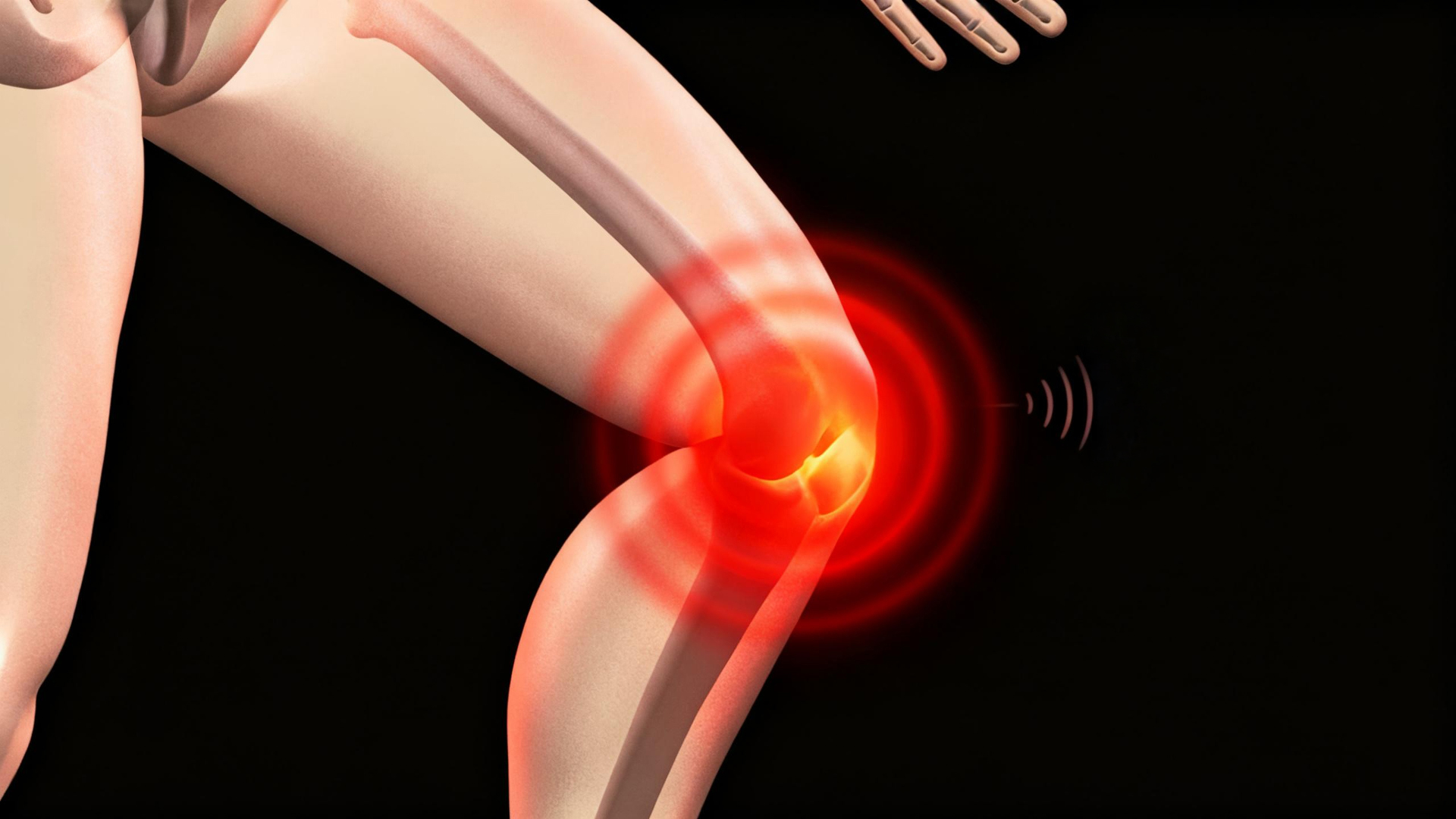
Does your knee let out a loud pop when you squat to pick up a weight? Do your ankles crack with every step you take in the morning? Or perhaps your knuckles make a sound sharp enough to annoy the person sitting next to you?
If you are in your teens, 20s, or 30s, hearing your body sound like a rusty hinge or a bowl of cereal can be unsettling. You might immediately jump to the conclusion that this is the first sign of premature aging or the onset of arthritis.
In the medical world, this audible phenomenon is known as crepitus. While it is often associated with the elderly, it is surprisingly prevalent among healthy young adults. As a doctor who bridges the gap between modern orthopedics and traditional herbal medicine, I am here to tell you the good news: most of the time, your noisy joints are perfectly healthy. However, understanding the mechanics behind the noise and knowing when it signals a need for intervention, is vital for maintaining your musculoskeletal health for decades to come.
This comprehensive guide will explore the physiology of joint sound, distinguish between harmless pops and dangerous clicks, and provide actionable, natural strategies to keep your joints moving smoothly.
The Anatomy of a Pop: What Causes Crepitus?
To understand why your joints make noise, you first need to understand how a healthy joint is constructed. A synovial joint, like your knee, elbow, or knuckle, is a biological masterpiece designed to minimize friction.
Crepitus encompasses any grinding, creaking, cracking, grating, crunching, or popping sound experienced during joint movement. In young populations without a history of injury, this is rarely caused by bone-rubbing-on-bone (osteoarthritis). Instead, it usually stems from three distinct physiological mechanisms.
1. Cavitation: The Explosive Bubble
The most common cause of a loud “crack”, distinctive in the fingers and cervical spine, is a phenomenon called cavitation.
Your joints are encased in a capsule filled with synovial fluid. Think of this fluid as a biological lubricant with the consistency of an egg white. It is rich in nutrients and contains dissolved gases, primarily oxygen, nitrogen, and carbon dioxide.
When you stretch a joint capsule (like pulling a finger), you expand the volume inside the joint. This expansion creates a sudden drop in intra-articular pressure. This negative pressure pulls the dissolved gases out of the fluid, forming a bubble. The “pop” you hear is the sound of this bubble rapidly forming and then collapsing.
- Refractory Period: It takes about 15 to 20 minutes for the gases to dissolve back into the synovial fluid. This is why you cannot crack the same knuckle twice immediately.
2. The Tendon Snap: Biological Guitar Strings
A snapping sound, frequently heard in the hip joint or shoulder, occurs when a tendon or ligament slides over a bony prominence and then snaps back into place.
Imagine a guitar string being pulled tight and then plucked. In young people, this is often due to tight muscles or rapid growth spurts where the soft tissue length hasn’t quite caught up to the bone growth. A common example is “Snapping Hip Syndrome” or Coxa Saltans, where the iliotibial band snaps over the greater trochanter of the femur.
3. The Grinding of Chondromalacia
A soft grinding or “sandpaper” sensation behind the kneecap (patella) is often indicative of Chondromalacia Patellae, also known as Runner’s Knee.
This occurs when the underside of the kneecap roughens slightly or when the patella does not track perfectly in the trochlear groove of the femur. While this sounds scary, in many young people, it is a painless, temporary issue caused by muscle imbalances (usually weak hips or tight hamstrings) rather than permanent damage to the articular cartilage.
Did You Know? The sound of a cracking knuckle can reach up to 83 decibels! That is roughly as loud as a diesel truck driving past you at 40 mph. The noise is naturally amplified because the joint capsule acts like a small echo chamber.
Physiological vs. Pathological Crepitus
Distinguishing between a “noisy” joint and a “damaged” joint is crucial for your peace of mind. In my practice, I categorize crepitus into two types: Physiological (normal) and Pathological (abnormal).
Physiological Crepitus (The “Good” Noise)
This is simply your body’s mechanics at work. It is characterized by:
- Absence of Pain: The sound occurs without any sharp or dull ache.
- No Effusion: There is no visible joint swelling or fluid buildup.
- Full Range of Motion: You can move the limb freely without it “catching,” locking, or feeling stiff.
- Consistency: The sound might happen every time you move a certain way, or sporadically.
The Verdict: If your knees click when you stand up but don’t hurt, you generally do not need to worry. Clinical studies have repeatedly shown that habitual knuckle cracking does not lead to osteoarthritis.
Pathological Crepitus (The “Bad” Noise)
This type of noise warrants a visit to a specialist, such as a rheumatologist or orthopedist. Look for:
- Pain: The click is accompanied by a wince-inducing pain.
- Inflammation: Signs of inflammation (redness, heat, swelling) are present.
- Mechanical Symptoms: The joint locks, gives way, or feels unstable.
- Trauma History: You recently twisted the joint or suffered an impact.
The Verdict: This could indicate a meniscus tear, ligament rupture, or early inflammatory conditions like synovitis.
Why Modern Youth are “Clickier”
You might think joint issues are reserved for the geriatric ward, but modern lifestyles are creating a “perfect storm” for joint stress in younger generations.
- “Tech Neck” and Posture: Hunching over smartphones places immense strain on the cervical spine and the trapezius muscles. This alters the alignment of the neck vertebrae, leading to increased popping and grinding.
- Weekend Warrior Syndrome: High-intensity interval training (HIIT) or heavy lifting without proper warm-ups puts shock loads on tendons. If the musculotendinous unit is stiff, it snaps rather than glides.
- Sedentary Stiffness: Synovial fluid relies on movement to circulate. “Motion is lotion.” When you sit for 8 hours a day, the fluid becomes viscous (thicker). This leads to increased friction and noise when you finally do move.
If you ignore painful clicking now, you may be setting the stage for chronic chondropathy (cartilage disease) later in life.
Solving the Click: Natural and Medical Approaches
As a medical professional, I advocate for a holistic approach. You rarely need painkillers for crepitus; often, you need the right nutrients and movement patterns to lubricate the gears.
1. “Motion is Lotion”: Corrective Exercise
To silence the snap, you must strengthen the muscles that stabilize the joint.
- For Knee Clicks: Focus on the Vastus Medialis Oblique (VMO), the teardrop-shaped muscle on the inner thigh. When this muscle is weak, the kneecap drifts outward, causing clicking. Squats and lunges with proper form are essential.
- For Shoulder Pops: Rotator cuff strengthening exercises (internal/external rotation) can stabilize the humeral head and prevent tendons from snapping over the bone.
2. Traditional Herbal Support: The “Bone Menders”
Nature offers powerful ingredients that have been used for centuries in Traditional Vietnamese Medicine (TVM) and Ayurveda to support connective tissue health.
- Rhizoma Homalomena (Thiên Niên Kiện): A staple in Vietnamese herbalism, this root is traditionally used to expel “wind-dampness” from the joints, a traditional way of describing stiffness and pain exacerbated by weather changes. It is believed to strengthen tendons and bones.
- Drynaria Fortunei (Cốt Toái Bổ): Literally translating to “Mender of Shattered Bones,” this fern extract is famous in Eastern medicine. It is used to promote osteoblast activity (bone-forming cells) and support kidney health, which in traditional theory governs bone strength.
You can find these potent, time-tested ingredients in modern formulations. For a comprehensive solution that blends these traditional herbs with modern science (like Collagen Peptides), find out more about joint support in this article on Naturem.us. Their Naturem™ Joints+ formula is specifically designed to nourish cartilage and reduce the friction that leads to crepitus.
3. The Power of Anti-Inflammatories
If your clicking comes with mild swelling, inflammation is the enemy. Curcumin, the active compound in Turmeric, is a potent anti-inflammatory agent.
For those looking for high-quality herbal extracts that prioritize purity, explore the range of herbal products on svkherbal.com. They utilize advanced extraction technologies to ensure high bioavailability of these natural compounds.
Proving the Concept: The Science of Collagen
Why do babies rarely have clicking joints? Their collagen levels are at their peak. As we enter our 20s, collagen synthesis begins to decline by approximately 1% per year. Collagen provides the tensile strength for our ligaments and the structural scaffolding for our cartilage.
Supplementing with Hydrolyzed Collagen has been shown to improve joint stability and reduce activity-related joint pain in athletes.
To understand the specific Vietnamese herbs that support the body’s natural collagen production, check out the resources on herbsofvietnam.com, a valuable database for botanical knowledge.
Naturem™ Joints+: Nourishing Joint Health from Within
True joint strength begins inside the body, where organs, circulation, and metabolism work together to protect bones and connective tissues. Naturem™ Joints+ combines traditional Vietnamese herbal wisdom with modern nutritional science to restore that harmony. Its natural formula targets the root causes of stiffness and discomfort, helping the body repair cartilage, regulate inflammation, and maintain long-term mobility.
Each capsule delivers a synergistic blend of Collagen Peptides, Drynaria Fortunei, Clinacanthus Nutans, Rhizoma Homalomena, and Tinospora Sinensis. Together, they strengthen bones, enhance circulation, and support the body’s natural healing processes. Designed for daily use, Naturem™ Joints+ helps you move with ease, balance, and confidence, the way your body was meant to.
Frequently Asked Questions
No. This is a persistent myth. One dedicated researcher, Dr. Donald Unger, cracked the knuckles on his left hand for 60 years and never on his right. He found no difference in the presence of osteoarthritis between the two hands. He later received the Ig Nobel Prize for this dedication!
This is often “Patellar Tracking Disorder.” The clicking sound is the kneecap sliding slightly out of its groove in the femur. Strengthening your hips and glutes can often correct the alignment and stop the noise.
Indirectly, yes. High-sugar and processed food diets can increase systemic cytokines (inflammatory markers), making joints more sensitive and prone to swelling (synovitis), which can alter joint mechanics. An anti-inflammatory diet rich in Omega-3 fatty acids can help.
While no herb “tightens” ligaments instantly, herbs that support collagen production (like Centella Asiatica or Gotu Kola) and bone strength (Drynaria Fortunei) can help support the connective tissue structures around hypermobile joints.
References
Castellanos, J., & Axelrod, D. (1990). Effect of habitual knuckle cracking on hand function. Annals of the Rheumatic Diseases, 49(5), 308–309. https://doi.org/10.1136/ard.49.5.308
Clark, K. L., Sebastianelli, W., Flechsenhar, K. R., Aukermann, D. F., Meza, F., Millard, R. L., … & Albert, A. (2008). 24-Week study on the use of collagen hydrolysate as a dietary supplement in athletes with activity-related joint pain. Current Medical Research and Opinion, 24(5), 1485-1496. https://doi.org/10.1185/030079908X291967
Daily, J. W., Yang, M., & Park, S. (2016). Efficacy of Turmeric Extracts and Curcumin for Alleviating the Symptoms of Joint Arthritis: A Systematic Review and Meta-Analysis of Randomized Clinical Trials. Journal of Medicinal Food, 19(8), 717–729. https://doi.org/10.1089/jmf.2016.3705
Song, S. J., Park, C. H., & Daily, J. W. (2016). Polyarthritis: Pathophysiology and Scientific Evidence for the Use of Herbal Medicine. Evidence-Based Complementary and Alternative Medicine.