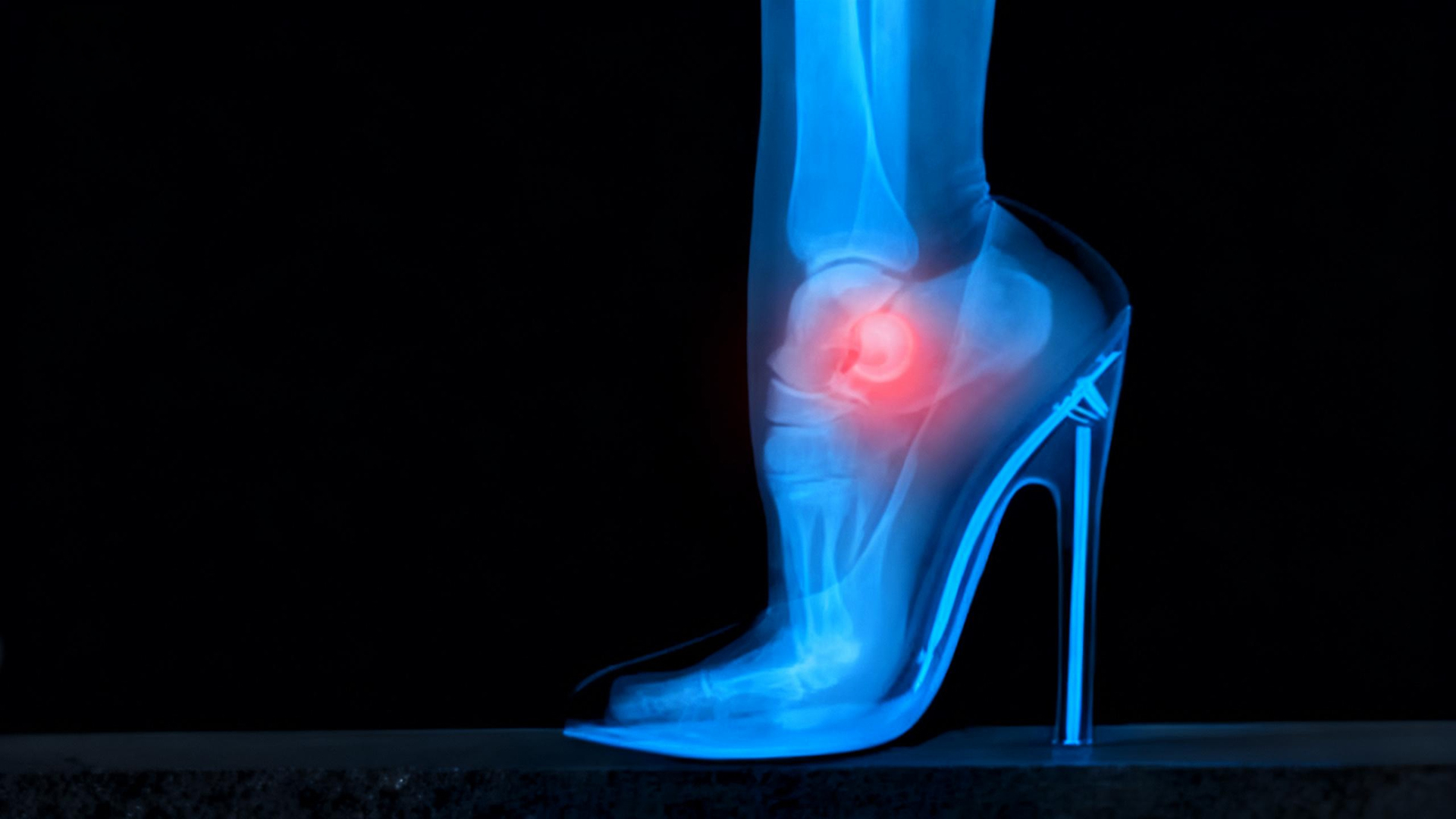
We have all been there. You slip into that perfect pair of stilettos, check the mirror, and feel a surge of confidence. They elongate the legs, tone the calves, and complete the outfit. But as a doctor who bridges the gap between modern orthopedics and traditional holistic medicine, I often tell my patients that the price of fashion is paid in installments by your joints.
While I would never tell you to throw away your favorite shoes, it is vital to understand the “hidden costs” they impose on your body. The human body is a brilliant machine designed for efficiency, but high heels throw a wrench into the gears of your natural alignment. Today, we are going to walk through exactly what happens to your knees and spine when you elevate your heels, and more importantly, how you can fix it without sacrificing your style.
The Kinetic Chain: Why Your Feet Dictate Your Back Health
To understand the pain, you have to understand the mechanics. Your body operates as a kinetic chain – a connected series of joints and muscles where movement in one area affects the others. Think of your feet as the foundation of a house. If the foundation tilts, the walls (your legs) lean, and the roof (your spine) has to shift to keep the whole structure from toppling over.
When you wear flat shoes, your body weight is distributed roughly 50-50 between your heel and the ball of your foot. Put on a 3-inch heel, and that balance shifts drastically. Suddenly, up to 90% of your body weight is forced onto the delicate metatarsal heads (the ball of the foot).
This shift triggers a chain reaction:
- The ankles lose their range of motion.
- The knees are forced to bend to absorb shock.
- The pelvis tilts forward to compensate.
- The lower back arches excessively.
It is a biomechanical domino effect that turns a simple walk into a high-stress balancing act.
The Knee Joint in Crisis
The knee is perhaps the biggest victim of high-heel wear. It is designed to function as a hinge, bearing weight in a straight vertical line. However, high heels force the knee into a position of constant flexion (bending) while you stand or walk.
The Pressure Cooker Effect
When your heel is elevated, your quadriceps muscles have to work overtime to keep you upright. This increased muscle contraction pulls harder on the kneecap (patella).
- Patellofemoral Pain Syndrome: The increased force compresses the kneecap against the thigh bone (femur). Over time, this grinds down the smooth cartilage, leading to Chondromalacia Patellae, often described by patients as a dull, aching pain behind the kneecap.
- Osteoarthritis Risks: Research is clear on this. Wearing high heels increases the torque (twisting force) on the knee, specifically on the medial (inner) side. This increased pressure is a direct risk factor for knee Osteoarthritis, the “wear and tear” arthritis that leads to joint replacement surgeries later in life.
The Spine’s Struggle for Balance
If the knees are the shock absorbers, the spine is the pillar. The human spine has natural curves to handle gravity, but high heels exaggerate these curves to dangerous levels.
The Swayback Effect (Hyperlordosis)
Because your weight is shifted forward onto your toes, your upper body naturally wants to fall forward. To stop you from face-planting, your body instinctively arches the lower back. This causes the pelvis to tilt forward, a condition called Anterior Pelvic Tilt.
This leads to Lumbar Hyperlordosis—an extreme inward curve of the lower back.
- Muscle Fatigue: The paraspinal muscles (the muscles running along your spine) remain in a state of constant contraction, leading to spasms and chronic fatigue.
- Nerve Compression: The excessive arching narrows the spaces where nerves exit the spine. This can pinch the nerves, leading to conditions like Sciatica, which shoots sharp pain down the leg.
- Spondylolisthesis: In severe, chronic cases, the vertebra can actually slip forward over the bone below it, a condition known as Spondylolisthesis, which results in significant pain and instability.
And that’s the real trap of high heels: they don’t just strain one joint, they rewrite your entire alignment chain from knee to pelvis to spine, turning a fashion choice into a daily mechanical stress test.
How to Wear Heels Without Ruining Your Body
Now for the good news: you don’t have to live in sneakers forever. As a doctor, I believe in harm reduction. By making smarter choices and actively recovering, you can mitigate most of this damage.
1. The “Commuter Shoe” Strategy
The damage from heels is cumulative. It is about time under tension.
- Wear flats for travel: Wear supportive sneakers or flats while commuting to work or walking to an event.
- Switch at the destination: Only put your heels on when you arrive. This simple swap cuts your daily “heel time” by 50-70%.
2. Smarter Shoe Selection
Not all heels are created equal.
- Go Lower: A 2-inch heel causes significantly less strain than a 4-inch stiletto. The relationship between heel height and knee pressure is not linear – it skyrockets as you go higher.
- Wedges and Platforms: A wedge connects the heel to the toe, providing a larger base of support. This reduces the wobble (lateral instability) that tears at your ankle ligaments and minimizes the balancing act your knees have to perform.
- Wide Toe Box: Avoid pointed toes that squeeze the Phalanges (toes) together, which causes Bunions and Morton’s Neuroma.
Do a quick 2-minute calf/hip-flexor release after heel days, strengthen glutes and foot muscles a few times weekly, and scale down if you feel numbness or persistent knee/foot pain, wear heels on your terms, not your body’s expense.
A Holistic Recovery Plan
Recovery isn’t just about rest; it’s about active repair. This is where my background in traditional medicine complements modern advice. We need to treat the inflammation and strengthen the structure.
1. Physical Counter-Moves
You need to undo the tightening caused by the shoes.
- The Calf Drop: Stand on a step with your heels hanging off the edge. Slowly lower your heels down to stretch the Gastrocnemius and soleus muscles.
- The Pelvic Tuck: Lie on the floor with knees bent. Flatten your lower back against the ground to counteract the hyperlordosis swayback position.
2. Natural Joint Support
In traditional Vietnamese and Eastern medicine, we look at joint health as a matter of “blood flow” and “structural integrity.” Chronic inflammation from heel wear acts as a blockage.
- Herbal Allies: Ingredients like Drynaria Fortunei (Cốt Toái Bổ) have been used for centuries to strengthen bone and connect tendons. Modern science is catching up, showing these herbs help stimulate bone-forming cells (osteoblasts).
- Collagen Restoration: Your cartilage is made largely of collagen. Supplementing with hydrolyzed collagen can provide the building blocks your knees need to repair the daily micro-damage.
For a deep dive into how these ingredients work together, I recommend reading about the formulation logic behind Naturem™ Joints+. You can learn more about how to protect your cartilage naturally in this detailed article on naturem.us.
3. Topical and Internal Balance
Sometimes, the pain is acute and needs immediate relief.
- Topical Relief: Essential oils and herbal balms can increase blood flow to tired feet. For high-quality, plant-based solutions, I often direct patients to explore the range at svkherbal.com.
- Internal Calm: High heels induce physical stress, which raises cortisol. Sipping on a relaxing herbal tea can help lower systemic tension. You can find excellent, purity-tested herbal teas for relaxation at lanui.vn.
Do these three layers consistently and your body will start “paying back” the damage instead of accumulating it. If pain persists beyond 2–3 weeks, or you develop numbness, swelling, or instability, take it as a sign to get evaluated, because early correction is far easier than chronic joint degeneration.
Naturem™ Joints+: Nourishing Joint Health from Within
True joint strength begins inside the body, where organs, circulation, and metabolism work together to protect bones and connective tissues. Naturem™ Joints+ combines traditional Vietnamese herbal wisdom with modern nutritional science to restore that harmony. Its natural formula targets the root causes of stiffness and discomfort, helping the body repair cartilage, regulate inflammation, and maintain long-term mobility.
Each capsule delivers a synergistic blend of Collagen Peptides, Drynaria Fortunei, Clinacanthus Nutans, Rhizoma Homalomena, and Tinospora Sinensis. Together, they strengthen bones, enhance circulation, and support the body’s natural healing processes. Designed for daily use, Naturem™ Joints+ helps you move with ease, balance, and confidence, the way your body was meant to.
Frequently Asked Questions (FAQ)
Soft tissue damage (like tight calves or plantar fasciitis) is largely reversible with stretching and physical therapy. However, wear and tear on the cartilage (osteoarthritis) is permanent, though its symptoms can be managed to prevent further progression.
This is a classic sign of shortened Achilles tendons. Because your feet have adapted to being in a “pointed” position, flattening them out stretches the tight tendon, causing pain. You need to gradually re-introduce flats and commit to daily calf stretching.
Yes. While they don’t change the angle of the foot (and thus the pelvic tilt), they provide much better lateral stability. This means your lower back muscles don’t have to fire as chaotically to keep you balanced, reducing muscle spasms.
I recommend a combination of Collagen Peptides (for cartilage elasticity) and anti-inflammatory herbs like Turmeric or Ginger. For bone and tendon strength, look for traditional herbs like Drynaria Fortunei.
References
Barnish, M. S., & Barnish, J. (2016). High-heeled shoes and musculoskeletal injuries: a narrative review. BMJ Open, 6(1), e010053.
Cronin, N. J., Barrett, R. S., & Carty, C. P. (2012). Long-term use of high-heeled shoes alters the neuromechanics of human walking. Journal of Applied Physiology, 112(6), 1054–1058.
Esmeny, T. J. (2015). High heels likely wrecking women’s knees, research shows. Anderson Independent Mail. Retrieved from https://independentmail.com
Mika, A., Oleksy, L., Mika, P., Marchewka, A., & Clark, B. C. (2012). The effect of high-heeled shoes on the electromyographic activity of the back and lower limb muscles during quiet standing. Journal of Electromyography and Kinesiology, 22(1), 116–123.
National Institute of Arthritis and Musculoskeletal and Skin Diseases. (n.d.). Osteoarthritis. Retrieved from https://www.niams.nih.gov/health-topics/osteoarthritis
Titchenal, M. R., Asay, J. L., Favre, J., Andriacchi, T. P., & Chu, C. R. (2015). Effects of high heel wear and increased weight on the knee during walking. Journal of Orthopaedic Research, 33(3), 405–411.