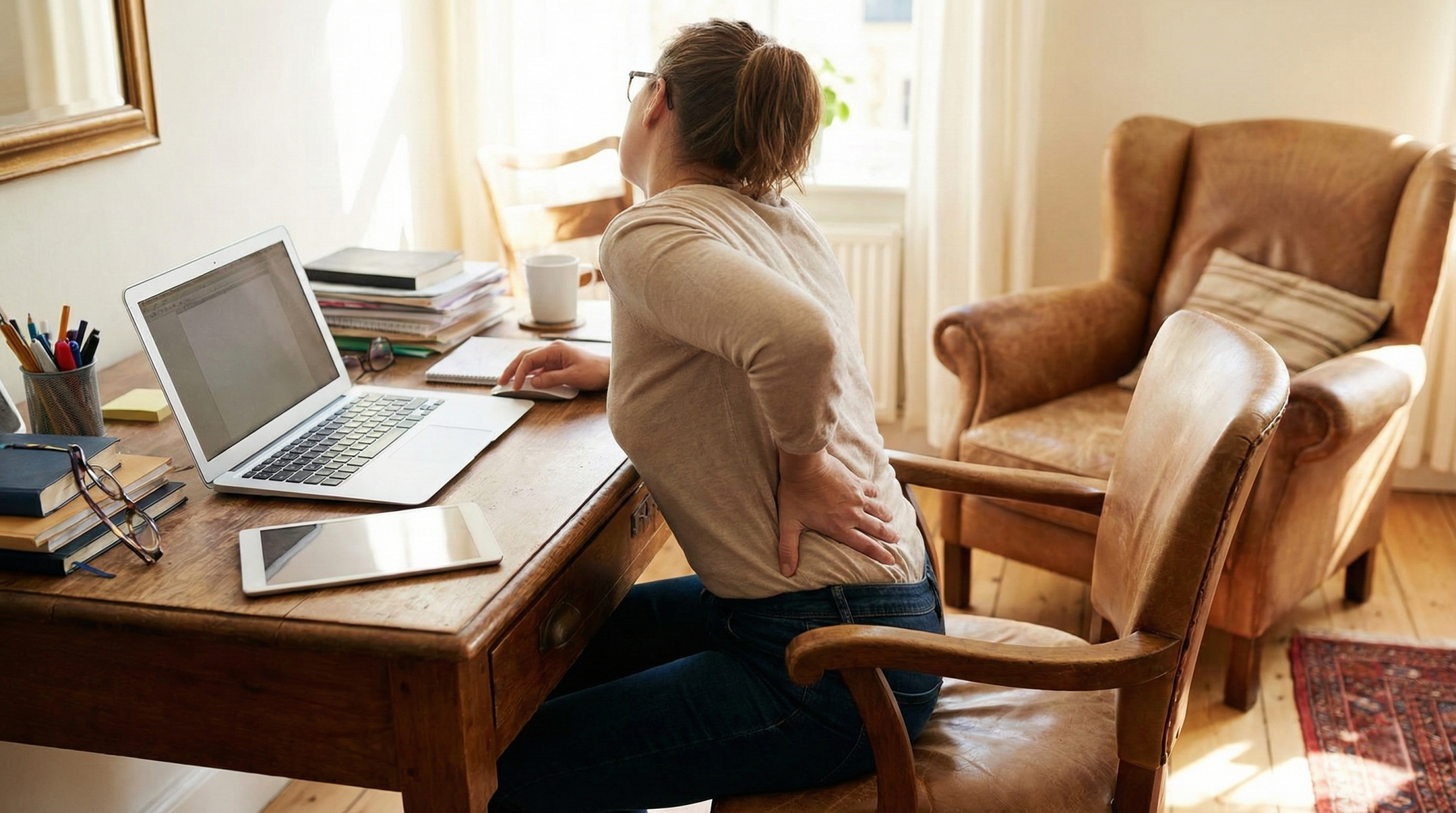
Back pain is the leading cause of disability worldwide. But the nagging question remains: Is that ache a simple result of poor posture, or is it a warning sign of a serious condition like a fracture or infection?
Guessing is dangerous. Treating a spinal fracture with yoga stretches can be disastrous, while fearing a tumor when you have “tech neck” causes unnecessary panic. You need to stop assuming and start understanding the specific language your spine is speaking.
According to the National Institute of Neurological Disorders and Stroke (NINDS), while most back pain is mechanical, correctly identifying the minority of cases driven by systemic disease is critical for long-term health.
The Anatomy of Mechanical Back Pain
To understand pain, you must first understand the machinery. Mechanical back pain (often called nonspecific back pain) arises from the intrinsic parts of the spinal column and its supporting structures. It is a problem of function and load.
Your spine is an engineering marvel consisting of 33 vertebrae, cushioned by shock-absorbing intervertebral discs, and held together by a complex web of muscles, ligaments, and tendons.
The “Weak Link” in the Chain
Mechanical pain occurs when one of these components fails under stress.
- Muscular Strain: Micro-tears in the paraspinal muscles caused by lifting heavy objects improperly.
- Ligament Sprain: Overstretching the fibrous bands that connect vertebrae, often due to sudden twisting motions.
- Discogenic Pain: Wear and tear on the annulus fibrosus (the outer ring of the disc), leading to inflammation.
- Facet Joint Syndrome: Stress on the small stabilizing joints behind the vertebrae, common in those with excessive lordosis (swayback).
Identifying exactly which component of this intricate machinery has failed,whether it is a disc, muscle, or joint is the essential first milestone in moving from chronic discomfort to targeted rehabilitation.
The Posture Pandemic: Habits vs. Anatomy
Most mechanical pain is not caused by a single event, but by thousands of small, poor decisions made by your body throughout the day. This is “cumulative micro-trauma.”
Tech Neck and The 10-lb Head
The human head weighs about 10-12 pounds. However, research in spinal biomechanics shows that for every inch you tilt your head forward to look at a smartphone, the load on your cervical spine doubles. At a 60-degree angle, your neck is supporting 60 pounds—the weight of a large microwave. This leads to chronic muscle fatigue and early spondylosis (osteoarthritis).
The Sitting Disease
When you sit, especially with a slouch, you reverse the natural curve of your lower back. This increases pressure inside the lumbar discs by up to 40% compared to standing. Over time, this leads to creep deformation in the ligaments, making them loose and less able to stabilize your spine.
Ultimately, these daily habits silently accumulate, transforming what should be temporary strain into chronic mechanical failure that demands active intervention to prevent permanent structural changes.
Differentiating Symptoms: The Clinical Breakdown
How do you tell if your pain is from that long drive yesterday or something that needs an MRI? Doctors use a system of “patterns” and “red flags.”
1. The Pattern of Mechanical Pain (Benign)
If your pain fits this profile, it is likely related to posture, muscle imbalance, or wear and tear.
- Activity-Dependent: The pain gets worse with specific movements (e.g., bending forward) and better with others (e.g., leaning back).
- Relief with Rest: Lying down usually alleviates the pressure and the pain subsides.
- Morning Stiffness: You wake up feeling like the Tin Man, but the stiffness resolves after 15-30 minutes of movement.
- No Neurological Drift: You do not have weakness in your legs or loss of sensation in your groin.
- Referral Patterns: Pain might spread to the buttocks or thighs, but rarely goes below the knee (unlike true sciatica).
2. The Red Flags of Pathology (Serious)
If you experience these symptoms, they point to underlying pathologies such as infection (osteomyelitis), cancer, or autoimmune diseases like Ankylosing Spondylitis.
- Night Pain: Pain that wakes you up from a deep sleep or worsens when lying down is a major warning sign for tumors or infections.
- Constitutional Symptoms: Fevers, chills, night sweats, or unexplained weight loss indicate the body is fighting a systemic disease.
- Neurological Deficits:
- Foot Drop: Inability to lift the front of your foot.
- Saddle Anesthesia: Numbness in the inner thighs and groin.
- Bladder/Bowel Dysfunction: Inability to urinate or incontinence can signal Cauda Equina Syndrome, a surgical emergency requiring immediate decompression.
- History of Trauma: A fall or car accident, especially in older adults with osteoporosis, suggests a compression fracture.
Recognizing these specific patterns allows you to act swiftly and appropriately, seeking rest and physical therapy for mechanical issues, or pursuing urgent medical evaluation when these critical red flags appear.
Integrative Solutions: Correct, Strengthen, and Heal
Once pathology is ruled out, treating mechanical back pain requires a multi-faceted approach. We combine the precision of modern ergonomics with the healing power of traditional herbs.
Ergonomics and Movement Therapy
You cannot fix mechanical pain if you keep breaking the machine.
- Neutral Spine: Whether sitting or standing, maintain the natural S-curve of the spine. Use a lumbar support pillow if necessary.
- The McKenzie Method: This involves therapeutic extension exercises that push the jelly-like center of the disc back into place, relieving pressure on spinal nerves.
- Core Stabilization: Strengthening the transverse abdominis creates a natural “corset” that supports the vertebrae.
Herbal Wisdom: Nature’s Anti-Inflammatories
In my practice, I often recommend herbal interventions before jumping to chronic use of NSAIDs, which can damage the stomach lining. Traditional Vietnamese Medicine offers profound remedies for musculoskeletal health.
- Thien Nien Kien (Homalomena occulta): Literally translating to “Thousand Years of Health,” this rhizome is famous in traditional medicine for strengthening tendons and bones. It is particularly effective for treating “cold-damp” arthritic pain that worsens in rainy weather. It is particularly effective for treating “cold-damp” arthritic pain that worsens in rainy weather. You can find high-quality extracts of such potent ingredients in formulas designed for joint health at naturem.us, where traditional wisdom meets modern extraction standards.
- Hy Thiem (Siegesbeckia orientalis): Known as the “Pig Weed,” this herb has strong anti-inflammatory and analgesic properties. It acts similarly to aspirin but without the harsh side effects, making it ideal for chronic back aches.
- Cot Toai Bo (Drynaria fortunei): This fern is renowned for its ability to promote bone healing and kidney health (which, in Eastern medicine, governs bone strength). For a deeper dive into how these indigenous ingredients are harvested and processed, explore the resources at herbsofvietnam.com.
- Massage & Topical Therapies: Applying herbal oils containing essential oils of ginger, cinnamon, and camphor can increase local blood flow, flushing out inflammatory cytokines. For those interested in holistic wellness and finding balance through natural therapies, svkherbal.com offers excellent insights into maintaining a pain-free lifestyle.
By combining these structural corrections with nature’s potent anti-inflammatories, you create a comprehensive environment for your spine to heal naturally, avoiding the need for invasive procedures or long-term medication use.
Naturem™ Joints+: Nourishing Joint Health from Within
True joint strength begins inside the body, where organs, circulation, and metabolism work together to protect bones and connective tissues. Naturem™ Joints+ combines traditional Vietnamese herbal wisdom with modern nutritional science to restore that harmony. Its natural formula targets the root causes of stiffness and discomfort, helping the body repair cartilage, regulate inflammation, and maintain long-term mobility.
Each capsule delivers a synergistic blend of Collagen Peptides, Drynaria Fortunei, Clinacanthus Nutans, Rhizoma Homalomena, and Tinospora Sinensis. Together, they strengthen bones, enhance circulation, and support the body’s natural healing processes. Designed for daily use, Naturem™ Joints+ helps you move with ease, balance, and confidence, the way your body was meant to.
Frequently Asked Questions (FAQ)
Absolutely. Emotional stress triggers the release of cortisol and adrenaline, which cause involuntary muscle tension. This “psychogenic” component often exacerbates existing mechanical issues, creating a vicious cycle of pain and anxiety.
Not necessarily. The body has an amazing ability to resorb the herniated material over time. With proper physical therapy and inflammation management, many herniated discs become asymptomatic without surgery.
This is known as the Valsalva maneuver effect. Coughing increases the intrathecal pressure (pressure inside the spinal canal). If you have a disc issue pressing on a nerve, this sudden spike in pressure causes a sharp shoot of pain.
Bed rest is actually outdated advice. Prolonged inactivity weakens muscles and stiffens joints. The goal is “active recovery”-gentle walking, swimming, or stretching helps flush out metabolic waste and speeds up healing.
References
WebMD. (2024). Cauda Equina Syndrome. https://www.webmd.com/back-pain/guide/cauda-equina-syndrome-overview
Cleveland Clinic. (2024). Ligament: Function, Anatomy & Definition. https://my.clevelandclinic.org/health/body/21604-ligament
Deyo, R. A., & Weinstein, J. N. (2001). Low back pain. New England Journal of Medicine, 344(5), 363-370.
Hartvigsen, J., et al. (2018). What low back pain is and why we need to pay attention. The Lancet, 391(10137), 2356-2367.
Mayo Clinic. (2024). Sciatica. https://www.mayoclinic.org/diseases-conditions/sciatica/symptoms-causes/syc-20377435
National Institute of Neurological Disorders and Stroke. (2023). Low Back Pain Fact Sheet. https://www.ninds.nih.gov/health-information/disorders/back-pain
National Library of Medicine. (2022). StatPearls: Anatomy, Back, Muscles. https://www.ncbi.nlm.nih.gov/books/NBK538173/