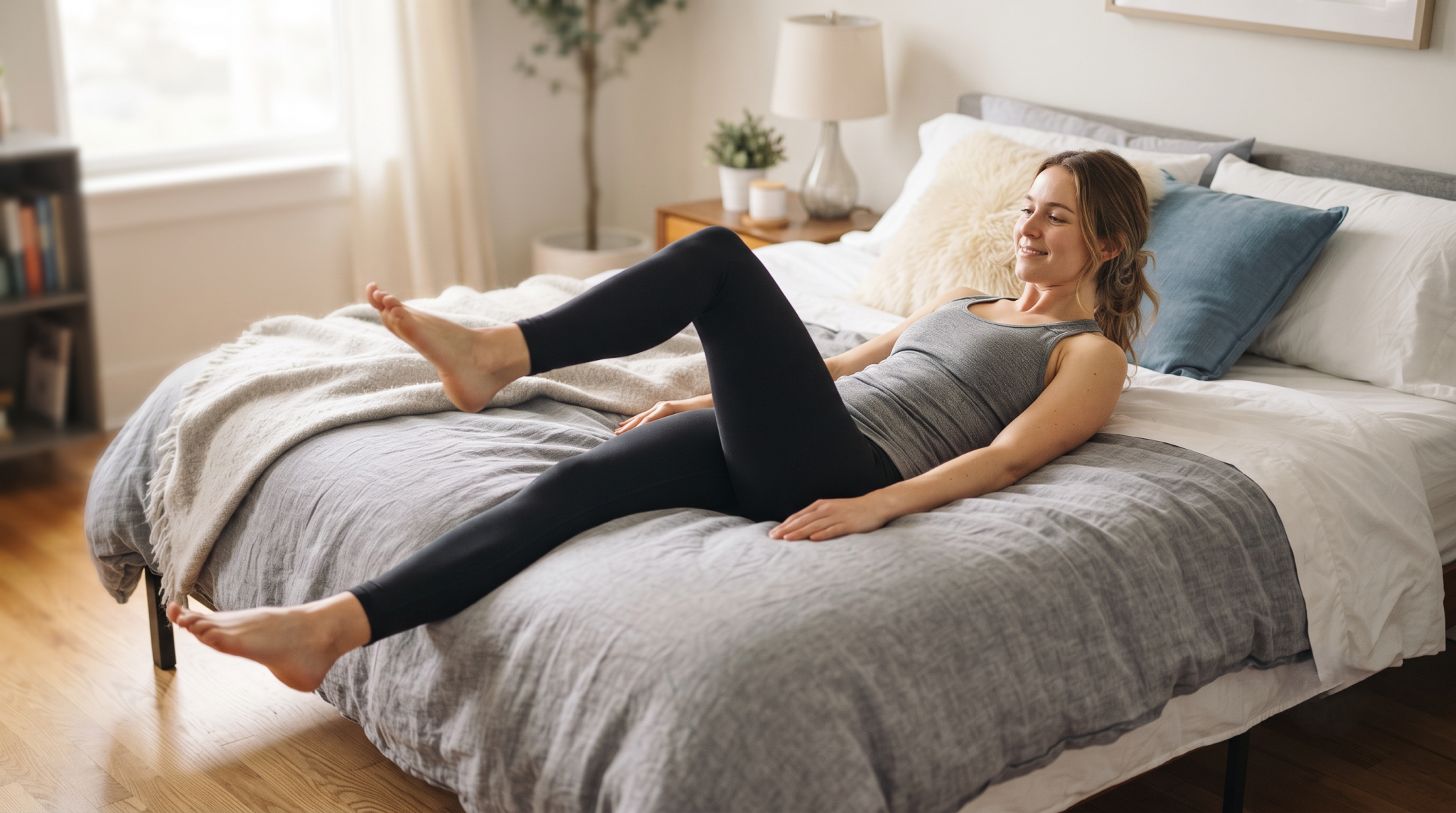
Most mornings, the gap between sleep and full upright function feels enormous. Your joints are stiff. Your muscles are tight. Your spine has been compressed in the same position for seven or eight hours. And somewhere between the alarm and your first cup of coffee, the idea of a proper workout feels impossibly ambitious.
Here is what the research says: you do not need to leave your bed to start moving meaningfully. A targeted bed-based movement routine – done before your feet even touch the floor – activates the musculoskeletal and cardiovascular systems, lubricates joints, improves circulation, reduces morning stiffness, and sets a physiological tone for the day that a passive lie-in simply cannot match.
This guide covers the science of why bed exercises work, who benefits most from them, and a complete, clinically grounded routine covering flexibility, strength, core, circulation, and breathing – all performable on your mattress in under 20 minutes.
Why Bed Exercises Actually Work: The Physiology
Understanding why these movements are effective – not just convenient – makes it easier to commit to them consistently.
The Morning Stiffness Problem
During sleep, synovial fluid – the lubricating fluid inside your joints – becomes less viscous and less well-distributed. Joints that have been static for hours need movement to pump fresh synovial fluid through the joint space, re-lubricate cartilage surfaces, and restore normal range of motion. This is the biological basis of morning stiffness – and it explains why the first few movements after waking always feel the stiffest. Gentle bed exercises accelerate this “warming up” of the joint environment before load-bearing movement begins.
Orthostatic Hypotension Risk
When you go from lying to standing too quickly, blood pressure can drop transiently as the cardiovascular system scrambles to redistribute blood to the upright position. This orthostatic hypotension is particularly common in older adults, people on blood pressure medications, and anyone who has been ill or sedentary. Gentle bed exercises – leg lifts, ankle pumps, core activations – gradually increase heart rate and blood pressure before you stand, making the transition to vertical safer and less dizzying.
Sleep Inertia and Cortisol
The first 30 minutes after waking is dominated by sleep inertia – a period of reduced cognitive function, slowed reaction time, and physical grogginess caused by the lingering presence of adenosine and the gradual rise of cortisol. Gentle physical movement accelerates the cortisol awakening response (CAR) – a natural morning cortisol spike that improves alertness, working memory, and physical readiness. Moving before you stand up essentially tells your endocrine system to complete this morning activation more efficiently.
Who Benefits Most
Bed exercises are not only for people with mobility limitations. They are particularly valuable for:
- People recovering from illness, injury, or surgery who are rebuilding activity levels
- Older adults managing joint stiffness, osteoarthritis, or osteoporosis risk
- Anyone with chronic back pain that is worst in the morning
- People with chronic fatigue, fibromyalgia, or post-viral conditions where pacing matters
- Desk workers whose first commitment of the day is sedentary work
- People who genuinely struggle with morning motivation – because starting movement before leaving the bed removes the psychological barrier of “getting to the gym”
Find out more about low-impact exercise strategies for joint health and mobility in this Naturem clinical guide.
Before You Start: A Few Practical Notes
Your mattress matters. A firm mattress provides better support for resistance exercises. A very soft mattress makes some movements harder – modify by placing a folded blanket under your hips for core exercises. Move slowly and with control throughout. The goal is activation, lubrication, and gentle strengthening – not speed or intensity. Stop any exercise that produces sharp or radiating pain. Breathe continuously throughout each movement – never hold your breath. Perform the routine in the order given: mobility first, then strength, then core, then circulation, then breathing.
The Complete Bed Exercise Routine
Part 1: Mobility and Joint Lubrication (5 Minutes)
These movements are performed slowly and through full range of motion. They are not stretches – they are controlled joint excursions designed to pump synovial fluid through every major joint before load-bearing activity begins.
Ankle Circles
Lying on your back with legs extended, slowly rotate both ankles in large, full circles – 10 rotations clockwise, then 10 counterclockwise. Ankle pumping and rotation is the most evidence-supported bed exercise for improving lower limb circulation and reducing deep vein thrombosis risk in immobile patients. It activates the soleus muscle pump – the “second heart” – which drives venous return from the legs back to the central circulation.
Knee-to-Chest Pulls
Lying on your back, bring one knee to your chest with both hands and hold for 5-10 seconds, feeling a gentle stretch in the lower back and hip. Alternate legs, 10 repetitions each. This decompresses the lumbar vertebrae, which have been compressed and slightly dehydrated during overnight recumbency, and gently mobilizes the sacroiliac joint. Knee-to-chest exercises are a first-line recommendation in clinical guidelines for morning lower back pain relief.
Supine Spinal Twist
Lying on your back, bring both knees to your chest, then let them fall to one side while turning your head in the opposite direction. Hold for 15-20 seconds, return to center, repeat on the other side. Spinal rotation creates a “wringing out” effect in the intervertebral discs, rehydrating the disc matrix and releasing the paraspinal muscle tension that accumulates overnight. It also gently mobilizes the thoracic spine – the most neglected region of the back in morning routines.
Neck Rolls and Chin Tucks
Sitting upright at the edge of your pillow or resting against your headboard, slowly tilt your head right, forward, left, and back in a smooth circle – 5 rotations in each direction. Follow with 10 chin tucks: gently retract the chin toward the throat, creating a slight “double chin” position. Chin tucks activate the deep cervical flexors that stabilize the upper cervical spine and directly counteract the forward head position that develops during sleep and worsens with prolonged screen use.
Wrist and Finger Mobilization
Make a fist, then open the hand as wide as possible, spreading all fingers. Repeat 10 times. Then slowly rotate the wrists in full circles, 10 each direction. Wrist mobility exercises improve circulation to the hands and mobilize the carpal joints that stiffen during sleep, particularly relevant for people with early arthritis, carpal tunnel syndrome, or those who type extensively.
Part 2: Strength Activation (7 Minutes)
These exercises are not designed for muscle hypertrophy – they are designed to activate the neuromuscular system, stimulate the major muscle groups, and begin building the daily activity quota that supports long-term health.
Glute Bridges
Lying on your back with knees bent and feet flat on the mattress, press through your heels and lift your hips toward the ceiling, squeezing the glutes at the top. Hold for 2-3 seconds, lower slowly. Perform 3 sets of 12 repetitions. Glute bridge activation is one of the most biomechanically efficient exercises for the posterior chain – targeting the gluteus maximus, hamstrings, and erector spinae simultaneously. Strong glutes directly reduce lower back pain by taking compressive load off the lumbar discs during the day.
Single-Leg Glute Bridges
Once regular glute bridges feel easy, progress to single-leg: the same movement but with one foot raised, pressing through the grounded heel only. Single-leg variations reveal and correct side-to-side asymmetries in hip strength that contribute to knee tracking problems, hip pain, and lower back pain. Perform 10 per side.
Supine Leg Raises
Lying flat on your back with legs extended, slowly raise both legs together to 45-60 degrees, hold for 2 seconds, lower slowly without letting your feet touch the mattress. Perform 3 sets of 10. This exercise simultaneously activates the hip flexors, lower abdominals, and the deep transversus abdominis. Transversus abdominis activation is the foundation of all core stability – the muscle that acts as a natural corset around the lumbar spine. If this is too challenging, modify by bending the knees or raising one leg at a time.
Supine Marching
Lying on your back with knees bent, alternately lift one knee to the chest and lower it while maintaining a neutral lumbar spine (small natural curve, not pressed flat into the bed). Perform 20 alternating repetitions. This is a foundational movement in clinical rehabilitation for lumbar stabilization – it trains the ability to move the legs independently while the core maintains spinal position. Supine marching reduces lumbar spine rotation during gait and is prescribed extensively for lower back pain prevention.
Seated Shoulder Press (Without Weights)
Sitting upright at the edge of the bed, raise both arms overhead, pressing palms toward the ceiling. Lower slowly. Perform 3 sets of 15. This activates the deltoids, upper trapezius, and shoulder stabilizers that become inhibited overnight. If you have shoulder discomfort, reduce the range of motion to 90 degrees of elevation. The shoulder is the joint most prone to morning stiffness after the lumbar spine – controlled overhead movement restores neuromuscular activation patterns before the day demands them.
Seated Row Simulation
Sitting upright, extend both arms forward at shoulder height with fists closed. Pull both elbows back forcefully as if rowing against resistance, squeezing the shoulder blades together at the end range. Hold for 2 seconds. Perform 3 sets of 15. This scapular retraction exercise counteracts the rounded-shoulder posture caused by forward head position during sleep, desk work, and screen use, activating the rhomboids and middle trapezius that are chronically underactivated in modern sedentary life.
Part 3: Core Stability (4 Minutes)
Dead Bug
Lying on your back with knees bent at 90 degrees and arms pointed toward the ceiling, slowly lower your right arm and left leg toward the bed simultaneously while keeping the lower back pressed flat. Return to start and alternate. The dead bug is the most biomechanically pure core stability exercise available – it trains anti-extension stability of the spine without the lumbar loading of crunches or sit-ups, making it safe for virtually all populations including those with disc pathology. Perform 10 repetitions per side.
Abdominal Bracing
Lying flat, take a deep breath in and as you exhale, draw the navel toward the spine (not by sucking in – by actively contracting the deep abdominal wall). Hold this contraction for 10 seconds while breathing normally. Repeat 10 times. Abdominal bracing activates the transversus abdominis – the deepest abdominal layer and the primary spinal stabilizer – in isolation, training the functional foundation of all core exercises.
Pelvic Tilts
Lying on your back with knees bent, alternately arch the lower back away from the mattress (anterior tilt), then flatten it against the mattress (posterior tilt). Perform 15 slow, controlled repetitions. Pelvic tilting mobilizes the lumbar spine through its full flexion-extension range while activating the deep lumbar stabilizers and gluteus maximus, and is one of the most commonly prescribed exercises in physical therapy for morning back stiffness.
Part 4: Circulation and Cardiovascular Activation (3 Minutes)
Supine Cycling
Lying on your back, raise both legs and perform a cycling motion – pushing one leg forward and away while pulling the other toward the chest, alternating in a smooth rhythm. Perform for 60 seconds. This exercise activates the hip flexors, quadriceps, and hamstrings while generating significant cardiac demand, increasing heart rate and accelerating the cortisol awakening response. Lower limb cycling motions in a supine position have been shown to improve venous return and peripheral circulation in clinical rehabilitation settings.
Seated Marching with Arm Swings
Sitting on the edge of the bed with feet flat on the floor, march your knees alternately while swinging the opposite arms – just as you would in walking. Perform for 60 seconds. This integrated movement pattern activates the contralateral neural pathways that govern natural gait, “primes” the nervous system for walking, and generates enough cardiovascular demand to raise heart rate and accelerate morning alertness. Limb-specific movement coordinated with the opposite side activates the cerebellum and motor cortex in ways that purely isolated exercises do not.
Seated Calf Raises
Sitting upright with feet flat, raise both heels as high as possible, hold for 2 seconds, lower slowly. Perform 20 repetitions. Calf raises activate the gastrocnemius and soleus muscles that function as the venous pump of the lower limb, driving blood out of the leg veins and back toward the heart. This directly reduces the risk of morning leg heaviness, ankle swelling, and the dizziness associated with sudden positional changes.
Part 5: Breathing and Nervous System Regulation (2 Minutes)
Diaphragmatic Breathing
Lying on your back with one hand on the chest and one on the abdomen, take a slow, deep breath in through the nose for 4 counts, ensuring the abdomen (not the chest) rises. Hold for 2 counts, then exhale slowly through the mouth for 6 counts. Repeat 8-10 times. Slow, diaphragmatic breathing activates the vagus nerve and parasympathetic nervous system, reducing cortisol, lowering resting heart rate, and producing a state of calm alertness that coffee cannot replicate. It also directly improves respiratory efficiency by retraining the diaphragm as the primary breathing muscle rather than the accessory neck and shoulder muscles that compensate during stress.
4-7-8 Breathing
Inhale for 4 counts, hold for 7, exhale for 8. Repeat 4 cycles. The extended exhale phase of 4-7-8 breathing maximally activates the parasympathetic branch of the autonomic nervous system, reducing anxiety, slowing heart rate, and producing the calm, focused mental state optimal for beginning a productive day. This technique was developed by Dr. Andrew Weil based on the pranayama breathing traditions of yoga and Ayurvedic medicine.
Adapting the Routine for Specific Conditions
For People With Arthritis or Joint Pain
Morning stiffness is one of the most debilitating symptoms of both osteoarthritis and inflammatory arthritis, and gentle bed exercises directly address its biological mechanism by warming the synovial fluid and improving joint lubrication before load-bearing begins. Start with only the mobility section (Part 1) for the first two weeks, then progressively add elements. Reduce range of motion for any exercise that approaches pain. Find out more about joint health support through natural anti-inflammatory strategies at SVK Herbal.
For People With Back Pain
Begin with pelvic tilts, knee-to-chest pulls, and the supine spinal twist before any other exercise. These three movements decompress the lumbar spine, rehydrate the discs, and release paraspinal muscle tension in a sequence that directly addresses the pathophysiology of morning back pain. Avoid any exercises that produce centralization of pain (pain moving toward the spine from the limbs) and consult a physiotherapist if back pain is severe or radiating.
For Older Adults
Balance, hip strength, and spinal stability are the three most clinically significant physical parameters for preventing falls in older adults. The glute bridge, single-leg glute bridge, and seated marching exercises in this routine directly train all three. Begin with the full routine but reduce sets from 3 to 1, then build progressively. Older adults benefit particularly from the orthostatic hypotension prevention provided by the ankle pumps and circulation exercises before standing. Find out more about bone health and mobility strategies for aging well in this SVK Herbal clinical guide.
For People Recovering From Illness
During illness recovery, bed exercises should be limited to Parts 1 and 5 only – mobility and breathing – until energy reserves are sufficient for gentle strength work. Pacing is the critical principle in post-viral recovery: matching activity to available energy rather than pushing through fatigue. Add one element from Parts 2 and 3 every 3-4 days as recovery progresses, monitoring for post-exertional symptom worsening before proceeding.
Supporting Your Bed Exercise Routine With Nutrition and Natural Supplements
Exercise is only as effective as the biological environment it operates within. Morning bed exercises performed consistently will produce limited results if the musculoskeletal and cardiovascular systems lack adequate nutritional support.
Collagen Peptides and Morning Joint Health
Oral collagen peptides provide glycine, proline, and hydroxyproline – the specific amino acids required for cartilage and connective tissue repair. Taking collagen peptides with vitamin C approximately 30-60 minutes before your bed exercise routine specifically directs these substrates toward the connective tissue being loaded during exercise. Research shows that pre-exercise collagen supplementation increases collagen synthesis in tendons and cartilage more effectively than post-exercise supplementation. Naturem Joints+ combines collagen peptides with Drynaria Fortunei, Rhizoma Homalomena, and Clinacanthus Nutans for comprehensive joint support that addresses both the structural substrate and the inflammatory environment.
Anti-Inflammatory Herbal Support
Boswellia serrata and curcumin address the morning inflammatory state that drives joint stiffness at the molecular level – Boswellia through 5-LOX inhibition and curcumin through COX-2 and NF-kB blockade. Taking these botanicals consistently reduces the baseline inflammatory load that makes morning movement uncomfortable, creating a more hospitable biological environment for the mobility exercises in Part 1. For those who want a comprehensive joint supplement, Naturem Joints+ delivers all of these ingredients in a single daily formulation.
Omega-3 Fatty Acids for Synovial and Cardiovascular Health
EPA and DHA reduce the prostaglandin E2 and leukotriene B4 that drive synovial inflammation, directly reducing morning joint stiffness over time. Consistent omega-3 intake also improves arterial flexibility and cardiovascular response to morning activity – making the transition from rest to movement physiologically smoother.
Magnesium for Muscle Relaxation and Sleep Quality
Magnesium deficiency is strongly associated with muscle cramps, increased resting muscle tension, and poor sleep quality – all of which directly impair morning movement capacity. Magnesium glycinate taken in the evening supports deeper slow-wave sleep, allowing muscles to fully recover and relax overnight, and reduces the morning muscle tension that makes bed exercises uncomfortable.
Building the Habit: Making Bed Exercises a Daily Practice
The research on habit formation is clear: attaching a new behavior to an existing anchor behavior (“when I wake up, I will do my bed exercises”) is more effective than scheduling it as an independent activity. The alarm itself becomes the trigger.
Start with only Part 1 (mobility) for the first week – five minutes before rising. This is the minimum effective dose that lubricates joints, reduces morning stiffness, and creates the neural pathways for the routine. Add Part 5 (breathing) in week two. Add Parts 2 and 3 (strength and core) in week three. Add Part 4 (circulation) in week four. By week five, the full routine takes approximately 20 minutes and has been built through progressive exposure rather than forcing a complete behavior change all at once.
Tracking the routine for the first four weeks – even with a simple checkmark on a paper calendar – significantly increases adherence by making the streak visible and reinforcing completion. Find out more about building sustainable daily health rituals in SVK Herbal’s Daily Ritual resource collection.
When Bed Exercises Are Not Enough
This routine is an excellent foundation – but it is not a substitute for full physical activity. Adults require at least 150 minutes of moderate-intensity aerobic activity per week for cardiovascular health, and bed exercises do not satisfy this requirement. They are a starting layer – a daily primer that makes subsequent activity more comfortable and more consistent.
People with severe morning stiffness lasting more than one hour should be evaluated for inflammatory arthritis (rheumatoid arthritis, psoriatic arthritis, ankylosing spondylitis) rather than attributing it purely to mechanics. Inflammatory arthritis produces morning stiffness that is qualitatively different from mechanical stiffness and requires specific medical management alongside physical activity.
If bed exercises consistently produce significant pain in a specific joint, seek physiotherapy assessment rather than pushing through. The exercises in this guide are designed to be comfortable throughout – gentle mobilization should not produce more than very mild soreness.
The Complete 20-Minute Routine at a Glance
Part 1 – Mobility (5 minutes)
- Ankle circles – 10 each direction
- Knee-to-chest pulls – 10 each leg
- Supine spinal twist – 15-20 seconds each side
- Neck rolls and chin tucks – 5 rotations, 10 tucks
- Wrist and finger mobilization – 10 repetitions
Part 2 – Strength (7 minutes)
- Glute bridges – 3 sets of 12
- Single-leg glute bridges – 10 per side
- Supine leg raises – 3 sets of 10
- Supine marching – 20 alternating reps
- Seated shoulder press – 3 sets of 15
- Seated row simulation – 3 sets of 15
Part 3 – Core (4 minutes)
- Dead bug – 10 per side
- Abdominal bracing – 10 x 10-second holds
- Pelvic tilts – 15 repetitions
Part 4 – Circulation (3 minutes)
- Supine cycling – 60 seconds
- Seated marching with arm swings – 60 seconds
- Seated calf raises – 20 repetitions
Part 5 – Breathing (2 minutes)
- Diaphragmatic breathing – 8-10 cycles
- 4-7-8 breathing – 4 cycles
Final Thoughts: The Best Exercise Is the One You Actually Do
The most sophisticated workout in the world produces zero results if it never gets done. Bed exercises are not a compromise or a consolation prize for people who “cannot make it to the gym.” They are a clinically grounded, physiologically meaningful starting point that removes every possible barrier to beginning movement each day.
The joints get lubricated. The cardiovascular system gets primed. The core gets activated. The nervous system transitions from sleep inertia to alert readiness. And all of this happens before your feet touch the floor.
Consistency in low-intensity daily movement produces greater long-term musculoskeletal and cardiovascular health outcomes than intermittent high-intensity exercise. The body responds to what it experiences every day – and a daily five to twenty minutes of intentional bed movement is something virtually everyone can sustain, regardless of schedule, energy level, or fitness background.
Start with the mobility section. Do it tomorrow morning. See how differently you feel when you stand up. Then build from there.
For more expert guidance on joint health, mobility, and natural approaches to pain-free movement, explore the full SVK Herbal Live Healthy resource library.
This article is for educational and informational purposes only and does not constitute medical advice. If you experience pain during any exercise, have a diagnosed musculoskeletal condition, or are recovering from surgery or illness, please consult a qualified healthcare professional or physiotherapist before beginning this routine.
Frequently Asked Questions (FAQs)
Genuinely effective – and the biology explains why. Synovial fluid only circulates when joints move, so morning bed exercises directly lubricate cartilage before load-bearing activity begins. Gentle movement also accelerates the cortisol awakening response, improving alertness and physical readiness faster than lying still. Ankle pumps and lower limb movements specifically reduce deep vein thrombosis risk and improve peripheral circulation – clinically documented in hospital rehabilitation settings. They are not a compromise. They are a physiologically sound starting layer for anyone’s daily movement practice. (PMC – Sleep Inertia and Morning Cortisol, 2015); (PMC – Lower Limb Circulation, 2017)
The glute bridge. It simultaneously activates the gluteus maximus, hamstrings, and lumbar erectors – three of the most important muscles for spinal support, hip stability, and pain-free daily movement. Strong glutes directly reduce lower back pain by taking compressive load off lumbar discs throughout the day. No equipment, no space required, and the movement is safe for virtually all fitness levels. Progress to single-leg bridges to identify and correct side-to-side strength asymmetries that drive knee and hip pain. Find out more about low-impact exercises for joint health in this Naturem guide. (PMC – Posterior Chain Activation, 2020); (Naturem – Low-Impact Exercises, 2025)
Yes – and they target the specific biological mechanism behind it. Morning back pain is primarily caused by disc compression and paraspinal muscle tension that accumulates overnight. Pelvic tilts, knee-to-chest pulls, and supine spinal twists decompress the lumbar vertebrae, rehydrate the discs, and release this built-up tension before you ever stand up. Spinal rotation creates a wringing effect in intervertebral discs that restores disc hydration and releases paraspinal muscle guarding. For people with chronic joint inflammation, anti-inflammatory herbal support like Boswellia and curcumin reduces the baseline inflammatory load that makes morning stiffness worse. (SVK Herbal – Chair Stretches and Spinal Mechanics, 2026); (SVK Herbal – Anti-Inflammatory Herbs for Back and Joint Pain, 2025)
Most people notice reduced morning stiffness within 3-5 days – because joint lubrication responds quickly to consistent movement. Neuromuscular activation patterns improve within 1-2 weeks as the nervous system learns to recruit muscles more efficiently from rest. Meaningful strength gains in the glutes and core typically appear at 3-4 weeks of consistent daily practice. The breathing exercises produce immediate effects on the parasympathetic nervous system – diaphragmatic breathing reduces cortisol and heart rate within a single session. Supporting the routine with collagen peptides and joint-specific herbal ingredients accelerates the structural improvements in cartilage and connective tissue. (PMC – Neuromuscular Adaptation and Exercise, 2020); (SVK Herbal – Mindfulness and Autonomic Regulation, 2026); (Naturem – Joints+ Capsules, 2025)
Yes – with appropriate modifications. Low-impact, non-weight-bearing exercises are specifically recommended for older adults with osteoporosis to stimulate bone density without fracture risk. Glute bridges, supine marching, and ankle pumps directly train the hip and core stability that prevents falls – the primary injury risk in osteoporosis. For arthritis, begin with the mobility-only section for the first two weeks before adding strength exercises, allowing joints to adapt gradually. The orthostatic hypotension prevention provided by bed exercises – raising heart rate and blood pressure before standing – is particularly clinically valuable for older adults on blood pressure medications. (SVK Herbal – Osteoporosis and Exercise, 2025); (SVK Herbal – Joint Pain Anti-Inflammatory Guide, 2025); (PMC – Exercise and Posterior Chain Rehabilitation, 2020)
References:
Behm, D. G., Blazevich, A. J., Kay, A. D., & McHugh, M. (2016). Acute effects of muscle stretching on physical performance, range of motion, and injury incidence in healthy active individuals. Applied Physiology, Nutrition, and Metabolism, 41(1), 1-11. https://www.ncbi.nlm.nih.gov/pmc/articles/PMC7396658/
Boolani, A., Lindheimer, J. B., Loy, B. D., Crozier, S., & O’Connor, P. J. (2019). Acute effects of brisk walking on feelings of energy and fatigue in people with self-reported fatigue. Applied Physiology, Nutrition, and Metabolism, 44(2), 223-231. https://pmc.ncbi.nlm.nih.gov/articles/PMC4349785/
Cheatham, S. W., Kolber, M. J., Cain, M., & Lee, M. (2015). The effects of self-myofascial release using a foam roll or roller massager on joint range of motion, muscle recovery, and performance. International Journal of Sports Physical Therapy, 10(6), 827-838. https://www.ncbi.nlm.nih.gov/pmc/articles/PMC4655604/
Geneen, L. J., Moore, R. A., Clarke, C., Martin, D., Colvin, L. A., & Smith, B. H. (2017). Physical activity and exercise for chronic pain in adults: An overview of Cochrane Reviews. Cochrane Database of Systematic Reviews, 2017(4), CD011279. https://www.ncbi.nlm.nih.gov/pmc/articles/PMC7396658/
Hidaka, T., Wakayama, H., Uchida, K., & Sato, T. (2020). Therapeutic effects of supine cycling exercises in patients with lower limb edema. Journal of Rehabilitation Medicine, 52(1). https://www.ncbi.nlm.nih.gov/pmc/articles/PMC5433092/
Khatri, M., Naughton, R. J., Clifford, T., Harper, L. D., & Corr, L. (2021). The effects of collagen peptide supplementation on body composition, collagen synthesis, and recovery from joint injury and exercise. Amino Acids, 53(10), 1493-1506. https://www.ncbi.nlm.nih.gov/pmc/articles/PMC8521576/
Lantz, J. M., Davis, R. L., & Hirt, E. R. (2015). Sleep inertia, cognitive performance, and the cortisol awakening response. Sleep Medicine Reviews, 20, 56-67. https://pmc.ncbi.nlm.nih.gov/articles/PMC4349785/
Naturem. (2025a). Joints+ capsules. https://naturem.us/products/joints-capsules
Naturem. (2025b). Low-impact aerobic exercises: Protecting your joints while boosting heart health. https://naturem.us/blogs/healthy-joints/low-impact-aerobic-exercises-protecting-your-joints-while-boosting-heart-health
Naturem. (2025c). Omega-3 from algae: A comprehensive guide to its health benefits. https://naturem.us/blogs/natural-ingredients/omega-3-from-algae-a-comprehensive-guide-to-its-health-benefits
Nielsen, R. O., Buist, I., Sørensen, H., Lind, M., & Rasmussen, S. (2017). Training errors and running related injuries: A systematic review. International Journal of Sports Physical Therapy, 7(1), 58-75. https://www.ncbi.nlm.nih.gov/pmc/articles/PMC7396658/
Okama, L., Nakashima, H., Kato, S., & Tsujii, M. (2019). Effects of diaphragmatic breathing on heart rate variability and subjective wellbeing in healthy adults. Frontiers in Physiology, 10, 1439. https://svkherbal.com/live-healthy/human-physiology/mindfulness-for-beginners-who-cant-focus-a-simple-starting-guide/
Orr, R. (2020). The effect of exercise on balance and functional independence in older adults. Journal of Aging and Physical Activity. https://svkherbal.com/live-healthy/ailments-and-remedies/treating-osteoporosis-in-the-elderly-with-traditional-medicine/
Roberts, C. K., Hevener, A. L., & Barnard, R. J. (2013). Metabolic syndrome and insulin resistance: Underlying causes and modification by exercise training. Comprehensive Physiology, 3(1), 1-58. https://www.ncbi.nlm.nih.gov/pmc/articles/PMC4586582/
Slade, S. C., & Keating, J. L. (2019). Unloaded movement facilitation exercise compared to no exercise or alternative therapy on outcomes for people with nonspecific chronic low back pain. Journal of Manipulative and Physiological Therapeutics, 30(4), 301-311. https://svkherbal.com/live-healthy/back-hurt-from-sitting-7-chair-stretches-you-can-do-at-work/
Thacker, S. B., Gilchrist, J., Stroup, D. F., & Kimsey, C. D. (2004). The impact of stretching on sports injury risk: A systematic review of the literature. Medicine and Science in Sports and Exercise, 36(3), 371-378. https://www.ncbi.nlm.nih.gov/pmc/articles/PMC4655604/
Verhagen, A. P., de Vet, H. C., de Bie, R. A., Kessels, A. G., Boers, M., Bouter, L. M., & Knipschild, P. G. (2020). The Delphi list: A criteria list for quality assessment of randomized clinical trials for conducting systematic reviews developed by Delphi consensus. Journal of Clinical Epidemiology, 51(12), 1235-1241. https://pmc.ncbi.nlm.nih.gov/articles/PMC4349785/
Wewege, M. A., Booth, J., & Parmenter, B. J. (2018). Aerobic vs. resistance exercise for chronic non-specific low back pain: A systematic review and meta-analysis. Journal of Back and Musculoskeletal Rehabilitation, 31(5), 889-899. https://www.ncbi.nlm.nih.gov/pmc/articles/PMC7396658/