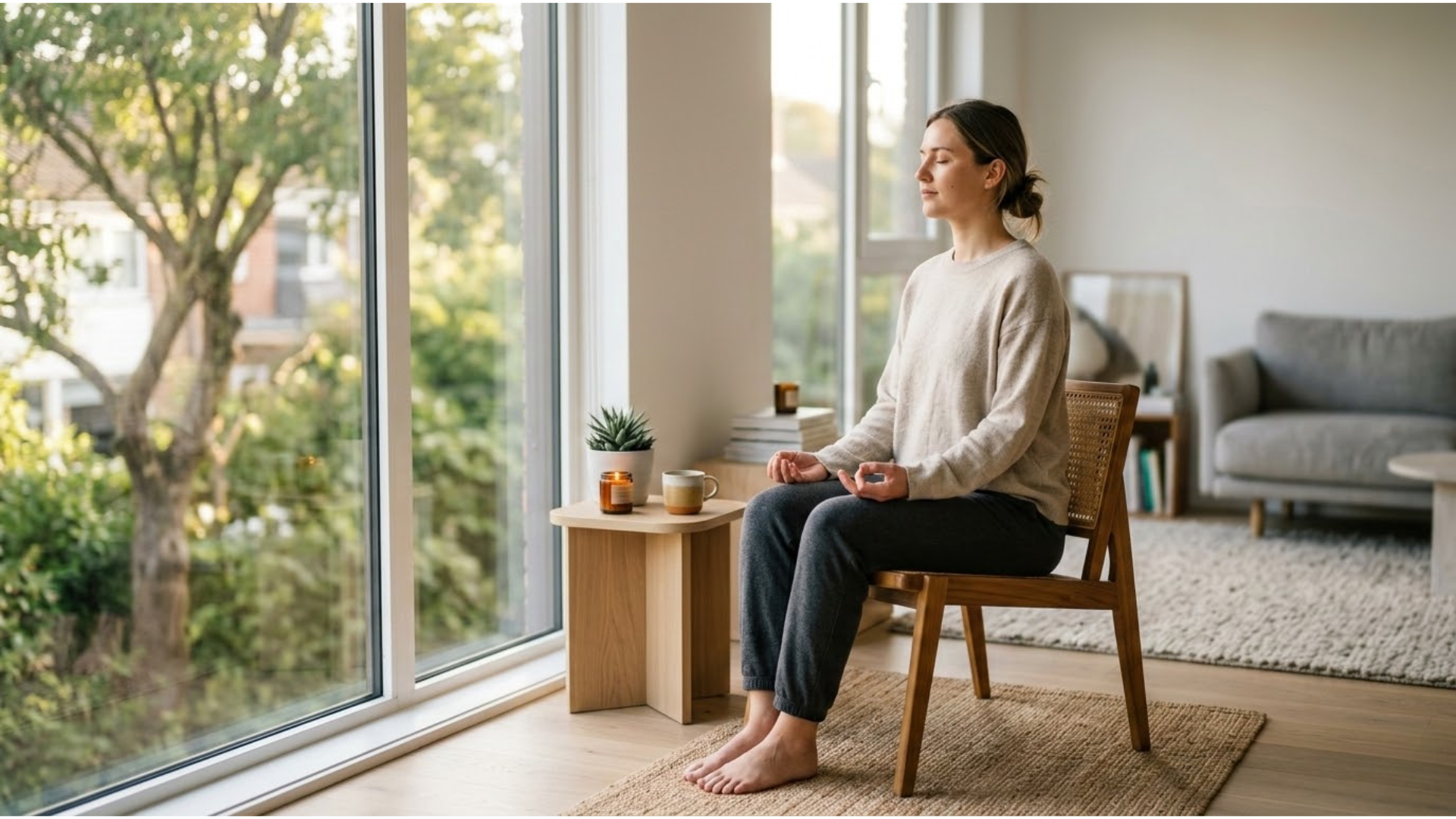
Do you feel like your brain has too many browser tabs open? You are not alone. Many people try to sit down for a moment of peace, only to find their minds instantly flooded with grocery lists, work deadlines, and embarrassing memories from five years ago. If you have tried meditation and felt like you failed because you couldn’t clear your mind, this guide is specifically for you.
Mindfulness for beginners is not about achieving a perfectly blank state of mind. In reality, most beginners struggle with wandering thoughts, distractions, and impatience when they first start practicing mindfulness. The goal is not to stop your thoughts, but to change how you relate to them. Whether you are dealing with stress, anxiety, or simply a busy schedule, learning simple mindfulness techniques can help you find calm in the chaos.
Many of these practices are also part of broader mental health strategies that strengthen emotional resilience and long-term well-being.
This article cuts through the spiritual jargon and offers practical, easy-to-apply strategies. We will explore how to navigate a wandering mind, introduce short exercises you can do anywhere, and provide a roadmap to help you build a sustainable habit. If you are looking for a way to ground yourself without needing an hour of silence, keep reading.
If Your Mind Wanders, You’re Doing It Right
One of the biggest misconceptions about mindfulness meditation for beginners is that a wandering mind equals failure. This could not be further from the truth. The moment you realize your mind has drifted away from your breath or your focal point, you have actually achieved a moment of mindfulness. You simply “woke up” from the distraction.

Think of mindfulness like a workout for your brain. Each time you notice your mind wandering and bring it back to the present moment, you strengthen your ability to focus. If your mind wanders a hundred times and you bring it back a hundred times, you have completed a hundred repetitions of mindfulness training.
This is far more beneficial than sitting in a trance-like state where you are not actively training your attention.
It is also common to get stuck in loops of overthinking during this process. Instead of judging yourself, view these distractions as opportunities. If you find yourself constantly replaying negative thoughts, learning specific techniques on how to stop rumination and overthinking can be incredibly helpful in breaking that cycle. Remember, the practice is in the return, not the stillness.
5-Minute Beginner Practices
You do not need to sit on a cushion for 45 minutes to experience the benefits of mindfulness. For mindfulness for beginners, shorter sessions are often the best way to build a habit that actually sticks.
These five-minute practices are simple and effective:
- Mindful breathing
- Body scan
- Sensory awareness
- Breath counting
Mindful Breathing

The breath is the most accessible anchor for your attention because it is always with you. Sit comfortably and simply observe the sensation of air entering and leaving your nostrils. You do not need to force deep breaths. Just notice your natural rhythm.
Understanding the science of breathing and how it affects the nervous system can make this practice even more effective.
The Body Scan
This practice involves mentally scanning your body from head to toe to release tension. It is particularly useful if you hold stress in your shoulders, neck, or jaw.
For a more structured approach, you can incorporate progressive muscle relaxation. This technique involves gently tensing and then relaxing muscle groups to deepen the sense of physical release.
Sensory Awareness
If closing your eyes makes you feel restless or anxious, try an open-eye grounding practice. Name five things you can see, four things you can touch, three things you can hear, two things you can smell, and one thing you can taste.
These grounding techniques for anxiety relief work quickly to pull your attention out of racing thoughts and back into the present moment.
Breath Counting
If your mind needs more structure, breath counting can help. Inhale and count one, exhale and count two, continuing until ten before starting again.
Giving your attention a simple task often helps calm what many people call the monkey mind.
For those days when you need more quick options, there are also other 5-minute mental health exercises that can provide instant stress relief without requiring a formal meditation session.
Micro-Mindfulness in Daily Life

Mindfulness exercises for beginners do not always need to happen in a quiet room. You can integrate “micro-mindfulness” into everyday activities.
This approach removes the barrier of not having enough time and allows awareness to become part of your normal routine.
The Morning Coffee Ritual
Instead of scrolling through your phone while drinking coffee, focus only on the experience. Notice the warmth of the cup, the aroma, and the taste.
This small moment of awareness can set a calm tone for the rest of the day.
Mindful Walking
Turn your commute or a short walk into a moment of awareness. Feel the contact of your feet with the ground and notice the rhythm of your stride.
It is a simple way to step out of autopilot mode. Taking care of mental health and longevity is essential for long-term well-being.
The Shower Reset
The shower is another ideal place to practice mindfulness because it engages several senses at once. Notice the sound of the water, the temperature on your skin, and the scent of soap.
Whenever your mind drifts toward work plans or worries, gently bring your attention back to the sensation of the water.
Common Barriers and Fixes
Starting a new habit rarely follows a straight path. Here are some common obstacles beginners experience when practicing mindfulness and how to overcome them.
I Can’t Stop Thinking/I Have Too much Anxiety
If sitting still makes your anxiety louder, traditional meditation may initially feel difficult. In these situations, combining mindfulness with practical behavioral therapy techniques can help you reframe overwhelming thoughts and respond to them more calmly.
I Keep Forgetting to Practice

Consistency is often harder than the practice itself. One simple strategy is to attach mindfulness to an existing habit, such as brushing your teeth or making coffee.
If you struggle with focus more generally, it may also help to explore ways to improve memory and concentration through simple lifestyle habits that support cognitive health.
I’m Just Bad at Focus
I’m Just Bad at Focus. If you find your focus is practically non-existent, exploring brainwave training options might offer the extra support needed to get started. Some beginners also find that improving mental clarity involves supporting brain health through lifestyle, sleep, and nutrition. Certain herbal ingredients such as Ginkgo biloba, Lion’s Mane mushroom, and Polygala have been studied for their potential role in cognitive function. In some cases, herbal formulas designed for brain circulation and focus may complement mindfulness practice. For example, formulas such as Naturem™ Memory+ combine these botanicals to support cognitive balance alongside mindfulness training.
I’m Too Stressed to Start
When you are overwhelmed, adding another task can feel exhausting. Instead of forcing a long meditation session, start small.
You might explore a broader list of mental health exercises and choose the one that feels easiest to begin today. Sometimes the simplest step is the most sustainable.
A 14-Day Beginner Plan
To help you get started, here is a simple plan designed to gradually build a mindfulness habit. The goal is consistency rather than duration.

Day 1–3: Breathing Awareness (3 Minutes)
Set a timer for three minutes. Sit comfortably and focus on the sensation of air moving in and out of your nose. When your attention drifts, gently return to the breath.
Day 4–7: Body Awareness (5 Minutes)
Shift your attention toward physical sensations in your body. In the evening, this can also serve as a way to wind down before sleep.
If relaxation feels difficult, progressive muscle relaxation can help release built-up tension.
Day 8–10: Mindful Walking (10 Minutes)
Practice mindfulness while moving. Walk at a normal pace while noticing the physical sensation of each step and the sounds around you.
Day 11–14: Combining Practices (10–15 Minutes)
Start with five minutes of mindful breathing, followed by a short body scan. Finish by taking a moment to notice something you feel grateful for.
Conclusion
Starting mindfulness for beginners does not require a perfectly quiet mind or long meditation sessions. The key is simply learning to notice your thoughts and gently return your attention to the present moment.
For many people, mindfulness for beginners begins with short breathing exercises, small daily awareness habits, and simple grounding techniques. Over time, these practices train the brain to respond to stress with more clarity and calm.
If your mind wanders, remember that this is not failure. It is actually the moment where mindfulness training happens. The more often you return your attention to the present moment, the stronger your focus and emotional resilience become.
Frequently Asked Questions
Beginners should start small to avoid burnout. Practicing for three to five minutes per day is often enough to build consistency. As the habit develops, the duration can gradually increase.
Yes. Wandering thoughts are a natural part of mindfulness practice. The goal is not to eliminate thinking but to notice when the mind drifts and gently bring attention back to the present moment.
Yes. Mindfulness acts as a form of attention training. Repeatedly returning your focus to a chosen anchor such as the breath strengthens neural pathways related to concentration.
Meditation is a structured practice used to train the mind. Mindfulness is a quality of awareness that can be practiced during meditation as well as during everyday activities like walking, eating, or listening.
Some people notice a sense of relaxation after a single breathing or grounding session. However, lasting stress reduction usually develops through consistent practice over several weeks.
References
American Psychological Association. (2019, October 30). Mindfulness meditation: A research-proven way to reduce stress. https://www.apa.org/topics/mindfulness/meditation
Mayo Clinic Staff. (2022, December 13). Mindfulness exercises. Mayo Clinic. https://www.mayoclinic.org/healthy-lifestyle/consumer-health/in-depth/mindfulness-exercises/art-20046356
National Center for Complementary and Integrative Health. (2021, June). Meditation and mindfulness: What you need to know. U.S. Department of Health and Human Services, National Institutes of Health. https://www.nccih.nih.gov/health/meditation-and-mindfulness-what-you-need-to-know
Tang, Y.-Y., Hölzel, B. K., & Posner, M. I. (2015). The neuroscience of mindfulness meditation. Nature Reviews Neuroscience, 16(4), 213–225. https://www.nature.com/articles/nrn3916
World Health Organization. (2020). Doing what matters in times of stress: An illustrated guide. https://www.who.int/publications/i/item/9789240003927