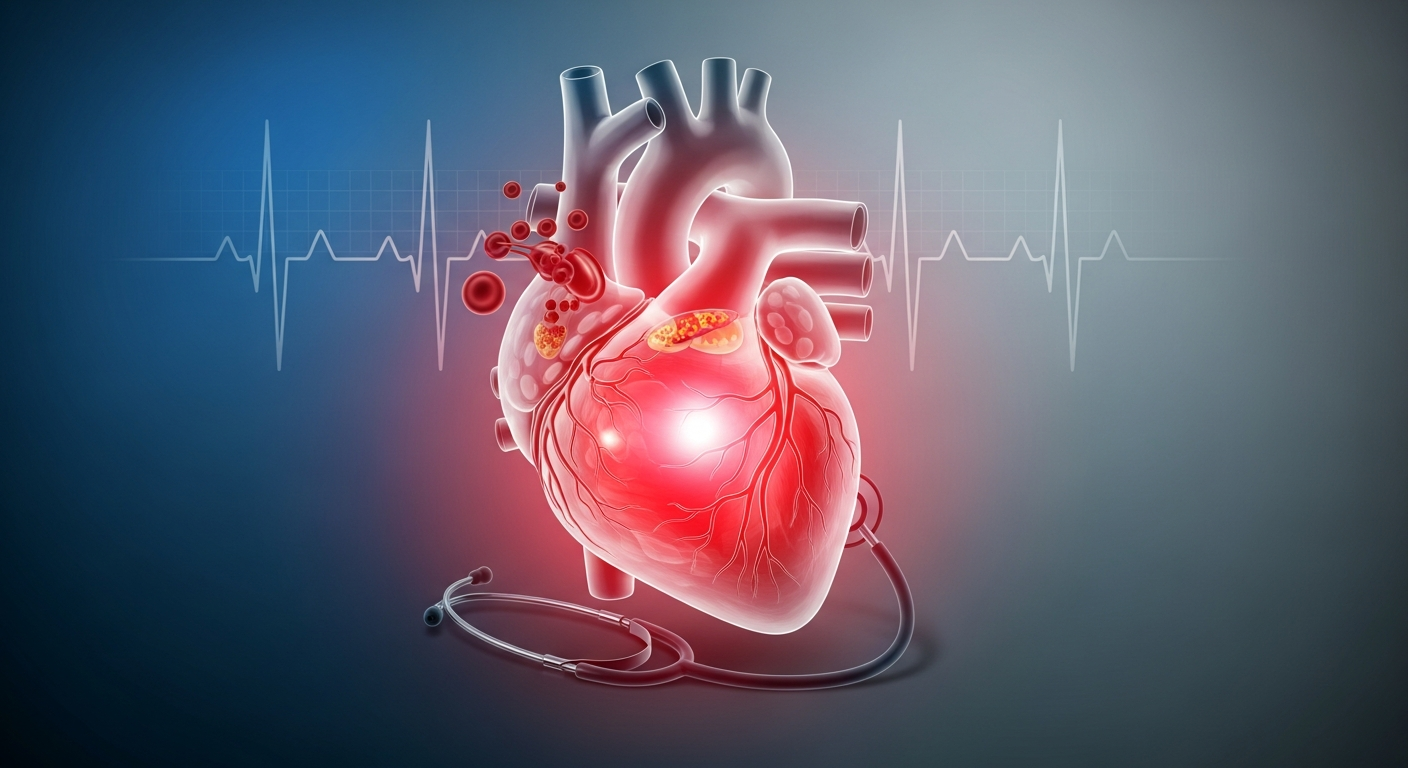
Heart disease is a term that encompasses a wide range of conditions affecting the heart and blood vessels. These conditions, which include coronary artery disease, heart failure,arrhythmias, and valvular heart disease, are responsible for more deaths worldwide than any other disease (WHO). Early recognition and effective management are critical to reducing morbidity and mortality.
Heart disease can develop silently over decades, often without obvious symptoms until a severe event such as a heart attack occurs. Understanding the risk factors, warning signs, and treatment options can empower individuals to take proactive steps toward heart health.
Overview of Heart Disease

Heart disease affects the heart’s structure and function. Common types include:
- Coronary Artery Disease (CAD): Narrowing or blockage of the coronary arteries due to plaque buildup, reducing blood flow to the heart muscle. This can lead to chest pain, heart attacks, and heart failure. CAD is the most common type of heart disease worldwide.
- Heart Failure: Occurs when the heart cannot pump blood effectively. Symptoms may include fatigue, shortness of breath, and fluid retention. Heart failure can be caused by CAD, high blood pressure, or previous heart attacks.
- Arrhythmias: Abnormal heart rhythms that disrupt efficient blood circulation. Some arrhythmias are harmless, but others can be life-threatening, leading to fainting, stroke, or sudden cardiac death.
- Valvular Heart Disease: Involves malfunctioning heart valves, causing blood to flow improperly. Common valve conditions include stenosis (narrowing) and regurgitation (leakage).
Understanding these different types of heart disease is essential for early detection, effective treatment, and prevention of serious complications.
Symptoms of Heart Disease

Heart disease can present differently in each individual. Common warning signs include:
- Chest Pain or Discomfort: Often described as pressure, tightness, squeezing, or heaviness in the chest. This is a hallmark of CAD.
- Shortness of Breath: Difficulty breathing during exercise or at rest can indicate heart failure or CAD.
- Fatigue: Unusual tiredness or exhaustion even after normal activity.
- Swelling (Edema): Fluid retention in the legs, ankles, or feet, common in heart failure.
- Other Symptoms: Dizziness, palpitations, nausea, and lightheadedness.
Gender Differences: Women may experience atypical symptoms, including jaw pain, back discomfort, nausea, and unexplained fatigue. These differences can delay diagnosis and treatment, making awareness crucial (NHLBI).
Causes and Risk Factors

Heart disease develops due to a combination of modifiable and non-modifiable factors.
Primary Causes:
- Atherosclerosis: Plaque buildup in the arteries reduces blood flow and oxygen supply to the heart.
- High Blood Pressure (Hypertension): Increases the heart’s workload and damages arteries over time.
- High Cholesterol: Excess LDL (“bad”) cholesterol promotes plaque formation.
Modifiable Risk Factors:
- Unhealthy diet (high in saturated fats, trans fats, and sodium)
- Sedentary lifestyle
- Smoking and exposure to secondhand smoke
- Excessive alcohol consumption
- Obesity
- Diabetes
Non-Modifiable Risk Factors:
- Age: Risk increases with age
- Gender: Men are at higher risk earlier; postmenopausal women’s risk rises
- Family History: Genetic predisposition plays a significant role
Understanding these factors allows for targeted interventions to prevent or delay disease onset.
Diagnosis

Early and accurate diagnosis is essential for effective management. Common diagnostic tools include:
- Electrocardiogram (ECG): Measures the heart’s electrical activity to detect arrhythmias or past heart attacks.
- Echocardiogram: Uses ultrasound waves to visualize heart structure and function.
- Stress Testing: Monitors the heart’s performance during exercise.
- Blood Tests: Measure cholesterol, triglycerides, and cardiac markers like troponin.
- Coronary Angiography: Imaging test to identify blockages in coronary arteries.
Early detection significantly improves outcomes and can prevent major cardiovascular events.
Treatment and Management

Treatment depends on the type and severity of heart disease and often combines medications, procedures, and lifestyle modifications.
- Medications:
- Statins (lower cholesterol)
- Beta-blockers (control heart rate and blood pressure)
- Antiplatelet drugs (reduce clotting risk)
- Procedures:
- Angioplasty and stent placement
- Coronary artery bypass grafting (CABG)
- Pacemakers or defibrillators for severe arrhythmias
- Lifestyle Changes:
- Heart-healthy diet rich in fruits, vegetables, whole grains, and lean proteins
- Regular physical activity (150 min/week moderate-intensity)
- Smoking cessation and limiting alcohol
- Stress management and adequate sleep
By combining appropriate medications, necessary procedures, and sustainable lifestyle changes, individuals with heart disease can effectively manage their condition, reduce complications, and improve overall heart health and quality of life.
Prevention

Prevention focuses on healthy lifestyle choices and regular monitoring:
- Maintain a balanced diet and healthy weight
- Engage in consistent physical activity
- Avoid tobacco and limit alcohol intake
- Manage blood pressure, cholesterol, and diabetes
- Regular check-ups and screenings for high-risk individuals
Research shows that lifestyle interventions can reduce cardiovascular events by up to 80% in high-risk populations (NIH, 2023).
Frequently Asked Questions (FAQs)
Early signs include chest discomfort, shortness of breath, fatigue, and swelling. Prompt medical evaluation is essential.
Some damage is permanent, but lifestyle changes, medications, and interventions can halt progression and improve quality of life.
Screening frequency depends on age, family history, and risk factors. High-risk individuals may require annual evaluations.
Yes. A heart-healthy lifestyle, regular exercise, smoking cessation, and proper management of blood pressure and cholesterol dramatically reduce risk.
Women are generally protected by estrogen until menopause, but risk rises after menopause. Awareness of atypical symptoms is critical.
References:
World Health Organization. Cardiovascular diseases [Internet]. Geneva: WHO; [cited 2025 Oct 26]. Available from: https://www.who.int/health-topics/cardiovascular-diseases
National Heart, Lung, and Blood Institute. Coronary heart disease [Internet]. Bethesda, MD: NHLBI; [cited 2025 Oct 26]. Available from: https://www.nhlbi.nih.gov/health/coronary-heart-disease
National Institutes of Health. Heart disease [Internet]. Bethesda, MD: NIH; [cited 2025 Oct 26]. Available from: https://www.nlm.nih.gov/medlineplus/heartdiseases.html
Ornish D, Scherwitz LW, Billings JH, et al. Lifestyle interventions for cardiovascular risk reduction. PubMed Central [Internet]. 2023 [cited 2025 Oct 26]; Available from: https://www.ncbi.nlm.nih.gov/pmc/articles/PMC7156229/
MacDonald BJ. Heart Failure Management in 2023: A Pharmacotherapy. PubMed Central. 2023. Available from: https://pmc.ncbi.nlm.nih.gov/articles/PMC10502425/
Marx N, Cosentino F, Ceriello A, et al. 2023 ESC Guidelines for the management of cardiovascular disease in patients with diabetes. Eur Heart J. 2023;44(39):4043–4140. doi:10.1093/eurheartj/ehad192. Available from: https://pubmed.ncbi.nlm.nih.gov/37622663/
Blinnikova K, Demissie GD, Thirunavukkarasu S, et al. Lifestyle Intervention for the Prevention of Cardiovascular Disease. PubMed Central. 2024. Available from: https://pubmed.ncbi.nlm.nih.gov/38278567/
Kariuki JK, Lim GP, Demissie GD, et al. Impact of lifestyle-based interventions on absolute cardiovascular disease risk. PubMed Central. 2024. Available from: https://pubmed.ncbi.nlm.nih.gov/37551161/Laranjo L, Ndejjo R, Demissie GD, et al. World Heart Federation Roadmap for Secondary Prevention of Cardiovascular Disease. PubMed Central. 2024. Available from: https://pmc.ncbi.nlm.nih.gov/articles/PMC10809857/