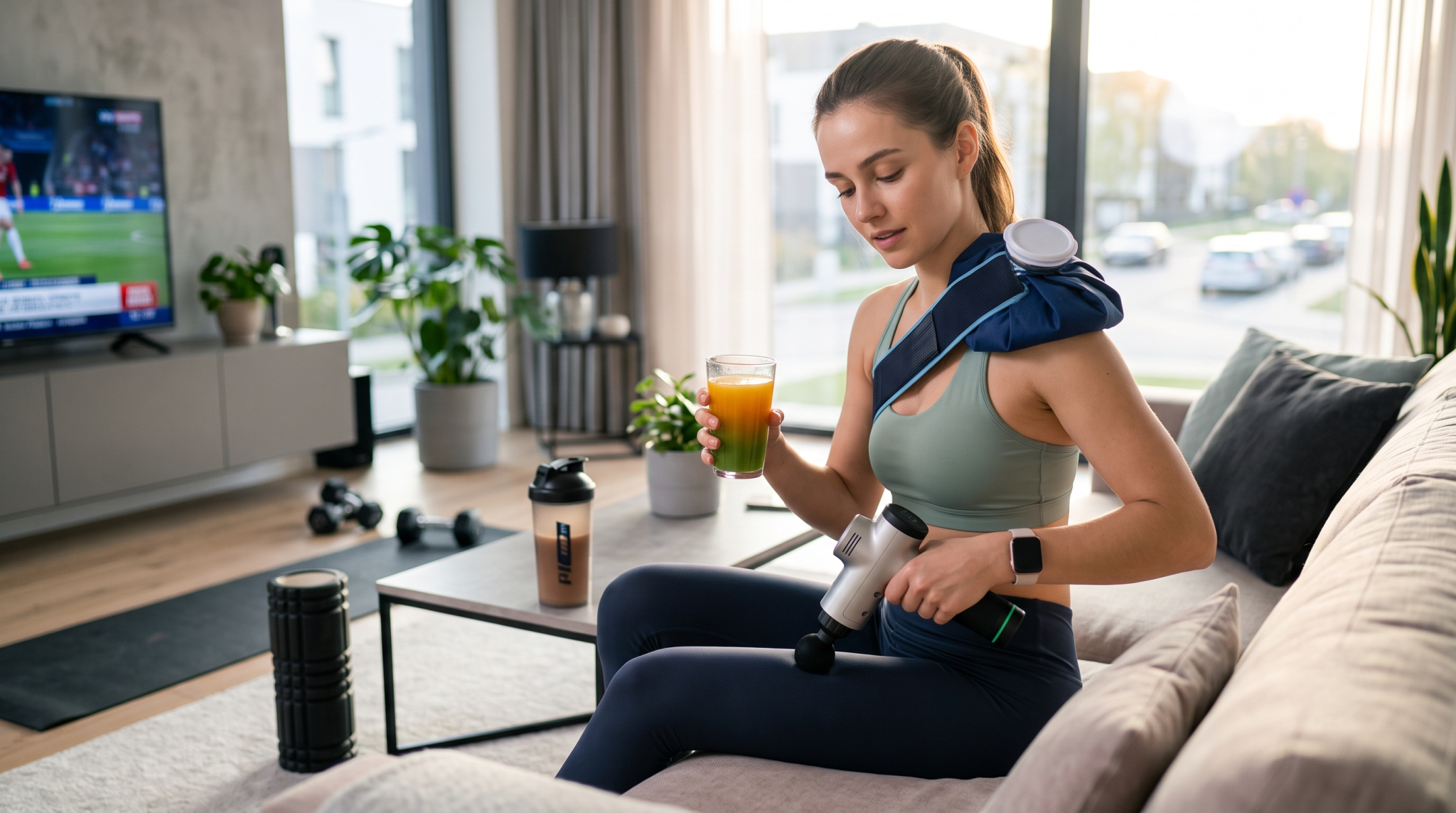
You pushed hard in the gym, went for a longer run than usual, or spent the afternoon moving furniture. The next morning, you reach for your coffee and your arms remind you – loudly – that muscles were used yesterday that haven’t been asked to work this hard in a while. That unmistakable deep ache, stiffness, and tenderness that peaks 24 to 72 hours after physical activity has a name: delayed onset muscle soreness, or DOMS. It is one of the most universal experiences in exercise, and one of the most mismanaged.
Most people either push through it, rest entirely, or reach for a painkiller. The science suggests all three are suboptimal strategies – and that a targeted, multi-layered approach to muscle recovery produces genuinely faster relief and better long-term performance outcomes. This guide walks through what the evidence actually supports, from physical interventions to nutritional strategies and herbal support that works at the cellular level.
What Is Actually Happening When Muscles Are Sore?
Before exploring what helps, it is worth understanding what DOMS actually is – because the popular explanation (lactic acid buildup) has been scientifically outdated for decades. DOMS is now understood as a consequence of microscopic structural damage to muscle fibers and surrounding connective tissue, particularly following eccentric contractions – the lengthening phase of movements like lowering a weight, walking downhill, or the descent in a squat. This microtrauma triggers an inflammatory cascade, bringing immune cells to the site, releasing cytokines, and sensitizing peripheral nociceptors (pain receptors) in the muscle – which is why soreness is a diffuse, widespread sensation rather than a sharp, localized pain.
The inflammatory process is not the enemy. This temporary inflammation is a necessary signal for muscle adaptation and growth. The goal of recovery strategies is not to suppress it entirely, but to support its resolution efficiently – clearing inflammatory byproducts, restoring blood flow, and providing the raw materials the muscle needs to rebuild stronger. Find out more about how oxidative stress after intense exercise compounds muscle damage and why antioxidant support matters for recovery.
The Physical Recovery Strategies With the Strongest Evidence
Cold Water Immersion
A 2025 randomized controlled trial comparing five different recovery interventions found that cold water immersion (CWI) produced the greatest improvement in muscle contraction recovery at 72 hours and the largest reduction in the inflammatory marker IL-6 of all tested methods – outperforming static stretching, functional electrical stimulation, vibration therapy, and massage in this specific outcome. The mechanism is well understood: cold exposure causes vasoconstriction, reducing the permeability of damaged capillaries, limiting secondary inflammatory swelling, and slowing nerve conduction velocity – reducing pain sensitivity.
Most protocols use water temperatures between 10 and 15°C for 10 to 15 minutes, applied within a few hours of intense activity. A Cochrane review confirmed cold water immersion reduces soreness at 24 to 96 hours compared to passive rest, making it one of the most consistently supported physical recovery tools available. If a cold bath is impractical, a cool shower or alternating warm and cold water produces a similar, if somewhat reduced, effect.
Massage and Percussion Therapy
A systematic review and meta-analysis in Frontiers in Physiology confirmed that massage alleviates DOMS and reduces markers of muscle damage, with the strongest effects observed when performed 24 to 72 hours after exercise rather than immediately after. Massage works by mechanically flushing metabolic waste products from muscle tissue, increasing local blood flow, reducing myofascial tension, and stimulating mechanoreceptors that compete with pain signals – the same gate-control mechanism that explains why rubbing an area instinctively helps when you bump into something.
Foam rolling and percussive massage devices (such as massage guns) offer self-administered alternatives with an emerging evidence base. Studies show that foam rolling and percussion therapy support DOMS recovery, particularly for maintaining range of motion between sessions, though the evidence for reducing muscle pain specifically is more modest than for traditional hands-on massage.
Active Recovery and Light Movement
Complete rest is one of the least effective strategies for DOMS, and yet it remains many people’s instinctive response. Movement acts as a pump that flushes inflammatory byproducts from muscle tissue – the very mechanism that stops working during complete inactivity. Low-intensity aerobic activity such as a brisk walk, easy cycling, or light swimming at 40 to 50% of maximum effort the day after an intense session maintains blood flow to recovering tissue, delivers oxygen and nutrients to repair sites, and reduces the subjective perception of soreness without adding additional muscle damage.
This principle is why professional athletes train through mild DOMS rather than taking complete rest days – not because the discomfort is irrelevant, but because continued gentle movement actively accelerates the recovery timeline. Find out more about low-impact exercise strategies and movement-based recovery approaches in this SVK Herbal article on desk-worker mobility.
Sleep: The Most Underrated Recovery Tool
Sleep deprivation increases pain sensitivity following acute muscle soreness – a finding that explains why sore muscles feel dramatically worse after a poor night’s sleep. During deep sleep, human growth hormone (HGH) is secreted in its largest daily pulse, directly stimulating muscle protein synthesis and tissue repair. Glymphatic clearance – the brain’s waste-clearing system that removes inflammatory metabolites – also operates primarily during slow-wave sleep.
Aiming for 7 to 9 hours of quality sleep during periods of high training load is not optional recovery advice – it is a physiological requirement. Without adequate sleep, the inflammatory resolution process that characterizes DOMS recovery is genuinely impaired at the cellular level.
Nutritional Strategies That Support Muscle Recovery
Protein: The Building Block of Repair
Every muscle repair process requires amino acids – the structural components of new muscle protein. Consuming adequate protein after exercise (20 to 40 grams of high-quality protein within 2 hours of training) provides the raw material for muscle protein synthesis, the cellular process by which damaged muscle fibers are rebuilt. Sources including eggs, lean meat, fish, Greek yogurt, and plant-based alternatives like pea and soy protein all provide the complete amino acid profile required for effective repair.
Leucine, in particular, is the amino acid that directly triggers the mTOR signaling pathway governing muscle protein synthesis – which is why leucine-rich protein sources like whey, eggs, and chicken are consistently rated highest for muscle recovery support.
Tart Cherry Juice: One of the Best-Studied Nutritional Interventions
Among all nutritional compounds studied specifically for exercise-induced muscle damage, tart cherry stands out for the consistency and quality of its evidence. A systematic review and meta-analysis of 10 randomized controlled trials found that tart cherry juice supplementation produced beneficial effects on muscular function recovery and significantly reduced the inflammatory biomarkers IL-6 and IL-8 following intense exercise. The anthocyanins and polyphenols in Montmorency tart cherries are potent antioxidants that directly scavenge the reactive oxygen species generated during intense muscle contraction, reducing oxidative damage and supporting faster inflammatory resolution.
Most studied protocols involve drinking 240 to 480ml of tart cherry juice concentrate for several days surrounding an intense training event, rather than using it as a single post-workout intervention.
Magnesium: Reducing Soreness from the Inside
A 2024 systematic review found that magnesium supplementation significantly reduced muscle soreness, rating of perceived exertion, and improved perceived recovery after exercise. Magnesium is involved in over 300 enzymatic reactions and plays a direct role in muscle contraction-relaxation cycles – a deficiency causes impaired calcium channel regulation, which can prolong muscle contraction and worsen post-exercise cramping and stiffness. Magnesium also plays a role in pain modulation through NMDA receptor regulation in the central nervous system, which may partially explain its effect on perceived soreness.
Dietary sources include pumpkin seeds, dark leafy greens, almonds, and dark chocolate. Supplemental magnesium glycinate or malate (200 to 400 mg daily) is better absorbed than cheaper oxide forms and produces fewer gastrointestinal side effects.
Omega-3 Fatty Acids
Omega-3 fatty acids, particularly EPA and DHA, reduce inflammatory markers including IL-6 and TNF-alpha following exercise-induced muscle damage. Their primary mechanism is competitive inhibition of the arachidonic acid pathway – the same metabolic route that produces pro-inflammatory prostaglandins. Regular consumption from fatty fish (salmon, mackerel, sardines) or algal-based supplements supports a lower systemic inflammatory baseline, making recovery from each training session progressively more efficient.
Herbal and Botanical Support for Muscle Recovery
Traditional medicine systems have long used plant-based compounds to address the inflammation, pain, and tissue damage underlying muscle soreness. Modern pharmacological research has increasingly validated the mechanisms behind many of these traditional applications.
Ginger: Nature’s Anti-Inflammatory for Muscle Pain
Ginger extract is widely recognized for its anti-inflammatory properties, with gingerol and shogaol inhibiting pro-inflammatory cytokines and helping reduce swelling and muscle discomfort. Mechanistically, these compounds inhibit both COX-2 and 5-LOX, the two primary inflammatory enzyme pathways – producing an anti-inflammatory effect comparable in mechanism to ibuprofen but without the gastrointestinal side effects associated with chronic NSAID use. A meta-analysis of randomized controlled trials found that ginger supplementation reduced muscle pain intensity after eccentric exercise, with 2 grams of raw ginger consumed daily for 11 days producing a 25% reduction in exercise-induced muscle pain. Ginger extract can also be applied topically – diluting ginger extract with a carrier oil and massaging onto sore muscles combines its anti-inflammatory biochemistry with the mechanical recovery benefits of massage.
Turmeric and Curcumin: Targeting the Inflammatory Cascade
Curcumin, the bioactive compound in turmeric, is one of the most comprehensively studied natural anti-inflammatory agents. Turmeric acts as a natural COX-2 inhibitor, targeting the same inflammatory enzyme pathway as NSAIDs but with significantly greater safety for long-term use. Its mechanism involves downregulation of NF-κB, the master inflammatory transcription factor that amplifies the entire cytokine cascade – meaning curcumin works upstream of the inflammatory process rather than simply masking its downstream symptoms.
Curcumin’s notorious bioavailability challenge – its poor absorption from standard turmeric powder – can be addressed by combining it with piperine from black pepper, which increases curcumin absorption by up to 2,000%. Find out more about anti-inflammatory herbs for joint and muscle pain and how curcumin compares to Boswellia in this detailed clinical guide on SVK Herbal.
Boswellia Serrata: The 5-LOX Pathway Partner
Where curcumin primarily addresses the COX-2 pathway, Boswellia serrata targets the 5-LOX (5-lipoxygenase) pathway – the route that produces leukotrienes, potent inflammatory mediators particularly involved in the swelling and connective tissue component of post-exercise muscle damage. Boswellia and curcumin together cover both major inflammatory highways, producing a more comprehensive anti-inflammatory effect than either compound alone – the botanical equivalent of a combination approach rather than a single-agent strategy.
Connective Tissue Support: Collagen and Joint-Protective Ingredients
Tendon and connective tissue injuries occur alongside muscle damage in intense exercise, and these structures heal even more slowly due to their poor blood supply. Collagen peptides supply the specific amino acids – glycine, proline, and hydroxyproline – that fibroblasts use to synthesize new collagen matrix in tendons, ligaments, and the connective tissue surrounding muscle fibers. Hydrolyzed collagen peptides are easily absorbed and can repair and rebuild joint tissues, reducing the total recovery time of connective tissue elements that are stressed alongside muscles during intense activity.
Drynaria fortunei and Rhizoma Homalomena contribute bone and connective tissue regenerative activity, inhibiting the matrix metalloproteinases that degrade collagen structure during inflammation. Clinacanthus nutans provides flavonoid-based antioxidant protection that complements the direct structural repair mechanisms.
Naturem Joints+ combines all of these evidence-informed ingredients in a formulation designed to address the full biological picture of post-activity tissue stress – not just muscle soreness in isolation, but the connective tissue, joint, and circulatory components that determine total recovery quality. For those who train regularly or experience recurring muscle and joint soreness, addressing this broader biological picture – rather than just the surface sensation of pain – produces the most sustained improvement in recovery speed and tissue resilience.
A Smart Daily Recovery Protocol
Putting all of this together, a practical evidence-based approach to post-activity muscle soreness looks like this: on the day of intense exercise, prioritize adequate protein within two hours of finishing, hydrate well, and apply a cold shower or brief cold water immersion if available. In the 24 to 48 hours following, perform light active recovery movement rather than complete rest, use massage or foam rolling to maintain range of motion and clear inflammatory byproducts, and ensure 7 to 9 hours of sleep. Throughout the days surrounding intense training, tart cherry juice, magnesium, omega-3s, and herbal anti-inflammatory support like ginger and curcumin contribute to a lower inflammatory baseline that makes each recovery episode more efficient than the last.
The consistent thread running through all effective recovery strategies is this: work with the biology of inflammation rather than against it. Support its resolution rather than suppressing its onset. Provide the nutrients for repair rather than just masking the sensation of damage. And maintain the movement, sleep, and systemic health that allow the body’s own recovery machinery to operate at its full capacity.
This article is for educational purposes only and does not constitute medical advice. If you experience severe muscle pain, significant swelling, dark urine, or weakness following exercise, seek prompt medical evaluation, as these may indicate serious muscle injury.
Frequently Asked Questions (FAQs)
DOMS typically peaks at 24 to 72 hours after intense exercise and resolves by 5 to 7 days with appropriate recovery strategies. Soreness persisting beyond a week, or accompanied by significant swelling, visible bruising, or weakness disproportionate to the exercise performed, warrants medical evaluation to rule out more significant muscle injury such as a grade II strain or rhabdomyolysis (Cleveland Clinic, 2025).
The evidence on pre-exercise stretching and DOMS prevention is consistently negative. A Cochrane review found that stretching before or after exercise does not produce clinically meaningful reductions in muscle soreness in the days following activity. Stretching has clear benefits for flexibility and injury prevention in other contexts, but preventing DOMS is not among its established effects (Cochrane, cited in Fascia Institute, 2026).
Yes, with appropriate expectations. A 2024 systematic review found that magnesium supplementation significantly reduced perceived muscle soreness and improved recovery in physically active people, though the effect was not elimination of soreness – rather a meaningful reduction in severity and perceived exertion. Oral supplementation is the only form with supportive data; topical magnesium gels have not shown comparable benefit in controlled trials (Physio-Pedia, 2025).
It depends on the stage of recovery. Cold water immersion within hours of intense activity reduces acute inflammatory swelling and IL-6 elevation, making it most beneficial in the first 24 hours. Heat applied 24 to 48 hours later, when acute inflammation has peaked, increases local blood flow and muscle extensibility, helping resolve residual stiffness. Both have a role; timing determines which is most appropriate (Frontiers in Physiology, 2025).
The pharmacological case for ginger in muscle pain is genuine. Gingerol and shogaol in ginger extract inhibit pro-inflammatory cytokines and the COX-2 enzyme pathway, and clinical research has found measurable reductions in exercise-induced muscle pain with consistent ginger supplementation. It is not a complete substitute for physical recovery strategies, but it is among the better-evidenced nutritional interventions for DOMS specifically (SVK Herbal, 2025).
Bleakley, C., McDonough, S., Gardner, E., Baxter, G. D., Hopkins, J. T., & Davison, G. W. (2022). Cold-water immersion (cryotherapy) for preventing and treating muscle soreness after exercise. Cochrane Database of Systematic Reviews, 2022(3), Article CD008262. https://doi.org/10.1002/14651858.CD008262.pub2
Black, C. D., Herring, M. P., Hurley, D. J., & O’Connor, P. J. (2010). Ginger (Zingiber officinale) reduces muscle pain caused by eccentric exercise. The Journal of Pain, 11(9), 894–903. https://doi.org/10.1016/j.jpain.2009.12.013
Centers for Disease Control and Prevention. (2025, January 14). Signs and symptoms of rhabdomyolysis. National Institute for Occupational Safety and Health. https://www.cdc.gov/niosh/rhabdo/signs-symptoms/index.html
Cheung, K., Hume, P. A., & Maxwell, L. (2003). Delayed onset muscle soreness: Treatment strategies and performance factors. Sports Medicine, 33(2), 145–164. https://doi.org/10.2165/00007256-200333020-00005
Coates, A. M., Patel, D. V., Binet, E. R., & Gibala, M. J. (2025). No effect of topical application of a commercial magnesium gel on exercise recovery in active individuals. International Journal of Sport Nutrition and Exercise Metabolism, 35(5), 416–423. https://doi.org/10.1123/ijsnem.2025-0034
Dehghani, E., Beba, M., Danandeh, K., Memari, A., Ershadmanesh, M. J., Rasoulian, P., Danandeh, A., & Djafarian, K. (2025). The effect of tart cherry juice supplementation on exercise-induced muscle damage in an athletic population: A systematic review and meta-analysis. Annals of Medicine & Surgery, 87(2), 880–890. https://doi.org/10.1097/MS9.0000000000002914
Dupuy, O., Douzi, W., Theurot, D., Bosquet, L., & Dugué, B. (2018). An evidence-based approach for choosing post-exercise recovery techniques to reduce markers of muscle damage, soreness, fatigue, and inflammation: A systematic review with meta-analysis. Frontiers in Physiology, 9, Article 403. https://doi.org/10.3389/fphys.2018.00403
Guo, J., Li, L., Gong, Y., Zhu, R., Xu, J., Zou, J., & Chen, X. (2017). Massage alleviates delayed onset muscle soreness after strenuous exercise: A systematic review and meta-analysis. Frontiers in Physiology, 8, Article 747. https://doi.org/10.3389/fphys.2017.00747
Jäger, R., Kerksick, C. M., Campbell, B. I., Cribb, P. J., Wells, S. D., Skwiat, T. M., Purpura, M., Ziegenfuss, T. N., Ferrando, A. A., Arent, S. M., Smith-Ryan, A. E., Stout, J. R., Arciero, P. J., Ormsbee, M. J., Taylor, L. W., Wilborn, C. D., Kalman, D. S., Kreider, R. B., Willoughby, D. S., … Antonio, J. (2017). International Society of Sports Nutrition Position Stand: Protein and exercise. Journal of the International Society of Sports Nutrition, 14, Article 20. https://doi.org/10.1186/s12970-017-0177-8
Palsson, T. S., Rubio-Peirotén, A., & Doménech-García, V. (2023). Sleep deprivation increases pain sensitivity following acute muscle soreness. Sleep Medicine, 109, 75–81. https://doi.org/10.1016/j.sleep.2023.06.010
Rattanaseth, N., Panyarapeepat, P., Muljadi, J. A., Chaijenkij, K., & Kongtharvonskul, J. (2021). Effect of curcumin supplement or placebo in delayed onset muscle soreness: A systematic review and meta-analysis. Bulletin of the National Research Centre, 45, Article 203. https://doi.org/10.1186/s42269-021-00664-1
Singh, S., Khajuria, A., Taneja, S. C., Johri, R. K., Singh, J., & Qazi, G. N. (2008). Boswellic acids: A leukotriene inhibitor also effective through topical application in inflammatory disorders. Phytomedicine, 15(6–7), 400–407. https://doi.org/10.1016/j.phymed.2007.11.019
Tarsitano, M. G., Quinzi, F., Folino, K., Greco, F., Oranges, F. P., Cerulli, C., & Emerenziani, G. P. (2024). Effects of magnesium supplementation on muscle soreness in different type of physical activities: A systematic review. Journal of Translational Medicine, 22, Article 629. https://doi.org/10.1186/s12967-024-05434-x
Wei, M., Liu, X., & Wang, S. (2025). The impact of various post-exercise interventions on the relief of delayed-onset muscle soreness: A randomized controlled trial. Frontiers in Physiology, 16, Article 1622377. https://doi.org/10.3389/fphys.2025.1622377