
Managing Diabetes Mellitus is not about starvation; it is about strategy. In 2025, we understand that food is information. When you eat the right kind of starch, you are sending a signal of safety and nourishment to your body. When you eat the wrong kind, you send a signal of chaos.
Let’s navigate this “Starch Matrix” together. I will guide you through the science of the Glycemic Index, introduce you to the “Golden Starches” that heal, and teach you the art of eating to keep your blood sugar in the safe zone.
The Sugar Spike: Why Your Body Panics After a Meal
To understand what to eat, we first need to understand what happens inside you 60 minutes after a meal. This is the phenomenon of Postprandial Hyperglycemia (high blood sugar after eating).
In a metabolically healthy person, eating carbohydrates triggers a smooth release of Insulin from the pancreas. This hormone acts like a doorman, opening your cells to let glucose in for energy. But for those with diabetes or Prediabetes, this door is jammed.
When you consume refined carbohydrates – like white bread or sugary pastries – your digestive system breaks them down into Glucose instantly. Because your insulin response is impaired, that glucose has nowhere to go. It piles up in your bloodstream, turning your blood into a syrupy, inflammatory substance that damages the delicate vessels in your eyes, kidneys, and nerves (a condition known as Diabetic Neuropathy).
This biological reality leads many to a dangerous conclusion: “I should stop eating carbs entirely.”
The Danger of Extreme Restriction
I often see patients who try the “Zero Carb” route. They feel tired, irritable, and weak. From a medical perspective, cutting out an entire macronutrient group is risky.
Your brain is a glucose-dependent organ; it consumes about 20% of your daily energy. Depriving it can lead to Hypoglycemia (dangerously low blood sugar) and mental fatigue. Furthermore, avoiding all grains means you miss out on essential B-vitamins and Dietary Fiber, which are crucial for cardiovascular health.
Instead of elimination, I prescribe substitution. You can find excellent natural supplements that support metabolic balance without harsh dietary restrictions at Naturem, where we focus on harmony between nutrition and biology.
Mastering the Glycemic Index (GI)
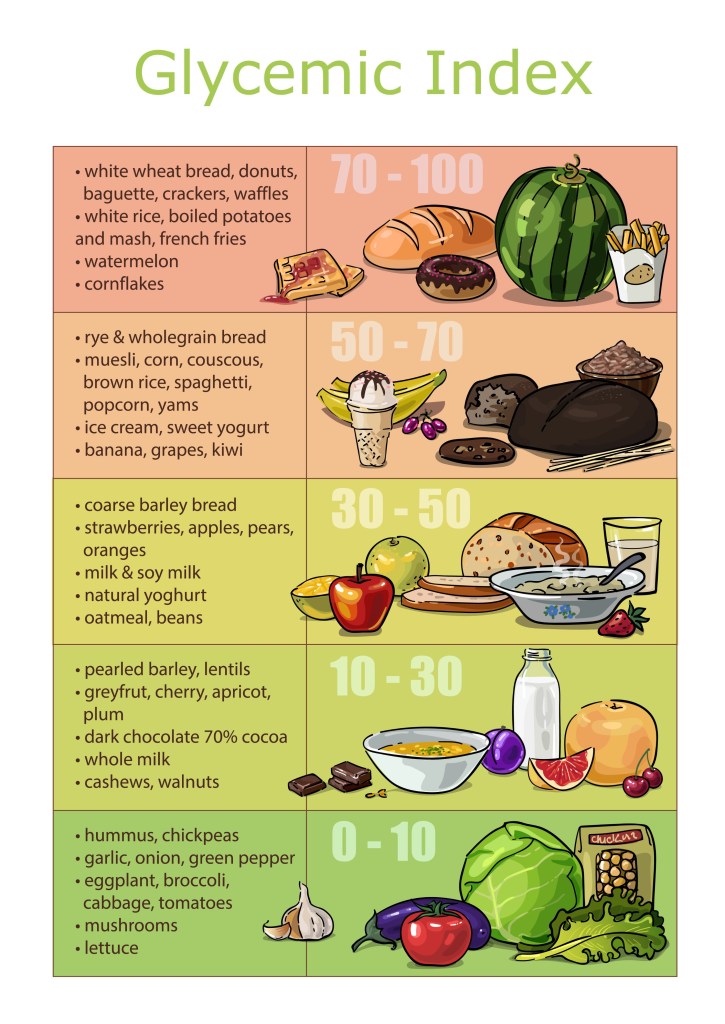
Think of the Glycemic Index (GI) as a speedometer for food. It measures how fast a specific food raises your blood sugar compared to pure glucose (which has a score of 100).
1. The Green Zone: Low GI (< 55)
These are the “slow-burn” fuels. Because they are difficult for your body to break down, they release glucose into your bloodstream essentially drop-by-drop. This gives your sluggish insulin response time to catch up. This is where you want 80% of your carbohydrates to come from.
2. The Yellow Zone: Medium GI (56 – 69)
These foods are acceptable in moderation but should always be paired with proteins or Unsaturated Fats to slow down digestion further.
3. The Red Zone: High GI (> 70)
These are the “flash floods” of sugar. They cause a rapid spike followed by a rapid crash, leaving you hungry and craving more sugar due to reactive Insulin Secretion.
The “Golden Starches”: Top Choices for Diabetics
As a doctor, I love these foods because they act as both fuel and medicine. They contain bioactive compounds that actively fight Insulin Resistance.
1. Whole Grains: The Armor of Fiber
The magic of whole grains lies in the “Bran” (the outer shell) and the “Germ” (the nutrient core).
- Brown Rice & Red Rice: Unlike white rice, which is naked starch, brown rice retains its fiber coating. Red Rice (Gạo Huyết Rồng) is even better; its color comes from Anthocyanins, powerful antioxidants that reduce Oxidative Stress. Replacing white rice with brown rice is scientifically proven to lower the risk of Type 2 diabetes progression.
- Oats: This is a superstar grain. Oats contain a soluble fiber called Beta-glucan. When you eat it, it forms a thick gel in your gut. This gel physically traps glucose and cholesterol, slowing their absorption. For those looking for herbal teas to pair with a healthy breakfast, explore the collections at SVK Herbal.
- Quinoa: A pseudo-cereal that is a complete protein, meaning it contains all nine Essential Amino Acids. It has a low GI and keeps you full for hours.
2. Legumes: The Protein-Fiber Matrix
Beans, lentils, and chickpeas are arguably the best carbohydrate source for diabetics. They are rich in Resistant Starch, a type of carb that bypasses digestion in the small intestine and ferments in the large intestine.
This fermentation feeds your good gut bacteria (the Microbiome), producing Short-chain fatty acids (SCFAs) that improve insulin sensitivity. Whether it is black beans, mung beans, or lentils, try to eat them with their skins on.
3. Tubers: Sweet but Safe?
Many patients fear sweet potatoes because of the name. However, boiled sweet potatoes have a moderate GI and are rich in Vitamin A.
- The Cooking Caveat: How you cook them matters. Boiling sweet potatoes keeps the GI low (around 44-50). Baking or roasting them breaks down the starch matrix, turning it into maltose and spiking the GI up to 90! Always choose boiling over baking.
A Traditional Medicine Perspective: Balance and Harmony
In Traditional Medicine, we view diabetes (often correlated with “Xiao Ke” or Wasting-Thirsting Syndrome) as a condition of Heat and Dryness consuming the body’s fluids. The goal is to nourish the Yin (fluids) and clear the Heat.
Foods like Mung Beans and Bitter Melon are prized not just for their nutrients, but for their “cooling” energetic properties. Bitter Melon contains charantin, a compound often called “plant insulin.”
At Herbs of Vietnam, we have documented the historical use of these indigenous plants. Integrating traditional herbs like Gymnema Sylvestre (Dây thìa canh) with a modern low-GI diet creates a powerful, dual-action approach to blood sugar management.
The Rules of Eating: It’s Not Just What, But How
You can eat the healthiest brown rice in the world, but if you eat it incorrectly, you may still spike your sugar. Here is the medical guide to eating smart.
1. The Vegetable Firewall (Sequencing)
This is a simple “bio-hack” I teach everyone. Never start your meal with starch.
- Step 1: Eat your vegetables or soup first. The fiber coats the lining of your stomach and intestine.
- Step 2: Eat your protein (meat, fish, tofu). Protein stimulates the release of GLP-1, a hormone that preps your insulin.
- Step 3: Eat your starch last.
By the time the rice hits your gut, it faces a “traffic jam” of fiber and protein, significantly slowing down glucose absorption.
2. The Plate Method
Forget counting calories. Visualizing your plate is easier and sustainable.
- 1/2 Plate: Non-starchy vegetables (Leafy greens, broccoli, cucumber).
- 1/4 Plate: Lean Protein.
- 1/4 Plate: Good Carbohydrates (The “Golden Starches”).

If you struggle with meal planning or need natural supplements to curb cravings, check out the lifestyle solutions at Lanui.vn.
3. Stop The Mash
Processing food increases its surface area, making it easier for enzymes to turn it into sugar.
- Eat whole fruit, don’t drink juice.
- Eat boiled potatoes, not mashed potatoes.
- Eat whole kernel corn, not creamed corn.
The more “work” your jaw and stomach have to do to break the food down, the better it is for your blood sugar.
Starches to Avoid (The Red Flags)
While I don’t believe in forbidding foods, you must be vigilant with these items. They are rapidly absorbed and offer little nutritional value:
- Jasmine Rice Porridge (Congee): The prolonged cooking explodes the starch granules, making them turn to sugar instantly upon hitting the tongue.
- White Bread & Crackers: Made from refined flour with zero fiber buffer.
- Instant Noodles: Often deep-fried and loaded with Trans Fats and high-GI flour.
Conclusion
Diabetes is a journey of balance, not deprivation. By understanding the science of the Glycemic Index and embracing the wisdom of Golden Starches, you can regain control over your health.
Remember the formula: Choose Whole Grains, prioritize Fiber, eat your Vegetables First, and listen to your body. Food is the most powerful medicine you take every day – make sure it’s the right prescription.
For more in-depth articles on natural living, herbal remedies, and metabolic health, please visit us at SVK Herbal and Herbs of Vietnam. Stay healthy, stay informed.
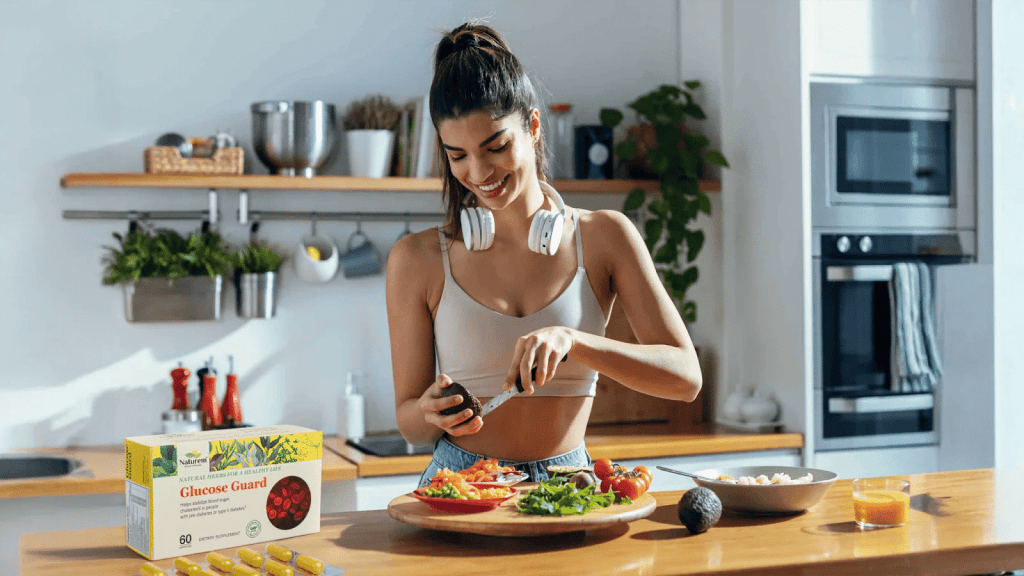
Naturem™ Glucose Guard – Supporting Metabolic Control Beyond the Plate
Even with perfect food choices and meal sequencing, many people with insulin resistance still experience post-meal glucose fluctuations. This is not a failure of discipline. It reflects a deeper metabolic reality: impaired glucose uptake, delayed insulin signaling, and chronic low-grade inflammation in the gut and liver.
Backed by Research-Based Ingredients
- Berberine: reduces fasting blood glucose, LDL, and triglycerides by enhancing insulin sensitivity and lowering inflammation.
- Gynostemma pentaphyllum: a powerful antioxidant herb that supports cardiovascular and liver health.
- Cinnamon extract: helps stabilize post-meal blood sugar spikes and supports healthier cholesterol levels.
Together, these ingredients help slow the absorption of sugars and fats in the digestive tract while improving circulation and metabolic balance.
Whether you are prediabetic, managing mild cholesterol issues, or simply aiming to protect your long-term health, Naturem™ Glucose Guard offers a natural complement to a gut-healthy diet and lifestyle.
Frequently Asked Questions
Is cold rice actually better for me than hot rice?
Surprisingly, yes! When you cook rice (or potatoes) and then cool it down in the fridge for 12-24 hours, a chemical process called retrogradation occurs. The starch transforms into Resistant Starch Type 3. This behaves like fiber, lowering the calorie count and the glycemic impact. You can even reheat it, and it keeps most of these benefits!
I thought Glass Noodles (Miến) were low carb?
This is a dangerous myth. Glass noodles (vermicelli) are typically made from Canna or Mung Bean starch. While the source is natural, the fiber has been removed, leaving pure concentrated starch. The GI of glass noodles can be extremely high (over 90). Do not rely on them as a “diet” food; always load them with veggies.
Can I use honey instead of sugar?
Honey has antimicrobial benefits, but metabolically, your body still sees it as sugar. It contains Fructose and Glucose. It will raise your blood sugar. If you need sweetness without the spike, look into natural non-nutritive sweeteners like Stevia or Monk Fruit. You can find products formulated with these safe sweeteners at Naturem.
Should I avoid all tropical fruits?
Not necessarily. While durian and ripe mango are very high in sugar, other tropical fruits like Dragon Fruit (Pitaya) and Guava are excellent. Guava, in particular, has a very low GI and is packed with Vitamin C. Just remember: eat the fruit, don’t juice it.
References
Shukla, A. P., & Aronne, L. J. (2015). Food Order Has a Significant Impact on Postprandial Glucose and Insulin Levels. Diabetes Care, 38(7), e98-e99. https://doi.org/10.2337/dc15-0429
American Diabetes Association. (2024). Understanding Carbohydrates: Glycemic Index and Load. Retrieved from Diabetes.org.
Mayo Clinic Staff. (2023). Diabetes diet: Create your healthy-eating plan. Mayo Clinic. https://www.mayoclinic.org/diseases-conditions/diabetes/in-depth/diabetes-diet/art-20044295
National Institute of Diabetes and Digestive and Kidney Diseases (NIDDK). (2023). Insulin Resistance & Prediabetes. NIH. https://www.niddk.nih.gov/health-information/diabetes/overview/what-is-diabetes/prediabetes-insulin-resistance
Harvard T.H. Chan School of Public Health. (2024). Carbohydrates and Blood Sugar. The Nutrition Source. https://www.hsph.harvard.edu/nutritionsource/carbohydrates/carbohydrates-and-blood-sugar/
Sun, Q., Spiegelman, D., van Dam, R. M., et al. (2010). White rice, brown rice, and risk of type 2 diabetes in US men and women. Archives of Internal Medicine, 170(11), 961-969. https://doi.org/10.1001/archinternmed.2010.109