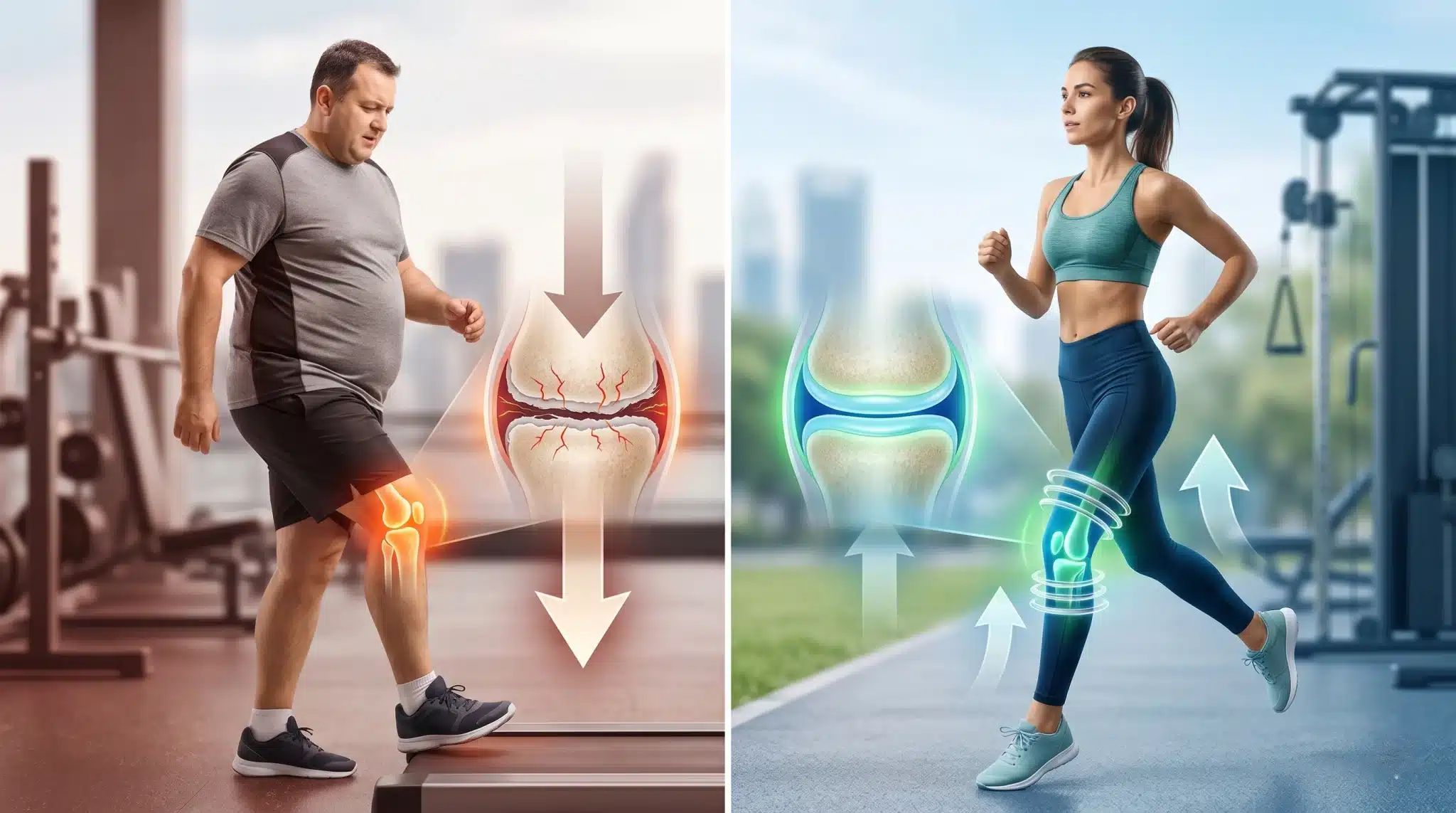
Obesity is recognized as a primary, independent risk factor for the development and progression of knee osteoarthritis (OA). While often historically viewed solely as a “wear and tear” condition caused by excess mechanical load, modern medical science now understands OA as a complex, multifactorial disease. The degradation of articular cartilage is deeply influenced by the silent root causes of obesity, creating a synergistic interplay between physical biomechanics and metabolic dysfunction.
Mechanical Overload and Structural Degradation
The most direct relationship between body mass and joint health is mechanical. The knee is a weight-bearing joint, and excessive axial loading from increased body mass leads to increased peak cartilage forces, stress, and strain. Every pound of excess body weight exerts approximately four pounds of additional pressure on the knees with each step taken.
- Cumulative Stress: Over time, this chronic overload accelerates the degradation of joint structures, leading to the gradual thinning of the cartilage that acts as a protective cushion between bones.
- Early Onset Issues: Structural wear is no longer just an issue for the elderly. Many now experience joint crepitus in youth, often exacerbated by early weight gain, which causes premature stress on the osteochondral unit.
- Joint Mechanics: Increased pressure alters the way the joint moves, leading to increased friction between articular surfaces, which promotes pain, stiffness, and structural wear.
Understanding that excessive load triggers cellular-level damage in chondrocytes – the cells responsible for maintaining cartilage – is vital. This process effectively converts mechanical energy into biochemical signals that promote the destruction of the cartilage matrix rather than its repair.
Metabolic Inflammation and Systemic Effects
Modern research confirms that the impact of obesity on joint health extends far beyond simple mechanical loading. Adipose tissue is a metabolically active endocrine organ that secretes pro-inflammatory cytokines and adipokines. This environment fosters “inflammaging,” a condition where chronic joint pain and systemic aging occur simultaneously due to persistent inflammatory signals.
- Systemic Low-Grade Inflammation: Excess fat tissue promotes a state of chronic, low-grade systemic inflammation, which can directly impact the synovial environment within the knee.
- Adipokine Signaling: Elevated levels of leptin and other adipokines alter chondrocyte metabolism, shifting the balance toward cartilage breakdown.
- Metabolic Syndrome: The connection between metabolic syndrome and joint degradation indicates that obesity-related OA is a systemic metabolic disease. Managing this often requires a multi-faceted approach, including investigating how herbs and obesity interact to support a healthier weight.
By recognizing that fat tissue itself signals for cartilage degradation, clinicians can better understand why weight management strategies are so critical. The inflammatory mediators produced by adipose tissue infiltrate the joint space, exacerbating local synovitis and cartilage erosion.
The Benefits of Weight Management for Joint Health
Weight management is a cornerstone of osteoarthritis treatment and prevention. Because of the biomechanical and metabolic mechanisms involved, integrating natural support alongside lifestyle changes can yield significant clinical improvements in pain and function.
- Reduced Joint Load: Losing just one pound of body weight can reduce the pressure exerted on the knees by four pounds during movement.
- Botanical Support: Traditional interventions often utilize specific plants to aid comfort. For example, Clinacanthus nutans has been studied for its potential to support joint repair, while Cinnamomum cassia provides warming relief to stiff tissues.
- Nutritional Integration: Incorporating nutrient-dense options like Morinda citrifolia (Noni) may assist in bone-mending and overall joint relief during the weight-loss journey.
- Symptom Relief: Achieving a weight loss of 5% to 10% of total body weight is associated with significantly reduced pain and improved physical function.
The efficacy of weight loss in managing joint health underscores the importance of a multidisciplinary approach. Combining nutritional changes to reduce systemic inflammation with low-impact physical activity can help patients achieve a healthier body composition, thereby protecting their cartilage and improving their quality of life.
Frequently Asked Questions (FAQ)
No, weight loss cannot reverse existing structural damage to cartilage, as it is a degenerative condition. However, it can significantly ease symptoms, improve mobility, and slow the further progression of the disease by reducing mechanical stress and systemic inflammation.
Obesity affects joints through both mechanical and systemic pathways. Adipose tissue releases inflammatory chemicals (adipokines) that circulate throughout the body, causing systemic inflammation that can affect joints regardless of their weight-bearing status.
Even small amounts of weight loss provide benefits. Research indicates that losing 5% to 10% of body weight can lead to meaningful reductions in knee pain and improvements in functional mobility. Some studies suggest that losing 20% or more of body weight results in even greater improvements in joint stress and function.
Yes, exercise is highly recommended. Low-impact activities such as walking, cycling, or swimming help strengthen the muscles around the knee, which stabilizes the joint and absorbs shock. Exercise also plays a critical role in managing weight and reducing systemic inflammation. Always consult with a healthcare professional to create an exercise plan appropriate for your specific condition.
Naturem™ Joints+: Nourishing Joint Health from Within

Real joint resilience begins internally, where circulation, metabolism, and organ function work together to preserve bones, cartilage, and connective tissue. Naturem™ Joints+ blends traditional Vietnamese herbal wisdom with modern nutritional science to help restore that internal balance. Its natural formulation is designed to address the deeper causes of stiffness and discomfort by supporting cartilage repair, moderating inflammation, and sustaining long-term mobility.
Each capsule contains a synergistic combination of Collagen Peptides, Drynaria Fortunei, Clinacanthus Nutans, Rhizoma Homalomena, and Tinospora Sinensis. Working together, these ingredients help reinforce bone strength, enhance blood flow, and support the body’s own healing processes. Formulated for daily use, Naturem™ Joints+ is designed to help you move more freely, comfortably, and confidently, just as your body was intended to do.
References
- Arthritis Foundation. (n.d.). More Weight Loss Is Better for Knee OA. https://www.arthritis.org/health-wellness/healthy-living/managing-pain/joint-protection/more-weight-loss-is-better-for-knee-oa
- Dr. Rajesh Bhalla. (2026, February 22). How Obesity Impacts Your Knee Joint Health. https://www.drrajeshbhalla.com/how-obesity-impacts-your-knee-joint-health/
- Herbs of Vietnam. (n.d.). Cinnamomum cassia: Warming Spice for Joint Relief. https://herbsofvietnam.com/en/cinnamomum-cassia-warming-spice-joint-relief/
- Herbs of Vietnam. (n.d.). Morinda citrifolia (Noni): Bone Mending & Joint Relief. https://herbsofvietnam.com/en/morinda-citrifolia-noni-bone-mending-joint-relief/
- Hopkins Arthritis. (n.d.). Role of Body Weight in Osteoarthritis. https://www.hopkinsarthritis.org/patient-corner/disease-management/rheumatoid-arthritis-weight-management/
- JointPain.ie. (n.d.). Weight & Lifestyle Management for Knee Osteoarthritis. https://jointpain.ie/weight-management-for-knee-osteoarthritis/
- Messier, S. P., et al. (2024). The Critical Role of Physical Activity and Weight Management in Knee and Hip Osteoarthritis: A Narrative Review. The Journal of Rheumatology, 51(3), 235-243. https://www.jrheum.org/content/51/3/235
- NatureM. (n.d.). Herbs and Obesity: What Does Science Say About Their Effectiveness?. https://naturem.us/blogs/healthy-advice/herbs-and-obesity-what-does-science-say-about-their-effectiveness
- NatureM. (n.d.). The Silent Root Causes of Obesity Most People Don’t Recognize. https://naturem.us/blogs/healthy-advice/the-silent-root-causes-of-obesity-most-people-don-t-recognize
- National Institutes of Health. (2023). Pathogenic Mechanisms and Therapeutic Approaches in Obesity-Related Knee Osteoarthritis. https://www.ncbi.nlm.nih.gov/pmc/articles/PMC10731450/
- SVK Herbal. (n.d.). How Clinacanthus Nutans Repairs Joint Health. https://svkherbal.com/live-healthy/how-clinacanthus-nutans-repairs-joint-health/
- SVK Herbal. (n.d.). Inflammaging: Chronic Joint Pain and Systemic Aging. https://svkherbal.com/live-healthy/inflammaging-chronic-joint-pain-systemic-aging/
- SVK Herbal. (n.d.). Joint Bone Density & Osteochondral Unit Support. https://svkherbal.com/uncategorized/joint-bone-density-osteochondral-unit-support/
- SVK Herbal. (n.d.). Joint Crepitus in Youth: Understanding Why Your Joints Click or Grind at a Young Age. https://svkherbal.com/live-healthy/joint-crepitus-in-youth-understanding-why-your-joints-click-or-grind-at-a-young-age/